
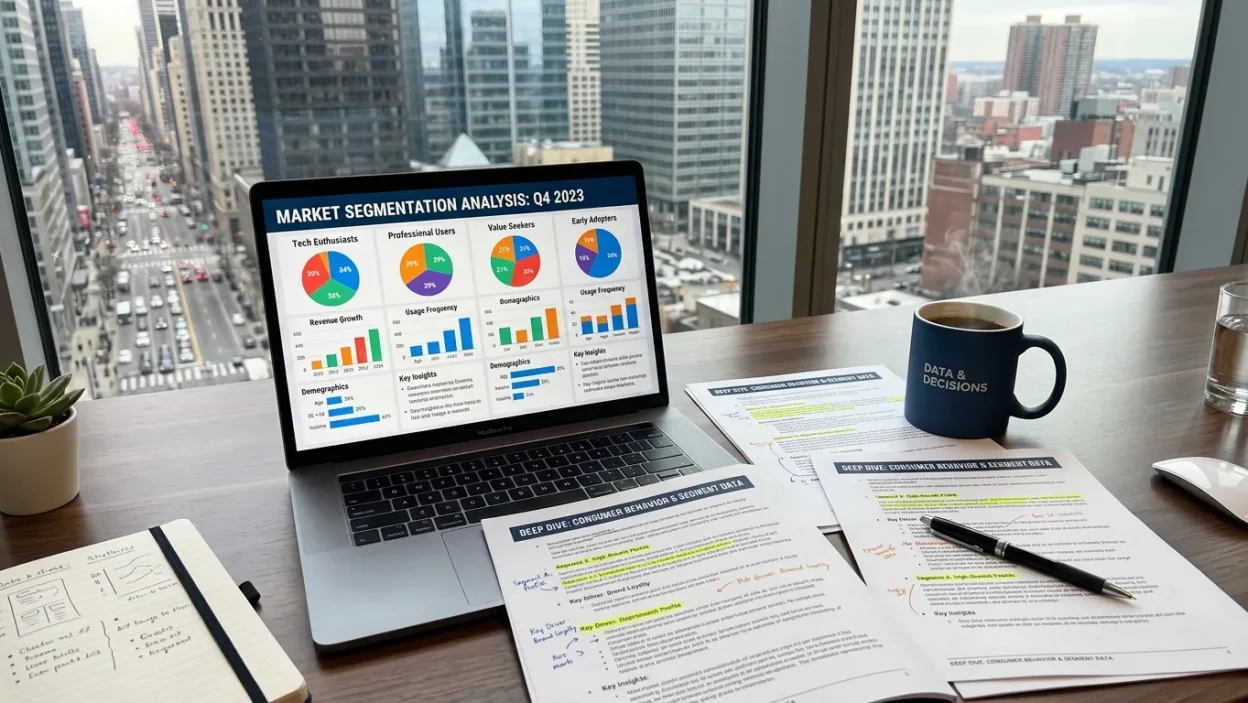
Are you struggling to maintain student engagement? Discover how applying market segmentation analysis completely transforms education by fostering profound calm and intense cognitive focus daily.
This comprehensive guide explores the innovative intersection of business strategy and learning. We detail how educators can utilize data-driven insights to categorize student needs, reduce classroom anxiety, improve concentration, and build structured, highly effective educational environments tailored to specific demographic and psychographic profiles.
The Intersection of Business Strategy and Educational Calm

The modern educational landscape relies heavily on diverse teaching methodologies. Classrooms are filled with students from various backgrounds, each possessing unique learning styles, emotional triggers, and cognitive demands. This heavy reliance on standardized teaching often introduces a unique type of daily stress. When an educator attempts to use a one-size-fits-all approach during a critical lesson, the resulting disconnect can completely derail student focus. The anxiety of managing a chaotic room live in front of thirty students disrupts the serene environment required for deep learning. Educators urgently need solutions that ground their operations, and many have found an unexpected remedy in advanced business methodologies. By utilizing comprehensive market segmentation analysis, teachers and administrators can bypass complex behavioral troubleshooting, bringing a much-needed sense of peace to their daily classroom operations.
When school leaders and teachers learn how to properly conduct a market segmentation analysis, they eliminate the frantic, manual guesswork of student engagement. This basic strategic knowledge provides a highly controlled, predictable, and engaging medium for academic teams to manage their instructional footprint. By incorporating these vital data-driven shortcuts into modern classroom management and robust student engagement strategies, educational leaders create a multidimensional approach that captures the attention of students without the chaos of disorganized behavioral support.
Why Concentration Falters in Standardized Settings
Teachers face unprecedented levels of distraction. Juggling lesson plans, behavioral management, and standardized testing severely limits their ability to concentrate on core educational values. In a standard classroom, the absence of tailored instructional solutions exacerbates this issue. When educators are tasked with manually troubleshooting an unengaged student without understanding their specific demographic or psychographic background, they waste valuable instructional minutes. Utilizing market segmentation analysis forces a fundamental shift from a reactive, stressed mindset to an active, deliberate state of instructional control. The delicate nature of managing an institution’s behavioral flow requires incredible precision. A strategic analytical approach provides this precision, allowing staff to slow down, breathe, and resolve frustrating classroom dynamics instantly.
The Anatomy of Efficient Classroom Workflows
Not all teaching methods behave perfectly, especially when running multiple heavy cognitive tasks in resource-constrained educational environments. Relying on outdated methods to engage students can introduce unpredictable results, leading to immense staff frustration. Knowing the direct benefits of market segmentation analysis is engineered for speed and ease of use, which is absolutely crucial for building administrative and teaching confidence.
Essential Components of Educational Segmentation
A premium digital workflow typically comprises a carefully balanced blend of preventative measures and quick reactions based on data. Understanding the core components of market segmentation analysis helps educators craft targeted, calm-inducing interventions.
- Demographic Grouping: This allows teachers to anticipate what cultural or background factors might influence a student’s learning style. By categorizing students by age, background, and previous educational access, teachers can align their lesson delivery with actual student readiness.
- Psychographic Profiling: Teachers can calmly observe how their students’ motivations and personal interests consume their attention. Grouping students by their intrinsic motivations allows for tailored projects that do not feel overwhelming.
- Behavioral Tracking: Building the habit of tracking how students respond to specific tasks ensures that delicate cognitive systems do not become bogged down. Using market segmentation analysis to track these behaviors prevents teachers from trying to remember complex individualized education plans without a framework.
Comparison: Traditional Teaching vs. Segmented Instruction
|
Feature |
Traditional Standardized Teaching |
Segmented Instructional Approach |
Educational Benefit |
|---|---|---|---|
|
Speed of Resolution |
Slow, highly prone to behavioral issues |
Instant, easily bypasses student frustration |
Easier for staff to maintain their lesson flow |
|
Cognitive Load |
High (demands constant attention to everyone) |
Low (relies entirely on structured group profiles) |
Prevents dangerous burnout and frustration in teachers |
|
Instructional Interruption |
Long, highly distracting for other students |
Brief, barely noticeable to the class |
Reduces the risk of completely losing class attention |
|
Predictability |
Guesswork and hoping for the best |
Absolute precision control over the learning environment |
Safe, clean, and highly predictable educational environments |
Fostering Calm Through Data Integration

Effective administration and teaching are the true cornerstones of a successful school. The act of interacting with optimized data habits—reviewing active student profiles, making data-driven choices to close educational gaps, and implementing targeted instructional solutions—serves as a powerful grounding exercise for school leaders. You can learn more about these foundational strategies through educational leadership resources.
The Psychology of Grounding in Data Workflows
Psychologists often recommend specific grounding techniques for individuals experiencing workplace anxiety. These techniques focus on creating reliable, unbreakable routines. Knowing exactly how to use market segmentation analysis intrinsically provides structured control over unruly classrooms, soothing visual data progression, and highly organized outcomes. When a teacher feels completely overwhelmed by a failing lesson plan, looking at the segmented data can act as an immediate emotional reset. The predictability of the student profiles, coupled with the routine of efficient troubleshooting, provides a stable, calming rhythm to the hectic academic day.
Integrating Analytical Efficiency into the Educational Ecosystem
Using market segmentation analysis is not just a priority for the marketing department of a university. Enterprising school leaders actively use the insights gained from this data fluency to enrich multiple facets of the institution, creating a cohesive, cross-departmental experience focused heavily on administrative workflows. By embracing these tools, schools empower their educators to handle minor behavioral glitches independently.
Aligning Teacher Training and Data Measurement
Administrators can calculate the exact time saved during customized outreach. They can measure dramatically reduced disciplinary tickets, chart the data over time, and learn deeply about the instructional proficiency of their staff. This directly transforms abstract analytical concepts into a highly visual, deeply actionable project. A teacher who quickly uses market segmentation analysis doesn’t just save time; they preserve the sanctity of the learning space.
Enhancing Communication and Institutional Transparency
Clear strategic knowledge encourages diverse teams to articulate their operational needs better. Documenting the transition from high administrative dependence to independent problem solving helps staff practice precise communication. Whenever a critical lesson stalls, market segmentation analysis acts as the highly effective first line of defense, ensuring that educational goals are never compromised by mismatched teaching styles.
Common Mistakes to Avoid with Educational Strategy
Even with the absolute best intentions, implementing new analytical habits can fail miserably if not properly managed. Here are the most frequent pitfalls schools encounter when dealing with classroom data:
- Obsessing Over Rigid Categories: Teachers often stress over placing students into perfect boxes. Teach teams to simply use market segmentation analysis as a fluid guideline to maintain a calm perspective, not a strict rulebook.
- Ignoring Silent Background Changes: Schools operate multiple monitoring systems. Failing to track how a student’s home life changes is a massive operational oversight. Ensure you update your data to check what is quietly draining your student’s focus.
- Siloing Analytical Knowledge in Administration: Keeping the demographic data locked in the principal’s office prevents the academic teams from truly understanding their own students.
- Chasing Highly Complex Solutions: Trying to rewrite an entire curriculum instead of simply adjusting the delivery method for a specific segment wastes precious energy and instructional time.
Pro Tips and Expert Insights for Institutional Success
To absolutely maximize the administrative and psychological benefits of your new data habits, consider these expert insights carefully:
- Implement a Strict Training Schedule: Assigning a specific time during professional development to deeply review market segmentation analysis completely prevents the habit of obsessive, stressful calls to the behavioral support team.
- Focus on True Intent, Not Just Metrics: Use these analytical shortcuts to fully understand the intent behind student behavior in your classroom. Monitor cognitive resources calmly and effectively.
- Embrace Instructional Failures: If a specific lesson consistently requires a complete overhaul to engage a certain segment, use it as a powerful teaching moment for the team to investigate and learn about updated pedagogical methods.
- Connect with EdTech Experts: Invite a data integration specialist to consult with your educational team. They can provide real-world connections to advanced technology practices and validate your strategy.
The Long-Term Impact on Institutional Focus
The primary goal of integrating market segmentation analysis into the school’s daily operations is not necessarily to turn every single educator into a data scientist, though that is a highly rewarding bonus. The primary objective is cultural and behavioral development. Removing frustrating friction from learning tasks teaches profound patience, extreme efficiency, and vital resourcefulness. In an era of constant academic pressure, automating a highly stressful task through a quick analytical shortcut is a profound lesson in institutional endurance.
Furthermore, these tools foster an amazing sense of community among staff. When diverse teams collaborate on sharing strategic tips, they genuinely learn teamwork and shared responsibility. They witness firsthand exactly how their individual contributions impact the collective success of the educational ecosystem they have so carefully created. By maintaining incredibly high standards in your operational methods, you ensure that these strategic shifts are safe, entirely accurate, and highly beneficial.
Deep Dive: How Segmentation Cultivates Classroom Calm

To truly understand how this business concept applies to a room full of learners, we must break down the physiological and psychological responses of students to targeted teaching. When a student feels misunderstood or overwhelmed, their amygdala activates, triggering a fight-or-flight response. This completely shuts down the prefrontal cortex, which is responsible for executive functioning and deep focus.
By applying market segmentation analysis, educators ensure that the material is presented in a way that aligns with the student’s current cognitive state. For auditory learners, information is spoken clearly. For kinesthetic learners, hands-on activities are provided. This alignment prevents the amygdala from triggering an alarm. The student feels safe, seen, and understood. This psychological safety is the absolute bedrock of a calm classroom. When thirty students are all operating in a state of psychological safety, the collective atmosphere of the room shifts from chaotic to profoundly serene.
Structuring the Segmented Environment
Creating this environment requires more than just good intentions; it requires architectural forethought in how the classroom is structured. Physical space can be segmented just as data is segmented.
- Quiet Zones: For students whose data profiles indicate sensory sensitivity, establish corners of the room with noise-canceling headphones and soft lighting.
- Collaborative Hubs: For extroverted segments that thrive on social learning, create grouped desks where discussion is encouraged.
- Independent Workstations: For highly focused, self-motivated learners, provide isolated desks facing away from high-traffic areas.
By mapping the physical space to the insights gathered from market segmentation analysis, teachers passively manage behavior before it ever becomes a disruption.
Building a Future-Proof Educational Environment
To truly transform modern education, the strategic foundation of the institution must be incredibly strong and highly visible. Parents, administrators, and adult learners alike expect smooth, uninterrupted academic progress. Mastering market segmentation analysis ensures your institution remains entirely professional during these crucial moments of discovery.
By consistently monitoring how students behave, you can deeply refine your teaching methods. You learn exactly what instructional tools resonate perfectly with your community. This beautiful harmony between what the school offers and what the strategy actually supports drastically eliminates the friction of traditional teaching. The amazing result is a smooth, highly predictable influx of engaged students, allowing the teaching staff to prepare calmly for the upcoming semesters without the ever-looming threat of behavioral breakdowns.
The Financial Benefits of Targeted Strategy
Beyond the obvious benefits to focus and well-being, teaching staff to utilize market segmentation analysis makes immense financial sense. School budgets are exceptionally tight. Spending money on constant behavioral interventions, specialized one-on-one aides for issues that could be solved by environmental design, and constant curriculum replacements is a massive waste of resources.
By analyzing exact learning workflows, schools ensure that every minute of class time directly contributes to creating a calmer, more productive institution. When administrators use market segmentation analysis to purchase bulk materials only for the specific student groups that need them, they save thousands of dollars annually. This money can then be reinvested into higher teacher salaries or better facility maintenance, which further contributes to the overall calm of the educational environment.
Overcoming Resistance to Analytical Teaching
It is natural for some educators to feel hesitant about integrating more data analytics into their operations. There is a valid fear that the process will become impersonal, reducing vibrant children to mere numbers on a spreadsheet. However, an effective understanding of market segmentation analysis actually proves the exact opposite.
By automating the resolution of instructional progress, staff members are freed from tedious administrative and behavioral burdens. They have more time to interact with students, support parents, and provide the emotional support that no data sheet can replicate. Market segmentation analysis does not replace the human element; it empowers staff to cultivate peace, profound empathy, and intense concentration in their daily work.
Advanced Strategies for Higher Education
While much of this applies to K-12 environments, universities benefit even more from these principles. In higher education, adult learners are paying premium tuition for their experience. If they do not feel the learning environment is tailored to their specific career goals and learning preferences, they will drop out.
Universities utilize market segmentation analysis to categorize their student body by career trajectory, scheduling needs (such as night classes versus online asynchronous learning), and financial constraints. By offering segmented pathways, universities ensure that adult learners can maintain focus on their studies without the external chaos of a mismatched university experience. A working mother taking night classes has vastly different needs than an eighteen-year-old freshman living on campus. Recognizing this through rigorous data analysis allows the institution to provide targeted support, fostering calm across the entire student body.
Sustaining the Calm Through Continuous Feedback
Segmentation is not a one-time event that happens at the beginning of the school year. It is a continuous, living process. Students grow, mature, and change. Therefore, the data must also evolve.
Educators must build continuous feedback loops into their teaching practice. Brief weekly surveys, quick emotional check-ins, and ongoing behavioral observations should all feed back into the central market segmentation analysis. If a previously highly motivated segment suddenly shows signs of fatigue and distraction, the teacher can immediately adjust the workload, thereby preserving the calm focus of the classroom before a total breakdown occurs.
Ultimately, taking control of your classroom using market segmentation analysis shifts the burden of behavioral troubleshooting from the tense shoulders of stressed staff onto capable strategic systems, completely clearing the path for what truly matters: exceptional, life-changing teaching.
Conclusion
Optimizing your institution’s strategic efficiency is the absolute key to thriving in modern education. By comprehensively adopting market segmentation analysis, you drastically eliminate classroom anxiety, permanently stabilize instructional time, and provide your staff with the peace needed for profound calm. Implement this powerful analytical strategy today and experience unmatched classroom clarity and student focus!
Frequently Asked Questions
1. What exactly is market segmentation analysis in an educational context?
In education, market segmentation analysis is the strategic process of dividing a broad student population into smaller, more manageable subgroups based on shared characteristics such as learning styles, behavioral traits, and demographic backgrounds to tailor instruction effectively.
2. How does using this analytical strategy improve teacher focus?
This decisive action completely eliminates the tedious, anxiety-inducing task of guessing why a lesson is failing. By instantly utilizing insights from market segmentation analysis, educators quickly pivot their teaching styles, allowing them to rapidly return their full concentration to effective student support.
3. Is learning to segment students difficult for non-technical staff?
Not at all. It simply requires a basic understanding of observation and categorization. High-quality professional development can easily and permanently integrate this strategic thinking into a teacher’s daily routine, making it a highly accessible tool that absolutely anyone can understand.
4. Will we need to hire a data scientist to teach this?
No. Modern educational strategy heavily focuses on user-friendly applications and intuitive frameworks. A well-structured professional development seminar is usually more than enough to fully explain the core concepts of market segmentation analysis, completely empowering teachers.
5. How can market segmentation analysis help increase student engagement?
By clearly showing you exactly how to bypass massive instructional disconnects, the tool actively prevents students from losing focus while a teacher wrestles with a mismatched lesson plan. You can calmly guide the lesson forward effortlessly.
6. Does this strategy only work in specific grade levels?
While the specific data points change, the core methodology works everywhere. Understanding the broad concept of market segmentation analysis translates perfectly across diverse educational environments, from early childhood centers to advanced university lecture halls.
7. Why is targeted instruction better than standardized teaching?
When a classroom is highly standardized, the students on the margins often check out entirely. Market segmentation analysis ensures that you reach the vast majority of your students by addressing their specific needs, acting as a reliable educational safety net.
8. Will collecting this data make my staff feel completely overwhelmed?
Initially, seeing the long list of student needs might seem somewhat daunting. However, once trained to exclusively group students for efficiency, using market segmentation analysis actually reduces overwhelming feelings by providing a single source of truth for all instructional planning.
9. How exactly does this fit into a very tight school budget?
It is incredibly cost-effective. When you carefully consider the hundreds of hours of administrative time saved and the massive reduction in wasted materials, utilizing market segmentation analysis is the most highly cost-effective strategic upgrade an institution can make.
10. How often should teachers update their classroom segments?
To perfectly maintain a calm and focused work environment, it should be updated periodically, usually at the end of a grading term or when major behavioral shifts occur. Continuous market segmentation analysis remains the absolute best tool for long-term classroom harmony.






Embedded Finance and the Future of Seamless Digital Financial Services
The Importance of Risk Management in Modern Business
What Is Financial Technology (FinTech)? Everything You Need to Know
How Financial Technology Is Transforming Digital Payments
The Importance of Risk Management in Modern Business
How Financial Technology Is Transforming Digital Payments
How Digital Banking Is Changing the Future of Financial Management
How Financial Consulting Supports Sustainable Business Growth