Discover how zero-knowledge proofs revolutionize modern education by protecting student privacy, minimizing digital anxiety, and creating a calm, focused environment for deep learning.
The integration of advanced cryptography into schools is reshaping student experiences. This guide explores how zero-knowledge proofs protect academic privacy and reduce surveillance anxiety. We break down the technology, practical applications, and ways it fosters uninterrupted focus, creating a healthier, more secure educational ecosystem for all learners.
The Intersection of Cryptography and Calm Learning

Education often struggles to balance the need for data tracking with student well-being. Today, learners face constant digital surveillance, which increases cognitive load and anxiety. By utilizing zero-knowledge proofs, educational institutions can verify student credentials, attendance, and task completion without exposing underlying personal data. This profound shift in data management fundamentally alters the learning atmosphere.
When schools adopt zero-knowledge proofs, they eliminate the invasive tracking that causes stress. Students no longer feel constantly watched. Instead, they operate in digital spaces where their privacy is inherently respected. This environmental calmness translates directly to better focus. Reduced stress lowers cortisol levels, allowing the brain to engage more deeply with complex subjects rather than worrying about data exposure.
Understanding the Core Technology
To grasp this transformation, administrators must understand the mechanics. Zero-knowledge proofs allow one party to prove to another that a statement is true without revealing any information beyond the validity of the statement itself. In a classroom, a student can prove they completed a reading assignment or passed a prerequisite without revealing their exact scores, reading speed, or personal study habits to third-party software providers.
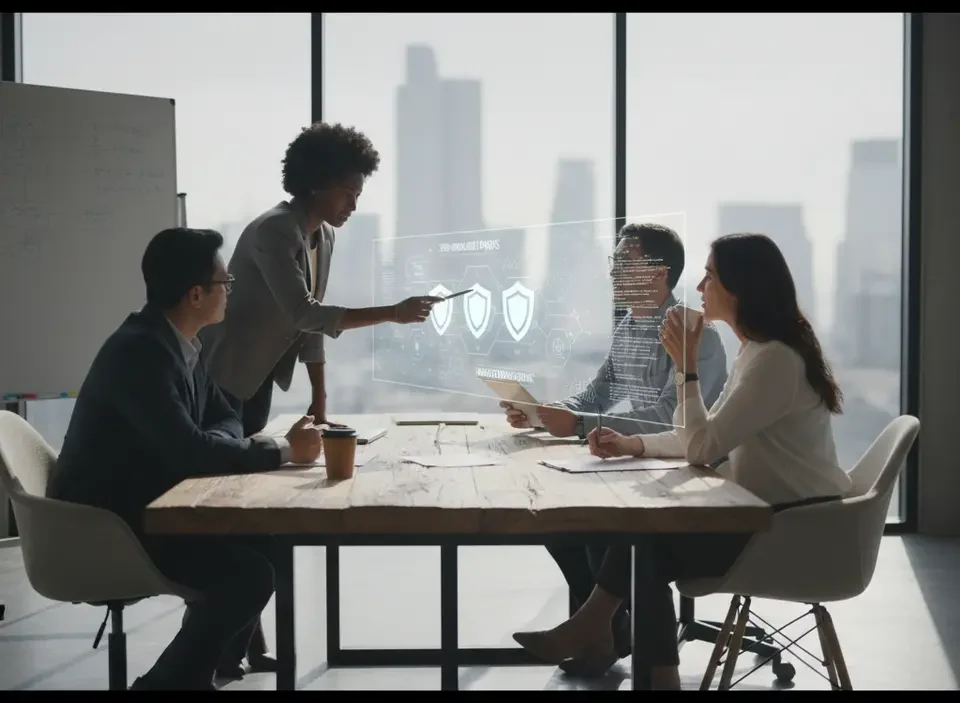
This cryptographic privacy acts as a digital shield. It perfectly complements advanced pedagogical frameworks that prioritize student autonomy and trust. By merging high-level security with educational independence, schools create an ecosystem where academic excellence thrives organically, free from the distractions of data mining.
Understanding Zero-Knowledge Proofs
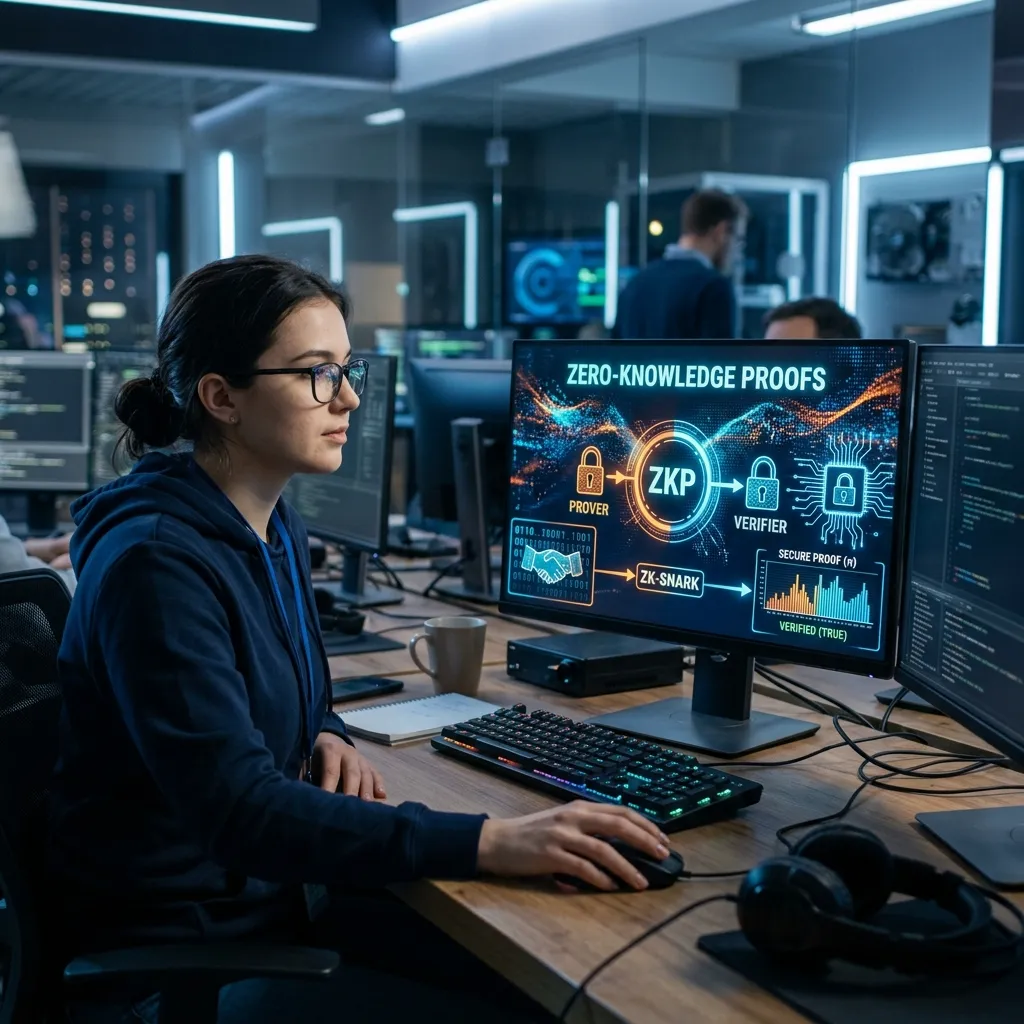
At its essence, a zero-knowledge proof is a cryptographic protocol that allows a prover to convince a verifier that a specific statement is true without disclosing any additional information. This concept dates back to theoretical work in the 1980s but has matured into practical implementations in today’s digital landscape. Unlike traditional authentication methods that require sharing secret credentials or data, zero-knowledge proofs rely on mathematical constructs that preserve confidentiality. A prover generates a proof by encoding their secret knowledge into a cryptographic commitment. The verifier then issues a random challenge, to which the prover responds with a proof linking the commitment and the challenge. The outcome is a validation of the prover’s claim—such as ownership of a private key or compliance with financial thresholds—without exposing the secret itself.
Advanced variants like zk-SNARKs (Zero-Knowledge Succinct Non-Interactive Arguments of Knowledge) and bulletproofs further refine this process by reducing both proof size and computational overhead. zk-SNARKs compress interactive steps into a single non-interactive proof, making them suitable for high-throughput blockchain environments. Bulletproofs, on the other hand, eliminate the need for a trusted setup and achieve logarithmic proof sizes, offering an appealing tradeoff for certain applications. Globally, researchers at institutions such as Stanford University and various cryptography consortia are advancing protocols to optimize verification time, enhance proof soundness, and ensure quantum resistance. As these innovations converge, zero-knowledge proofs stand poised to redefine privacy-preserving computations across finance and beyond.
Integrating Privacy into Modern Curriculums
Adopting zero-knowledge proofs requires more than just installing new software. It demands a holistic integration into the curriculum and school culture. Teachers must shift from relying on invasive analytics to trusting cryptographic verification. This means designing lesson plans that take advantage of secure, decentralized platforms.
For example, a school might implement verification systems that allow for extended periods of uninterrupted, unmonitored study. During this time, students can utilize premium digital resources. This method prepares them for the rigors of higher education and mimics the high-trust environments of modern elite workplaces, where zero-knowledge proofs are already standard practice.
Structured Comparison: Traditional EdTech vs. Privacy-First Approaches
|
Feature |
Traditional Educational Technology |
Zero-Knowledge Proofs Education |
|---|---|---|
|
Data Collection |
Invasive, maximalist |
Minimal, cryptographically secure |
|
Student Mindset |
Monitored, anxious |
Calm, trusted, independent |
|
Verification |
Exposes full student profiles |
Validates only necessary claims |
|
Focus |
Disrupted by tracking alerts |
Sustained deep work |
|
Well-being |
Secondary priority |
Central to the design philosophy |
Pro Tips for Educational Administrators
To successfully bring zero-knowledge proofs into your school district, consider these expert insights:
- Start with digital literacy. Educate staff and students about how zero-knowledge proofs work and why they matter for mental health.
- Audit your current software. Identify tools that extract excessive data and replace them with privacy-preserving alternatives.
- Give students a voice. Allow them to manage their own digital credentials to build confidence and autonomy.
- Partner with privacy advocates. Work with organizations specializing in secure digital infrastructure to ensure seamless integration.
Common Mistakes to Avoid When Upgrading Systems
While the transition to zero-knowledge proofs is highly beneficial, many institutions stumble by focusing too much on the tech rather than the user experience.
- Ignoring Usability: Implementing secure systems that are too difficult to use defeats the purpose of creating a stress-free environment.
- Partial Adoption: Using zero-knowledge proofs for some classes but keeping invasive trackers in others creates confusing, inconsistent experiences for students.
- Lack of Teacher Buy-In: If educators do not understand how to leverage environments built on zero-knowledge proofs, the investment will fail. Ensure continuous professional development.
- Forgetting Accessibility: Privacy must be inclusive. Ensure that all secure digital spaces are fully accessible to students with physical or neurodivergent needs.
How Zero-Knowledge Proofs Operate
To illustrate the operation of zero-knowledge proofs, imagine you need to prove ownership of a digital wallet without revealing the wallet’s private key. In a typical challenge-response protocol, you follow three main steps: commitment, challenge, and response. First, you generate a cryptographic commitment derived from your secret key. This commitment conceals the secret but ties to it mathematically. Next, the verifier sends a random challenge, often a nonce or unpredictable number. Finally, you compute a response that links the commitment and the challenge, demonstrating your knowledge of the secret key without ever disclosing it. Successfully verifying this response gives the verifier confidence that you control the private key, and yet they learn nothing about the key itself.
Non-interactive variants streamline the process by employing a common reference string or public parameters. In systems using zk-SNARKs, for instance, a trusted setup phase generates parameters that both parties use to produce and verify proofs. Once set up, provers can create single-message proofs, and verifiers can validate them with minimal computation. Bulletproofs replace this setup with range proofs and logarithmic communication complexity, providing increased flexibility at the cost of marginally higher verification time. These mathematical enhancements make zero-knowledge proofs adaptable for real-world applications such as blockchain transactions, confidential audit logs, and secure identity attestations within financial institutions.
Transformative Applications in Digital Finance
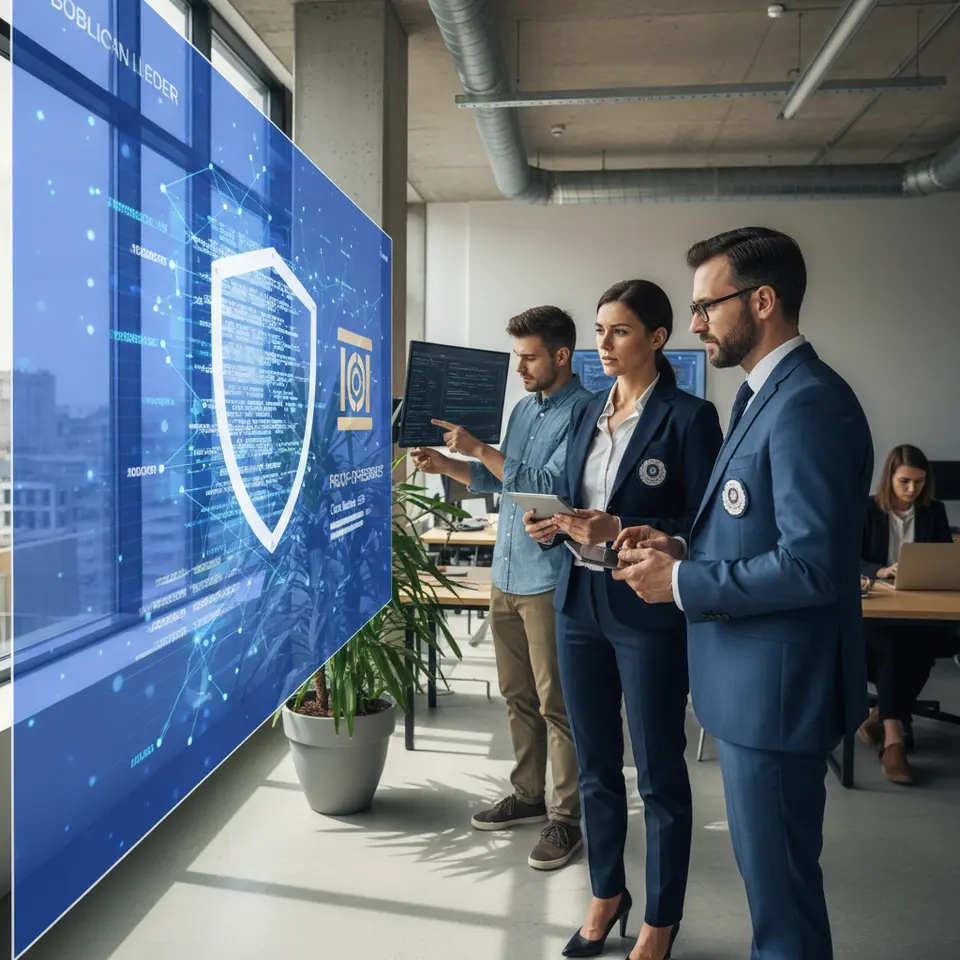
Zero-knowledge proofs are reshaping multiple facets of digital finance by introducing privacy at scale. One prominent use case is confidential transactions on public blockchains. Cryptocurrencies built on transparent ledgers typically expose transaction amounts and wallet addresses. By integrating zero-knowledge proofs, protocols such as Zcash enable shielded transactions that hide sender, recipient, and amount, while still allowing network participants to verify transaction validity. This balance of privacy and auditability is critical in preventing illicit misuse without compromising the decentralized ethos of public blockchains.
Another major application is proof of reserves and regulatory compliance. Cryptocurrency exchanges and custodial services must demonstrate solvency and meet reserve requirements under financial oversight. Using zero-knowledge proofs, these platforms can publish proof of reserve without disclosing client balances or transaction histories. Auditors and regulators receive strong assurances that obligations are met, while customers maintain confidentiality over their holdings. Similarly, advanced KYC (Know Your Customer) and AML (Anti-Money Laundering) processes can deploy zero-knowledge identity systems. Customers prove age, residency, or risk profiles without uploading raw identity documents, reducing data storage risks and enhancing user trust.
Decentralized finance (DeFi) lending platforms are also benefiting from this technology. Borrowers can prove collateral adequacy with zk-SNARK-based circuits that validate asset value and loan-to-value ratios without exposing specific asset details. Protocols report increased user engagement as privacy-seeking clients opt for confidential lending solutions. In today’s digital landscape, these applications highlight the versatility of zero-knowledge proofs, providing robust privacy while maintaining financial integrity and regulatory alignment.
Advantages and Obstacles in Deployment
Adopting zero-knowledge proofs in financial systems offers substantial advantages. Enhanced data privacy reduces the attack surface by limiting sensitive information held on centralized servers. Regulatory alignment improves as institutions can generate verifiable proofs of compliance while respecting client confidentiality. Interoperability is also strengthened; zero-knowledge proof systems can be integrated with existing blockchain platforms and traditional financial rails through bridging frameworks and secure APIs. Furthermore, by minimizing data exposure, these proofs foster customer trust and open new markets where stringent privacy requirements previously hindered digital finance adoption.
Nonetheless, implementing this technology at scale entails challenges. Trusted setups required for certain zk-SNARK protocols involve complex ceremonies and multi-party computations to ensure parameter integrity. Proof generation and verification, though optimized, still incur computational overhead that can impact throughput and latency. Integrating zero-knowledge proof frameworks into legacy banking systems demands specialized cryptography expertise and careful key management processes. Standardization efforts are in progress but not yet universally adopted, leaving organizations to navigate multiple competing protocols. Finally, ongoing research into quantum-resistant schemes means institutions must plan for evolving threat models and potential future upgrades.
Implementing Privacy-First Protocols in Traditional Finance
Major banks and clearinghouses are currently piloting zero-knowledge proof frameworks to enhance interbank settlements and wholesale payments. By establishing permissioned blockchain channels augmented with zero-knowledge layers, financial institutions can reconcile ledgers, net positions, and finalize trades without sharing granular transaction data. Early trials by global clearing networks have demonstrated settlement finality within seconds, end-to-end confidentiality, and operational cost savings compared to legacy messaging systems. These initiatives indicate that zero-knowledge proofs can co-exist alongside SWIFT, Fedwire, and other conventional rails.
To successfully deploy privacy-first systems, organizations should take a phased approach. First, conduct proof-of-concept pilots focusing on low-risk processes such as internal auditing or proof of reserves. Collaborate with cryptography research teams and engage regulators early to align on compliance requirements. Next, invest in open-source libraries—projects like libsnark, zkSync, and Circom offer foundational tools to build custom circuits. Emphasize robust key management and secure parameter generation, leveraging multi-party computation ceremonies or distributed key generation platforms to mitigate trusted setup risks. Finally, foster industry collaboration through consortia and standardization bodies, ensuring interoperability across networks and future-proofing solutions against regulatory changes and emerging threats.
Conclusion
Zero-knowledge proofs represent a paradigm shift in how digital finance can protect privacy without sacrificing transparency or compliance. By enabling verifiable claims without exposing raw data, these protocols address the growing demand for confidentiality in an era of frequent breaches and heightened regulatory scrutiny. From confidential blockchain transactions and proof-of-reserve attestations to privacy-preserving DeFi services and interbank settlement channels, zero-knowledge proofs are laying the foundation for a more secure, user-centric financial infrastructure. As computational efficiencies improve and standardization matures, organizations that embrace this technology today will gain a competitive edge in delivering secure, compliant, and privacy-preserving services in the years ahead (2026).
Frequently Asked Questions
1. What exactly are zero-knowledge proofs in an educational context?
They are cryptographic methods allowing students to prove they meet a requirement (like passing a test or being enrolled) without revealing any extra personal data. This minimizes data collection and creates a safer digital environment.
2. How does digital privacy improve student grades?
A secure space lowers stress hormones. When students feel their data is safe thanks to zero-knowledge proofs, their executive functioning improves, allowing for better memory retention, problem-solving skills, and higher academic performance.
3. Are zero-knowledge proofs only for universities?
No. While they sound complex, the core principles can be scaled and integrated into K-12 systems through user-friendly software that handles the cryptography behind the scenes.
4. How does this concept support student mental health?
Students often suffer from surveillance anxiety. By using zero-knowledge proofs to limit how much they are monitored, schools create a calm, trusting atmosphere where learners can explore ideas without fear of judgment.
5. What is the first step a school should take to implement this?
The most impactful first step is a data audit. Identify where student privacy is compromised and begin introducing platforms utilizing zero-knowledge proofs to handle basic identity and attendance verification.
6. Do students actually focus better with zero-knowledge proofs?
Yes. When students are trusted to manage their learning without invasive trackers, they develop intrinsic motivation and take greater responsibility for their own educational outcomes in a calm state of mind.
7. How do teachers manage a classroom using this technology?
Teachers act as guides. They rely on the binary verification (pass/fail, complete/incomplete) provided by zero-knowledge proofs to ensure progress, allowing them to focus on human connection rather than data analysis.
8. What role does cryptography play in calm environments?
Cryptography acts as an invisible shield. By securing data quietly, zero-knowledge proofs maintain the serene atmosphere of the learning environment, free from loud alerts, data breaches, and privacy concerns.
9. Can zero-knowledge proofs help reduce student burnout?
Absolutely. By removing the constant friction and privacy worries of traditional digital schooling, students expend less mental energy coping with surveillance, leaving more energy for actual learning.
10. Where can administrators learn more about this technology?
Schools can consult cybersecurity experts and educational technology boards that focus on privacy. Partnering with university computer science departments can also help integrate zero-knowledge proofs smoothly.




Embedded Finance and the Future of Seamless Digital Financial Services
How Financial Technology Is Transforming Digital Payments
The Importance of Risk Management in Modern Business
What Is Financial Technology (FinTech)? Everything You Need to Know
The Importance of Risk Management in Modern Business
How Financial Technology Is Transforming Digital Payments
How Digital Banking Is Changing the Future of Financial Management
How Financial Consulting Supports Sustainable Business Growth