
Digital Process Automation (DPA) is transforming financial services by automating complex, end-to-end workflows. By combining technologies like AI, RPA, BPM, and low-code platforms, DPA improves efficiency, accuracy, compliance, and customer experience. From loan processing and KYC to fraud detection and account opening, DPA enables faster, scalable, and more inclusive financial services while supporting long-term digital transformation.
Digital transformation has made a deep impact on the financial sector. Among the many innovations, Digital Process Automation (DPA) has emerged as a vital force. But what is digital process automation in financial services, really?
It’s more than just software. It’s a strategy that helps banks, insurance companies, and other financial institutions streamline their operations using digital tools. Let’s break it down.
What is Digital Process Automation?
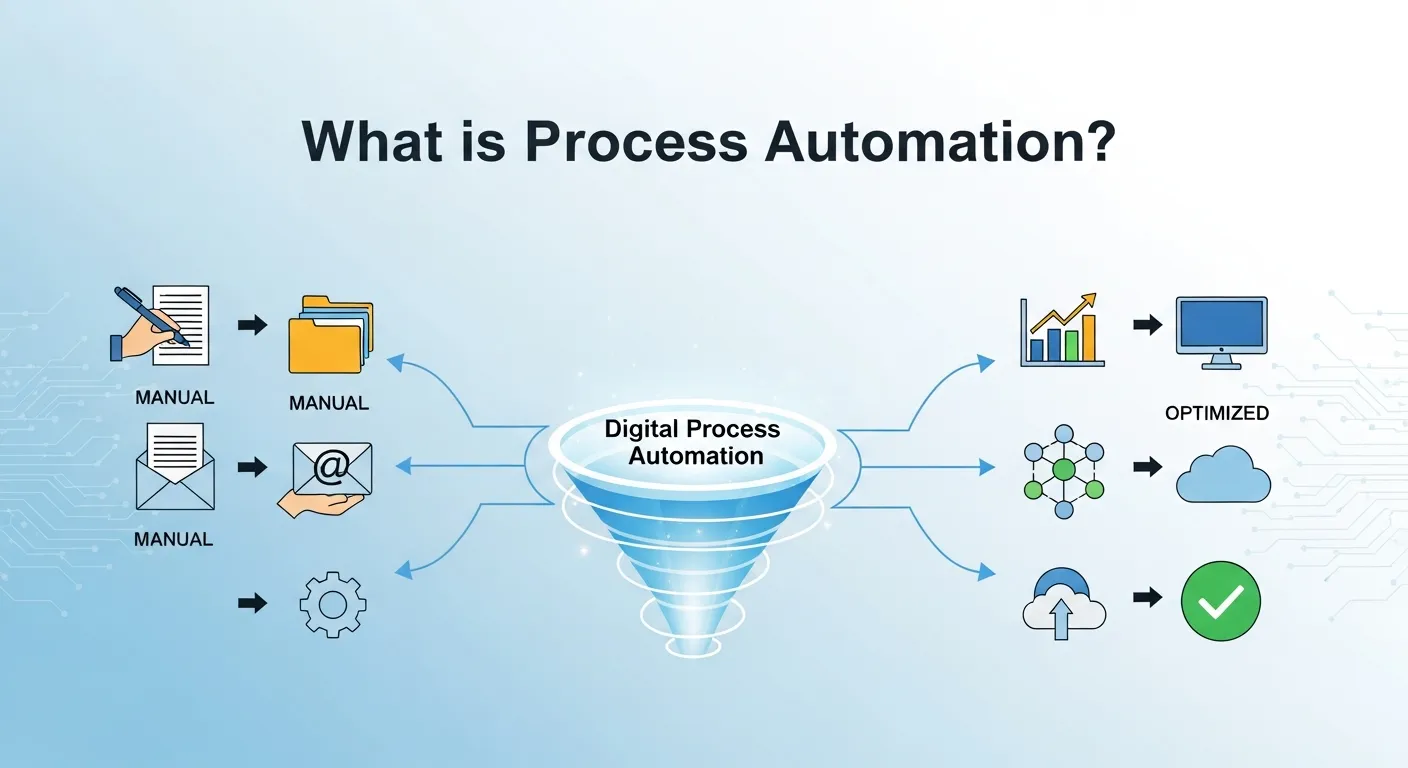
Digital Process Automation (DPA) refers to using modern technology to automate complex, multistep business processes. Unlike simple task automation, DPA handles end-to-end workflows.
Think of it as a way to eliminate manual paperwork, reduce delays, and ensure consistent performance across departments. Digital automation often plays a key role in expanding what financial and digital inclusion can achieve.
DPA is not a tool but a system powered by technologies like:
-
Artificial intelligence (AI)
-
Machine learning (ML)
-
Robotic Process Automation (RPA)
-
Business Process Management (BPM)
-
Low-code and no-code platforms
In financial services, it’s used to handle everything from loan approvals to fraud detection, with speed and accuracy.
Why Financial Services Need DPA
The financial world is known for its complex operations, strict regulations, and need for precision. Traditional systems often rely on legacy software and manual inputs, which slow things down.
This is where DPA steps in.
By automating workflows, banks and financial institutions can:
-
Improve accuracy
-
Reduce processing time
-
Cut operational costs
-
Ensure regulatory compliance
-
Deliver faster customer service
In an industry where seconds matter, automation is no longer optional—it’s necessary.
Role of Digital Process Automation in Financial and Digital Inclusion
Digital Process Automation plays a critical role in expanding financial and digital inclusion by removing operational barriers that slow down access to services. When financial institutions automate workflows, they can serve more customers efficiently—especially those in underserved or remote areas.
DPA enables institutions to offer faster onboarding, simplified documentation, and real-time decision-making, which are essential for reaching unbanked and underbanked populations.
How DPA supports inclusion:
-
Reduces manual paperwork and in-branch dependency
-
Speeds up access to loans, accounts, and digital payments
-
Lowers operational costs, making services more affordable
-
Enables scalable service delivery across rural and urban areas
By making processes faster and more accessible, Digital Process Automation turns technology into a practical inclusion tool rather than a privilege.
Common Use Cases in Finance
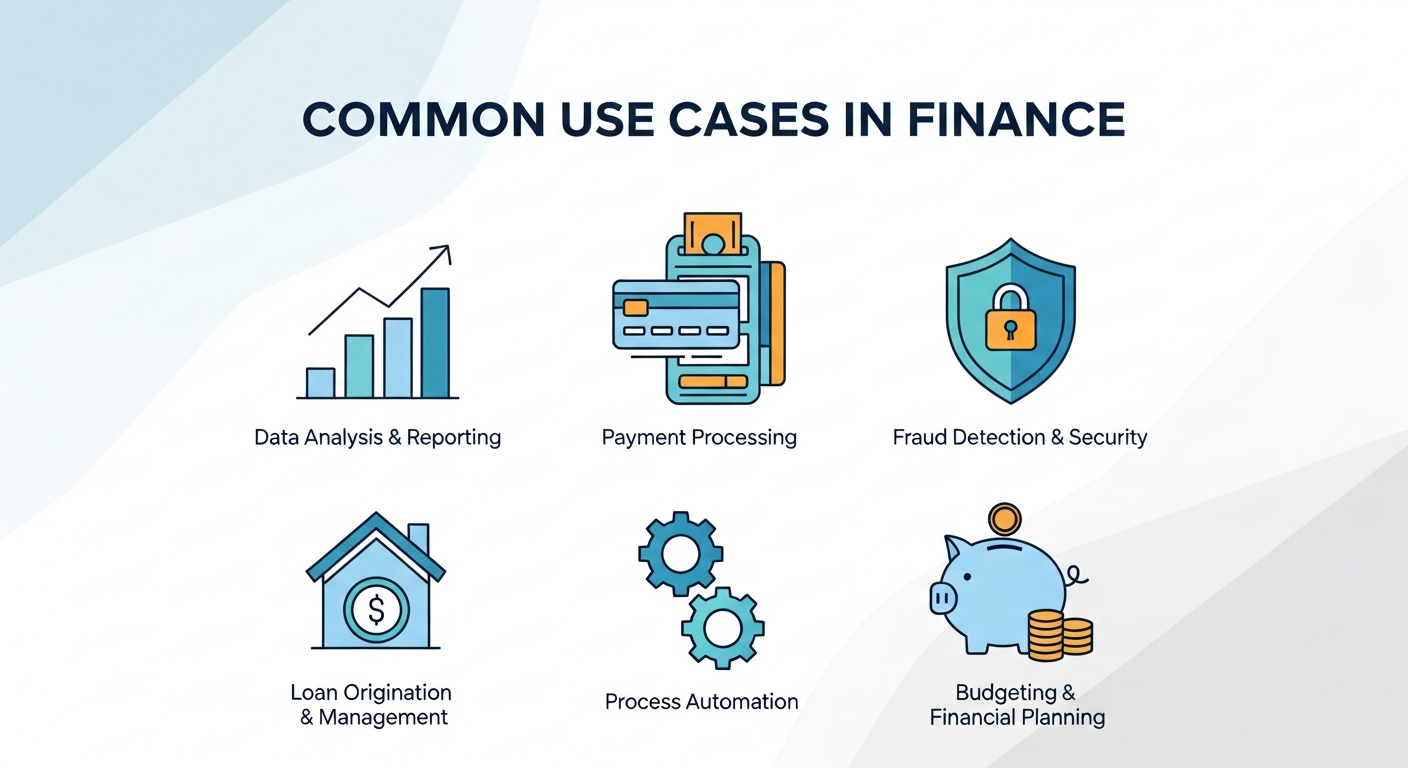
Loan Processing
Traditionally, loan approvals involve multiple forms, manual credit checks, and long wait times. DPA automates these steps by integrating data from multiple systems, checking eligibility, and even sending approval emails—all within minutes.
KYC and Compliance
Know Your Customer (KYC) processes are tedious but essential. With DPA, these can be streamlined. Data from various sources can be collected, verified, and stored with full audit trails, reducing human error.
Fraud Detection
By integrating real-time data analysis, DPA systems can flag unusual transactions. These alerts help financial institutions take quick action, protecting both the customer and the business.
Account Opening
Digital onboarding, including document uploads and identity verification, can be automated. What once took days now takes hours—or even minutes.
Digital Process Automation Across Key Financial Touchpoints
Digital Process Automation impacts nearly every customer interaction within financial services. From the first point of contact to long-term account management, DPA ensures consistency, speed, and accuracy.
Key touchpoints improved by DPA include:
-
Customer onboarding and identity verification
-
Transaction monitoring and risk assessment
-
Customer support ticket routing and resolution
-
Reporting, audits, and regulatory submissions
Because DPA manages end-to-end workflows, it reduces friction across departments and ensures that customers experience seamless service at every stage.
Key Benefits of Digital Process Automation
1. Enhanced Customer Experience
Today’s customers expect speed and convenience. DPA helps deliver both. Whether it’s approving a credit card or resolving a support issue, automation ensures faster, smoother service.
2. Operational Efficiency
Employees no longer have to juggle spreadsheets and paperwork. Automated processes reduce manual work, freeing staff for higher-level tasks like customer relationship management or strategic planning.
3. Better Compliance
The financial sector is heavily regulated. DPA tools can ensure that every action taken is recorded, auditable, and compliant with laws like GDPR, AML, and more.
4. Scalable Processes
As your business grows, manual systems struggle to keep up. DPA can scale effortlessly. Whether it’s 100 or 10,000 applications, the process remains stable and reliable.
Strategic Advantages of Digital Process Automation for Financial Institutions
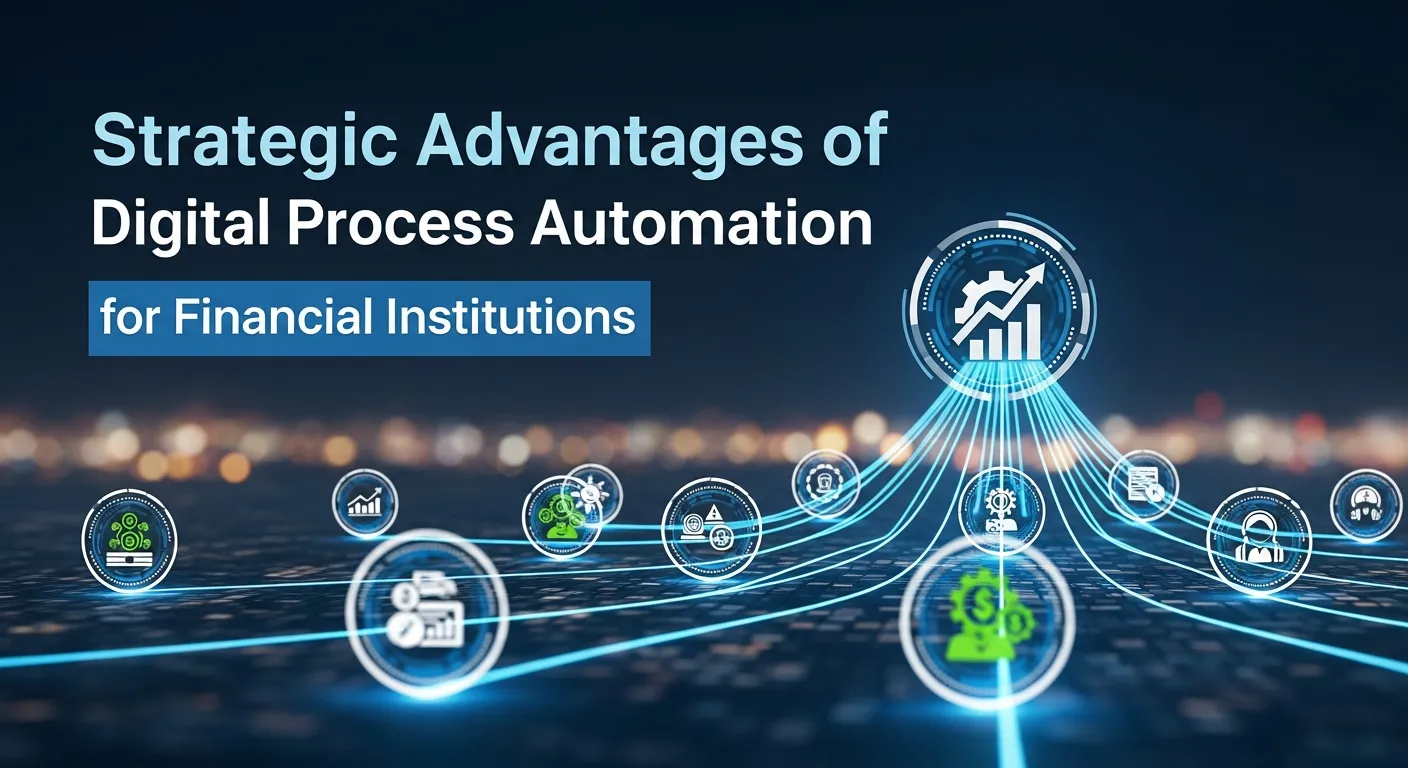
Beyond operational efficiency, Digital Process Automation provides long-term strategic value. Institutions that adopt DPA gain agility in responding to market changes, regulatory updates, and customer expectations.
Strategic advantages include:
-
Faster product launches through automated workflows
-
Data-driven decision-making using real-time insights
-
Reduced dependency on legacy manual systems
-
Improved collaboration between compliance, operations, and IT teams
In a competitive financial landscape, DPA enables organizations to innovate while maintaining control and compliance.
Digital Process Automation and Customer Trust in Financial Services
Digital Process Automation helps financial institutions build stronger customer trust by delivering consistent, transparent, and error-free services. Automated workflows reduce human mistakes and ensure that every transaction, request, or approval follows the same verified process.
Because DPA maintains clear digital records and audit trails, customers gain confidence in how their data is handled. Faster responses, real-time updates, and predictable outcomes make Digital Process Automation a key trust-building element in modern financial services.
How DPA Differs from RPA and BPM
It’s easy to confuse Digital Process Automation with Robotic Process Automation (RPA) or Business Process Management (BPM). Let’s clear that up.
-
RPA automates individual tasks, like extracting data from emails.
-
BPM is more about managing and optimizing existing processes.
-
DPA combines both—automating whole workflows from start to finish.
In simple terms, if RPA is a robot doing one task, DPA is the system controlling multiple robots across an entire business line.
Digital Process Automation vs Traditional Financial Operations
The shift from traditional manual systems to Digital Process Automation marks a fundamental change in how financial services operate. The table below highlights this transformation clearly.
| Aspect | Traditional Processes | Digital Process Automation |
|---|---|---|
| Processing Time | Days or weeks | Minutes or hours |
| Error Rate | High due to manual input | Significantly reduced |
| Scalability | Limited by human resources | Easily scalable |
| Compliance Tracking | Manual and fragmented | Automated with audit trails |
| Customer Experience | Slow and inconsistent | Fast and seamless |
This comparison shows why Digital Process Automation is becoming the backbone of modern financial operations.
Technology Behind DPA in Financial Services
Several technologies work together in DPA platforms:
-
AI and ML for decision-making and pattern recognition
-
APIs to integrate multiple systems
-
Cloud platforms for scalability and accessibility
-
Low-code tools to design processes with minimal programming
These technologies ensure that even legacy banking systems can connect with modern digital tools, allowing for full digital transformation.
Challenges to Consider
Despite its benefits, implementing DPA isn’t plug-and-play. Financial institutions must:
-
Ensure data security
-
Train employees to work with new systems
-
Re-architect legacy systems for compatibility
-
Monitor performance continuously
However, with the right planning and tools, these hurdles are manageable.
Real-World Example
Let’s take the case of a mid-sized bank implementing DPA for credit card applications.
Before automation, the process took 7–10 days. After DPA, the same process took less than 24 hours. Manual verification was replaced by real-time checks using APIs connected to credit bureaus. Approval emails and card activation were automated. Customer satisfaction scores improved within weeks.
This is the power of digital process automation in action.
Why Digital Process Automation Is a Long-Term Investment
Digital Process Automation is not a short-term technology upgrade—it’s a long-term investment in operational resilience. As customer expectations grow and regulations become more complex, manual systems simply cannot keep pace.
By adopting DPA early, financial institutions position themselves for:
-
Sustainable growth
-
Continuous compliance readiness
-
Improved trust and transparency
-
Long-term cost optimization
DPA ensures that financial services remain efficient, inclusive, and future-ready.
How Digital Process Automation Enables Data-Driven Financial Decisions
Digital Process Automation allows financial institutions to move beyond manual reporting and delayed insights. By automating data collection and analysis across workflows, DPA supports faster and more accurate decision-making.
With Digital Process Automation in place, banks and financial organizations can:
-
Analyze customer behavior in real time
-
Detect risks and inefficiencies early
-
Improve product personalization and pricing
-
Support strategic planning with reliable data
This data-driven approach ensures that financial services remain agile, competitive, and aligned with evolving customer needs.
Future of Digital Automation in Finance

As artificial intelligence becomes more advanced, DPA will evolve too. Predictive analytics, conversational AI, and blockchain are already being integrated into automation platforms.
We may soon see a future where financial services run on mostly autonomous systems—guided by human strategy, but executed by intelligent software.
That future isn’t decades away. It’s happening now.
Conclusion
Digital Process Automation is no longer optional for financial institutions—it is essential. By automating workflows end to end, DPA reduces complexity, strengthens compliance, improves customer trust, and enables data-driven decisions. As financial services continue to evolve, organizations that adopt DPA will be better equipped to scale, innovate, and stay competitive in a digital-first world.
FAQs on Digital Process Automation in Financial Services
1. What is Digital Process Automation (DPA) in financial services?
Digital Process Automation (DPA) is the use of advanced digital technologies to automate complex, multi-step financial processes end to end. In financial services, it is commonly applied to areas such as loan approvals, KYC verification, regulatory compliance, claims processing, and customer onboarding, ensuring speed, accuracy, and consistency.
2. How is DPA different from simple automation?
Simple automation focuses on individual tasks, such as data entry or file transfers. DPA, on the other hand, manages entire workflows from initiation to completion. It connects multiple systems, departments, and decision points, allowing financial institutions to automate processes holistically rather than in isolated steps.
3. Why is Digital Process Automation important for banks?
Banks operate in a highly regulated and competitive environment. Digital Process Automation helps banks reduce processing time, minimize errors, improve regulatory compliance, and enhance customer experience while lowering operational costs and reducing dependence on manual processes.
4. What technologies are used in Digital Process Automation?
DPA is powered by a combination of technologies, including artificial intelligence (AI), machine learning (ML), Robotic Process Automation (RPA), Business Process Management (BPM), APIs, cloud infrastructure, and low-code or no-code platforms. Together, these technologies enable intelligent, scalable, and adaptable automation.
5. How does DPA improve customer experience?
Digital Process Automation improves customer experience by accelerating service delivery and reducing friction. Faster approvals, real-time status updates, fewer errors, and consistent service across channels lead to smoother and more satisfying customer interactions.
6. Can Digital Process Automation help with regulatory compliance?
Yes. DPA helps financial institutions maintain compliance by enforcing standardized processes, generating automated audit trails, and ensuring accurate record-keeping. This makes it easier to comply with regulations such as AML, GDPR, and other financial governance requirements.
7. What are common use cases of DPA in finance?
Common use cases of Digital Process Automation in finance include loan processing, customer onboarding, KYC and compliance checks, fraud detection, transaction monitoring, regulatory reporting, and customer support workflow automation.
8. How does DPA support financial and digital inclusion?
DPA supports financial and digital inclusion by reducing operational complexity and costs. Automated onboarding, simplified documentation, and faster service delivery allow financial institutions to reach underserved, unbanked, and remote populations more effectively.
9. Is Digital Process Automation scalable?
Yes. One of the key advantages of DPA is scalability. Automated workflows can handle growing volumes of transactions, applications, or customers without compromising performance, making DPA suitable for both small institutions and large financial enterprises.
10. What challenges come with implementing DPA?
Implementing DPA can present challenges such as data security risks, integration with legacy systems, employee training requirements, and the need for continuous monitoring and optimization. However, with proper planning and governance, these challenges can be successfully managed.
11. How does DPA enable data-driven decision-making?
Digital Process Automation continuously captures and analyzes data across workflows. This real-time insight helps financial institutions identify risks, detect inefficiencies, understand customer behavior, and make informed strategic and operational decisions.
12. Is Digital Process Automation a long-term investment?
Absolutely. Digital Process Automation is a long-term investment that supports sustainable growth, operational resilience, compliance readiness, and ongoing digital transformation. As financial services evolve, DPA provides the flexibility and efficiency needed to remain competitive.






Embedded Finance and the Future of Seamless Digital Financial Services
How AI-Based Fraud Detection is Protecting Digital Payments
Harnessing AI and Machine Learning for Fraud Detection in Digital Finance
Digital Marketing for Financial Services: Strategies That Deliver Results
Digital Twin Technology in Finance: How Virtual Models Are Transforming Risk Management
The Future of Personal Finance: Autonomous Finance and AI Money Management
AI Credit Scoring: Revolutionizing SME Banking and Digital Loans
AI Fraud Detection: How Banks Prevent Financial Crime in Real Time