

Money management is undergoing a massive transformation. Understanding the latest innovations in digital finance helps you make smarter, faster, and more secure financial decisions moving forward.
This comprehensive guide explores the most impactful technological shifts reshaping the financial sector. You will discover actionable insights on artificial intelligence, blockchain technology, seamless payment systems, and sustainable green fintech to optimize your financial strategies and outpace industry changes.
The Evolution of AI-Powered Banking
Artificial intelligence completely alters how banking institutions operate and how customers interact with their money. Banks no longer rely solely on human advisors to analyze data or detect fraud. Instead, they deploy advanced machine learning algorithms to process millions of transactions per second. This shift ensures higher accuracy, personalized customer experiences, and robust security frameworks.
Hyper-Personalized Financial Services
Customers expect tailored advice. AI systems analyze spending habits, income streams, and investment portfolios to deliver customized recommendations. For example, if a user frequently spends money on travel, the AI might suggest a specific rewards credit card or automatically allocate funds into a travel savings account. This level of personalization increases customer retention and helps users achieve their financial goals faster.
Intelligent Fraud Detection
Security remains a top priority for any financial institution. Traditional rule-based security systems often flag legitimate transactions as fraudulent or miss sophisticated attacks entirely. Modern AI systems learn consumer behavior patterns. When a transaction deviates from the norm, the system instantly flags it for review. This real-time analysis drastically reduces financial losses and protects sensitive consumer data.
Automated Customer Support
Chatbots and virtual assistants handle complex customer inquiries 24/7. These tools utilize natural language processing to understand context, resolve disputes, and execute basic account changes. By automating routine tasks, banks free up human agents to handle high-level advisory roles, improving overall operational efficiency.
Expert Insights: To maximize the benefits of AI in banking, always keep your financial profile updated. The more accurate data the AI has, the better it can tailor its recommendations to your specific needs. Look for institutions that transparently share how they use your data to power their AI tools.
Blockchain and the Rise of Decentralized Systems

Blockchain technology moves far beyond its origins in cryptocurrency. It provides a secure, transparent, and decentralized ledger system that revolutionizes how we verify and record transactions. By removing intermediaries, blockchain reduces costs and accelerates settlement times across global networks.
The Mechanics of Decentralized Finance
Decentralized finance allows users to lend, borrow, and trade assets without traditional banks. These platforms operate on public blockchains, ensuring transparency and accessibility. Users retain complete control over their assets through private digital wallets, eliminating the need to trust a centralized authority with their funds.
Implementing Smart Contracts
Smart contracts are self-executing agreements with the terms written directly into code. When predefined conditions are met, the contract automatically executes the transaction. This innovation removes the need for lawyers or escrow services in standard financial agreements.
|
Feature |
Traditional Contracts |
Smart Contracts |
|---|---|---|
|
Execution Speed |
Days or weeks |
Instantaneous |
|
Intermediaries |
Lawyers, notaries, banks |
None |
|
Cost |
High fees |
Minimal network fees |
|
Transparency |
Limited to involved parties |
Fully visible on the blockchain |
|
Error Rate |
Prone to human error |
Highly accurate |
Cross-Border Payments
Sending money internationally traditionally involves high fees and extended waiting periods. Blockchain networks facilitate cross-border transactions in minutes, regardless of the destination. This efficiency greatly benefits multinational corporations managing global payrolls and individuals sending remittances to their families overseas.
Common Mistakes to Avoid: Never lose your private keys when interacting with blockchain networks. Unlike traditional banking, there is no password reset button. If you lose access to your private wallet keys, you lose your assets permanently.
Transforming Transactions with Digital Payments
The transition from physical cash to digital payments accelerated rapidly over the last decade. Consumers demand frictionless checkout experiences, while merchants seek reliable systems that lower processing fees and improve cash flow.
Contactless and Mobile Wallets
Mobile wallets store payment information securely on smartphones and smartwatches. Using near-field communication technology, consumers can pay for goods simply by tapping their devices at checkout terminals. This method masks the actual card number, providing an extra layer of security against skimming devices.
Peer-to-Peer Payment Networks
Splitting bills and paying friends is now effortless. Peer-to-peer applications link directly to bank accounts or debit cards, allowing instant fund transfers. These platforms frequently incorporate social feeds, transforming basic transactions into engaging user experiences.
Buy Now, Pay Later Structures
Consumers increasingly prefer flexible payment options. Buy now, pay later services integrate directly into the checkout process, allowing buyers to split their purchases into interest-free installments. This model increases conversion rates for merchants and provides consumers with short-term credit without the strict requirements of traditional credit cards.
Pro Tips for Merchants: Always offer multiple digital payment options at checkout. Data shows that cart abandonment drops significantly when customers see their preferred payment method, whether it is a mobile wallet, a peer-to-peer app, or an installment plan.
Sustainable Growth Through Green Fintech

Environmental sustainability influences financial decision-making globally. Investors and consumers actively seek out companies that prioritize ecological responsibility. Green fintech merges financial services with environmental tracking, creating tools that promote sustainable practices.
Carbon Footprint Tracking
Many modern banking applications now track the carbon footprint of individual transactions. By analyzing the merchant category and purchase amount, the app estimates the environmental impact of a purchase. This visibility encourages consumers to alter their spending habits and support eco-friendly businesses.
Sustainable Investment Platforms
Environmental, social, and governance investing is no longer a niche market. Dedicated investment platforms allow users to build portfolios composed entirely of companies committed to sustainable practices. These platforms use rigorous screening processes to ensure the underlying assets meet strict environmental standards.
Green Bonds and Lending
Financial institutions increasingly issue green bonds to fund climate-related projects. Furthermore, lenders offer preferential interest rates on loans used for sustainable purposes, such as purchasing electric vehicles or installing solar panels. This financial incentive drives widespread adoption of green technologies.
Expanding Access with Embedded Finance
Embedded finance integrates financial services into non-financial platforms. You no longer need to visit a bank or open a dedicated finance app to access loans, insurance, or payment processing.
Seamless E-commerce Integration
When you purchase an airline ticket and instantly add travel insurance at checkout, you are using embedded finance. The airline acts as the distributor for an underlying insurance provider. This seamless integration improves the user experience and creates new revenue streams for non-financial companies.
Empowering the Gig Economy
Rideshare drivers and freelance workers benefit massively from embedded finance. Platforms offer instant payouts directly into driver wallets, bypassing the traditional two-day waiting period for bank transfers. Some platforms even offer customized debit cards and tax withholding tools directly within their app ecosystems.
Internal Linking Strategy: To understand how these embedded systems rely on data sharing, review our comprehensive guide on open banking frameworks.
Navigating Regulatory Technology (RegTech)
Compliance costs consume a massive portion of financial institution budgets. RegTech uses cloud computing, big data, and machine learning to automate compliance processes and monitor regulatory changes in real time.
Automating KYC and AML
Know Your Customer and Anti-Money Laundering checks require extensive documentation and verification. RegTech solutions use biometric scanning and document verification algorithms to authenticate identities in seconds. This rapid onboarding process satisfies regulatory requirements without frustrating new customers.
Real-Time Reporting
Financial regulations change constantly. RegTech platforms connect directly to regulatory databases, automatically updating compliance protocols when laws shift. This proactive approach prevents costly fines and ensures institutions remain fully compliant across different jurisdictions.
Achieving True Financial Inclusion
Technology breaks down geographical and economic barriers, bringing banking services to underserved populations worldwide. Financial inclusion remains a primary goal for global economic developers.
Mobile-First Banking in Developing Nations
In regions lacking physical bank branches, mobile phones serve as the primary financial tool. Telecommunication companies provide text-based payment systems that allow users to store money, pay bills, and transfer funds using basic cellular networks.
Alternative Credit Scoring
Millions of people lack traditional credit histories, making it impossible to secure loans. Fintech companies use alternative data points—such as utility payments, mobile phone usage, and rent history—to generate accurate credit scores. This innovative approach unlocks capital for small business owners and individuals previously excluded from the banking system.
Common Mistakes to Avoid: Do not assume that high-tech solutions are required for financial inclusion. Often, the most effective tools in developing markets are built on simple, existing infrastructure like SMS text messaging.
Enhancing Cybersecurity Protocols

As financial services migrate online, the attack surface for cybercriminals expands. Protecting digital assets requires multi-layered security protocols that adapt to emerging threats.
Biometric Authentication
Passwords are fundamentally insecure. Financial applications now rely on biometric markers like facial recognition, fingerprint scanning, and voice analysis. These physical characteristics are incredibly difficult for hackers to replicate, providing a robust defense against unauthorized access.
Multi-Factor Authentication (MFA)
Even with biometrics, MFA remains essential. Requiring a secondary verification step—such as a time-sensitive code sent to a trusted device—ensures that a compromised password does not lead to a compromised account.
Pro Tips for Users: Never use the same password across multiple financial accounts. Invest in a reputable password manager to generate and store complex, unique passwords for every application you use.
The Future Trajectory of Open Banking
Open banking forces traditional banks to share consumer financial data with third-party providers through secure application programming interfaces (APIs). This data liberation fosters intense competition and rapid innovation.
Unified Financial Dashboards
Consumers often hold accounts across multiple institutions—a checking account here, a mortgage there, and an investment portfolio elsewhere. Open banking enables third-party apps to aggregate this data into a single, comprehensive dashboard. You can view your entire net worth and manage your cash flow from one centralized location.
Competitive Lending Marketplaces
When third-party platforms can access your financial history, they can instantly match you with the best loan rates from dozens of providers. This transparency prevents banks from monopolizing their customer base and forces them to offer highly competitive products.
Conclusion
Understanding digital finance gives you a distinct advantage in navigating modern wealth management. By leveraging AI-driven tools, adopting secure blockchain networks, and supporting sustainable fintech, you protect and grow your assets efficiently. Ready to upgrade your financial toolkit? Start exploring automated banking applications today to streamline your financial growth.
Frequently Asked Questions
What are the main benefits of AI in banking?
AI provides numerous benefits, including personalized financial advice, rapid fraud detection, and automated customer service. It analyzes large datasets to predict spending patterns, helping users save money. For banks, AI reduces operational costs and minimizes human error in processing transactions.
How does blockchain improve financial security?
Blockchain uses a decentralized ledger system secured by advanced cryptography. Because data is distributed across thousands of network nodes, hackers cannot alter transaction records without controlling the majority of the network. This makes blockchain highly resistant to tampering and fraud.
What is the difference between a mobile wallet and a digital payment app?
A mobile wallet securely stores your credit or debit card information on your device for contactless payments at physical stores. A digital payment app primarily focuses on transferring money between users, like paying a friend for dinner. Many modern applications now combine both functionalities.
Are Buy Now, Pay Later services bad for my credit score?
It depends on the provider and your payment behavior. Many BNPL services do not perform hard credit checks or report to credit bureaus, meaning they won’t impact your score if you pay on time. However, if you default on payments, they may send the debt to collections, which will severely damage your credit.
How does green fintech help the environment?
Green fintech aligns financial goals with environmental sustainability. It offers tools that track the carbon footprint of your purchases, provides platforms for investing in eco-friendly companies, and facilitates the issuance of green bonds to fund renewable energy projects.
What exactly is embedded finance?
Embedded finance is the integration of financial services into non-financial platforms. Examples include ride-sharing apps offering instant driver payouts, e-commerce sites providing insurance at checkout, or software companies offering branded credit cards to their users.
How do smart contracts work?
Smart contracts are digital agreements written in code on a blockchain network. They automatically execute the terms of an agreement when specific conditions are met. For example, a flight insurance smart contract could automatically deposit funds into your account the moment a flight is officially delayed.
Is open banking safe to use?
Yes, open banking is highly secure when regulated properly. It relies on secure Application Programming Interfaces (APIs) to transfer data. You must explicitly grant permission for third parties to access your data, and you can revoke that permission at any time.
How does alternative credit scoring work?
Traditional credit scoring relies on debt repayment history. Alternative credit scoring looks at different data points, such as timely utility payments, rent history, and steady income deposits. This allows people without traditional loans or credit cards to prove their financial reliability.
What is RegTech and why do banks need it?
RegTech, or Regulatory Technology, uses software to help financial institutions comply with complex industry regulations efficiently. Banks need it because manual compliance checks are slow, expensive, and prone to human error. RegTech automates these processes, saving time and reducing the risk of massive regulatory fines.




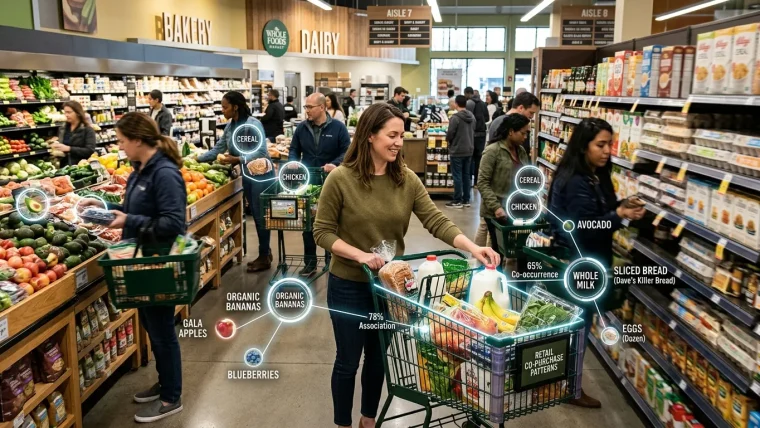

Market basket analysis: Transforming Education Through Calm and Focus
FinTech and Traditional Banking: How Old Banks Are Adapting
Digital Finance VS Traditional Finance: What’s The Real Difference?
Digital Twin Technology in Finance: How Virtual Models Are Transforming Risk Management
Market basket analysis: Transforming Education Through Calm and Focus
Zero-Knowledge Proofs: Transforming Education Through Calm and Focus
Blockchain Interoperability in Education
Bridging the Unbanked Gap with Mobile Digital Finance