

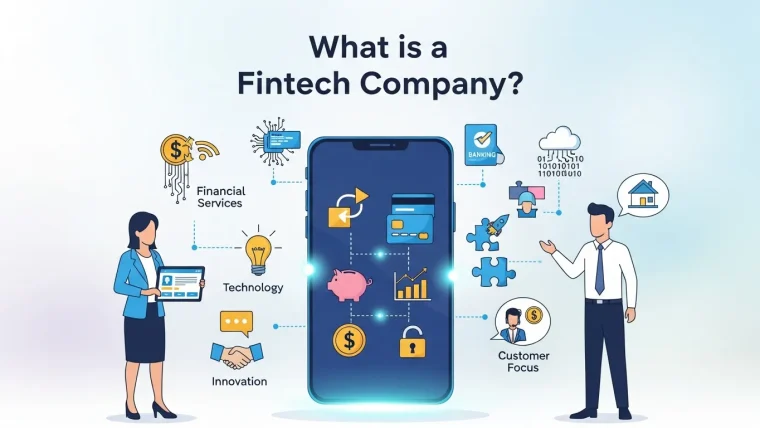
A Fintech Firm leverages technology to improve and automate financial services such as payments, lending, investing, insurance, and business financing. By operating through digital-first platforms, fintech firms provide faster transactions, lower costs, personalized experiences, and broader financial inclusion. Compared to traditional banks, they offer greater agility, innovation, and accessibility. From digital wallets like PayPal to investment platforms like Robinhood and crypto exchanges such as Coinbase, fintech firms are reshaping how individuals and businesses manage money in the modern economy.
The sector of finance technology is often referred to as fintech changed our way of dealing with money. From digital wallets to peer-to -peer lending, fintech companies have made managing finances easier more efficient and often, more transparent. What is the purpose of fintech companies? Who are they designed to serve and how do they disrupt the traditional banking system?
If you’re a tech-savvy user or finance professional, or an investor interested in the expanding fintech sector this guide will provide you with the fundamentals of fintech companies as well as their purpose and the reasons why they are important in today’s world.
What is a Fintech Firm?
At its heart Fintech is a firm that makes use of technology to design and develop new financial services or enhance existing ones. The main objective of these companies is to streamline financial transactions such as investments, payments, as well as lending, by making easier and more accessible to users.
Fintech companies come in a variety of kinds, such as startups that are developing disruptive technologies, as well as established companies that are utilizing cutting-edge financial tools in order to improve customer service. These firms typically work in the nexus of technology and finance by blending the speed and efficacy of technology with the reliability required of financial institutions.
Why a Fintech Firm Matters in the Modern Economy
A Fintech Firm plays a crucial role in reshaping how individuals and businesses interact with money in today’s digital economy. As financial expectations evolve, users demand faster transactions, seamless digital access, and personalized financial solutions. Fintech firms bridge the gap between traditional banking limitations and modern technological capabilities by delivering services that are efficient, data-driven, and user-focused. Their ability to combine software innovation with financial expertise allows them to create flexible solutions that adapt quickly to changing market needs.
Beyond convenience, a Fintech Firm also contributes significantly to economic growth by empowering startups, freelancers, and small businesses with easier access to funding and digital payment systems. By lowering entry barriers and reducing operational costs, fintech platforms help stimulate entrepreneurship and financial participation across diverse communities.
Key Impacts of a Fintech Firm on the Economy:
-
Encourages financial inclusion for unbanked and underbanked populations
-
Reduces transaction costs through automation and digital infrastructure
-
Supports small businesses with faster funding and payroll solutions
-
Promotes transparency through real-time financial tracking
-
Enhances competition within the financial sector
Key Characteristics of Fintech Firms
To understand the factors that set the fintech firms distinct, it is important to recognize the common traits that define them. The majority of fintech companies share these traits:
- Customer-Centric Priority Fintech companies focus on user experience and offer smooth, intuitive platforms that are that are designed to satisfy the needs of customers.
- Innovation-driven, whether through A,I blockchain technology or data analytics, Fintech is always at the forefront of technology and innovation.
- accessibility Many fintech companies aim at “democratize” financial services by developing solutions that are accessible and affordable to markets that aren’t served.
- Digital-First Methodology Contrary to traditional banks, a majority of fintech companies operate completely online, eliminating the necessity to have physical locations.
- The ability to scale. Because of its digital character, fintech companies can quickly scale and serve millions of customers around the world without the cost of overheads associated with traditional institutions.
What Do Fintech Firms Do?
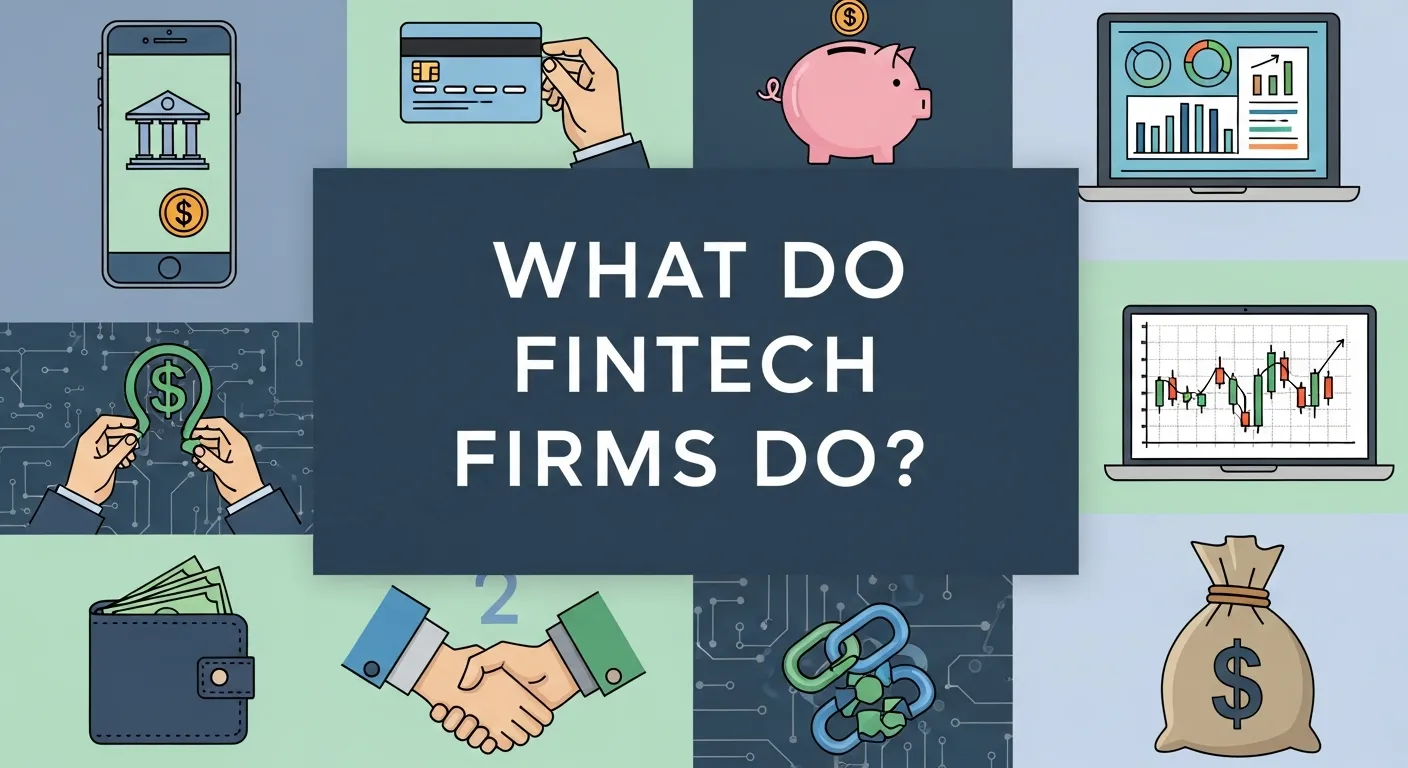
Digital Payments & Transfers
Many fintech firms are focused on making payments via digital channels faster and easier. Companies such as PayPal, Venmo, and others allow users to transfer and receive money across the globe in a matter of a few clicks. These platforms usually eliminate large processing costs and fees typically encountered in conventional banking platforms.
In addition, developments like real-time payment and contactless technology, which are enabled by fintech programs, are altering the world of payments.
Peer-to-Peer Lending and Crowdfunding
Platforms such as LendingClub and Kickstarter let entrepreneurs and consumers to get loans or money directly from their peers, avoiding banks completely. The democratization of borrowing and lending opens new opportunities for people to obtain financial aid as well as offering backers or lenders an opportunity to earn a profit from their investment.
Personal Finance Management
Fintech firms are helping consumers improve their control over their finances through apps like Mint as well as YNAB (You Need a Budget). These tools provide comprehensive insights into your spending habits, personalised savings plans and even investment opportunities that are based on your personal goals.
Investment Platforms
Traditional investment often required financial brokers or advisors. Fintech companies such as Robinhood and Betterment have simplified the process by allowing customers to trade bonds, stocks as well as cryptocurrencies using their phones. Robo-advisors make use of automation to build customized portfolios, eliminating the hassle of managing investments by hand.
Insurtech (Insurance Technology)
Fintech companies are disrupting insurance business, as well. Companies such as Lemonade make use of AI to make insurance policies quicker, analyze claims on a computer, and provide customized products for people or businesses that have specific requirements.
Blockchain & Cryptocurrency
Cryptocurrencies such as Bitcoin and Ethereum have a lot to do with their growth to fintech companies. Companies like Coinbase and Binance facilitate users to purchase and sell digital currencies safely. Blockchain technology has broader applications in areas such as the transparency of supply chains as well as the secure processing of transactions.
Business Lending & Financing
Fintech companies like Square and Kabbage are specifically designed for small-sized businesses, providing credit lines, loans, and payroll solutions that require minimal documentation and quicker approvals when in comparison to traditional banks.
Benefits of Fintech Firms
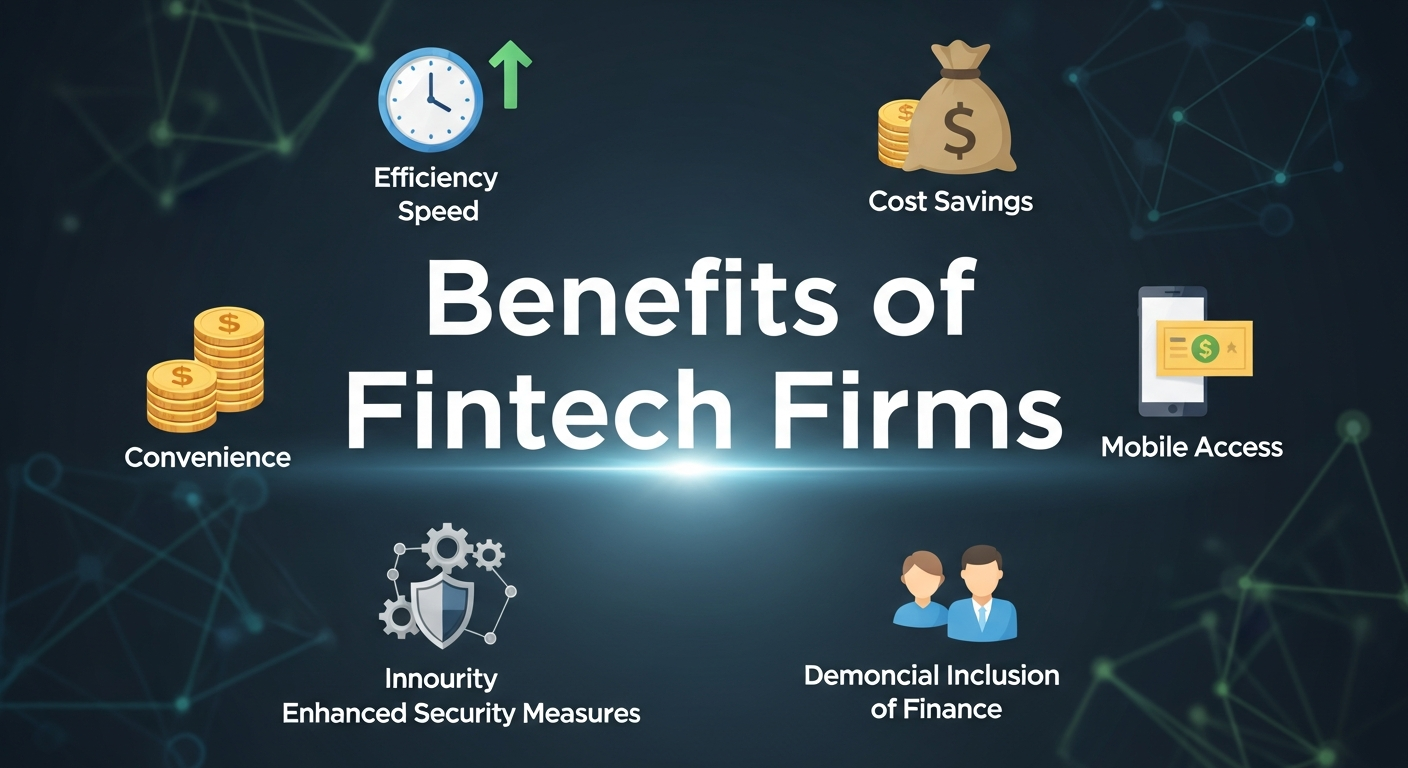
Fintech companies are gaining popularity with reasons of their own. They offer significant benefits for businesses, consumers as well as the traditional banks.
- Efficiency from managing your finances using your smartphone to receiving payments instantly, Fintech provides unparalleled ease of use.
- Effectiveness and Cost-Effectiveness: Lower costs and competitive rates help users in comparison with traditional financial and banking services.
- Transparency: Fintech platforms provide clear reports and live updates, helping to reduce confusion and providing transparency.
- enhanced security Utilizing modern technologies such as blockchain, a lot of fintech companies offer secure platforms that can ward off cyber-attacks and fraud.
- Inclusion Fintech companies offer financial services to underserved or unbanked communities, assisting in filling the gaps in access to finance.
Fintech Firm vs Traditional Bank: A Comparative Overview
While traditional banks have long been the foundation of the financial system, a Fintech Firm introduces agility, automation, and customer-focused innovation into the equation. The primary difference lies in infrastructure and approach. Traditional banks often rely on legacy systems and physical branches, whereas fintech firms operate digitally with scalable cloud-based platforms.
Below is a clear comparison to better understand how a Fintech Firm differs from traditional financial institutions:
| Feature | Fintech Firm | Traditional Bank |
|---|---|---|
| Operating Model | Fully digital, app-based | Physical branches + digital services |
| Speed of Service | Instant or real-time processing | Often slower due to manual processes |
| Customer Experience | User-centric, personalized dashboards | Standardized service structure |
| Cost Structure | Lower overhead, fewer fees | Higher operational and maintenance costs |
| Innovation Level | Rapid innovation and tech adoption | Slower adaptation to new technology |
| Accessibility | 24/7 global access | Limited by banking hours and locations |
This comparison highlights how a Fintech Firm is not necessarily replacing banks, but rather transforming expectations within the financial ecosystem.
How Fintech Firms are Disrupting Traditional Finance
Utilizing the power of technology, fintech firms have disrupted traditional banks that rely on old technology. Insurance companies and banks are under tremendous pressure to improve their efficiency in response to the pressures that fintech brings.
For instance:
- Effectiveness Fintech companies can handle transactions with lightning speed, which eliminates the manual processes that are that are typical of traditional banks.
- agility Startups are able to respond faster to the needs of customers in contrast to traditional institutions shackled by red tape from regulatory agencies.
- Open Banking Fintech companies have pioneered the concept of open banking. It allows third-party service providers to secure access bank data and provide more personalised solutions for customers.
While traditional financial institutions usually have more oversight from regulators Fintech companies’ lesser size and greater agility has provided them with an advantage in addressing market demands rapidly.
What the Future Holds for Fintech Firms
The fintech market is expected to increase exponentially in the coming years as technology is more integrated into the financial process. The emerging trends include:
- AI, as well as Machine Learning, automates tasks such as customer service and risk analysis using highly sophisticated algorithms.
- Blockchain beyond Crypto: Growth of blockchain technology to serve reasons that go beyond digital currency, including smart contracts and Decentralized Finance (DeFi).
- Sustainable Collaboration in Fintech initiatives focusing on green financing and sustainable investing are growing in popularity.
- Embedded Financial seamless integration of the financial instruments into other platforms (like payment processing in websites for e-commerce).
Is Fintech Right for You?
Professionals and companies learning and utilizing the latest technology in fintech can transform your business. You may be seeking to cut costs or streamline your processes, or provide a better customer experience, fintech companies offer solutions that can streamline your daily life.
If you’re interested in the potential of fintech and are interested in learning more about the ways these companies can improve your financial operations, begin exploring platforms that are compatible with your specific needs. From managing expenses on a daily basis to accelerating global transactions, the fintech company could be the best way to unleash the full potential of your finances.
Conclusion
The rise of the Fintech Firm marks a fundamental shift in the global financial landscape. By combining advanced technologies like AI, blockchain, and automation with user-centric design, fintech companies have transformed traditional banking processes into seamless digital experiences. They are not simply replacing banks—they are redefining expectations around speed, transparency, accessibility, and personalization.
As financial ecosystems continue to evolve, fintech firms will play an even greater role in driving inclusion, supporting entrepreneurship, and fostering innovation. Whether you are a consumer, business owner, or investor, understanding the impact of fintech is essential to navigating the future of finance.
Frequently Asked Questions
1. What is a Fintech Firm?
A Fintech Firm is a company that uses technology to deliver or improve financial services such as payments, lending, investing, and insurance.
2. How does a Fintech Firm differ from a traditional bank?
Fintech firms operate digitally, offer faster services, and focus heavily on user experience, while traditional banks rely on physical branches and legacy systems.
3. Who benefits from a Fintech Firm?
Consumers, small businesses, startups, freelancers, and even large enterprises benefit from faster, cheaper, and more accessible financial solutions.
4. Are Fintech Firms safe to use?
Most fintech firms use advanced encryption, AI fraud detection, and secure cloud systems to protect user data and transactions.
5. How do Fintech Firms make money?
They generate revenue through transaction fees, subscription models, lending interest, premium features, and partnerships.
6. What services does a Fintech Firm provide?
Services include digital payments, peer-to-peer lending, investment platforms, insurance technology, cryptocurrency exchanges, and business financing.
7. Can a Fintech Firm replace traditional banks?
Not entirely. Fintech firms complement banks by improving efficiency and innovation, though they compete in many service areas.
8. What technologies power a Fintech Firm?
Common technologies include artificial intelligence (AI), blockchain, machine learning, cloud computing, APIs, and data analytics.
9. What is open banking in fintech?
Open banking allows third-party fintech providers to securely access bank data (with user consent) to deliver personalized financial services.
10. Are Fintech Firms regulated?
Yes, fintech firms must comply with financial regulations, though requirements vary by country and service type.
11. How do Fintech Firms promote financial inclusion?
They provide affordable digital services to unbanked and underbanked populations, expanding access to financial tools globally.
12. What is the future of a Fintech Firm?
The future includes AI-driven automation, embedded finance, sustainable fintech solutions, decentralized finance (DeFi), and enhanced digital security systems.


Embedded Finance and the Future of Seamless Digital Financial Services
How AI-Based Fraud Detection is Protecting Digital Payments
Harnessing AI and Machine Learning for Fraud Detection in Digital Finance
Digital Marketing for Financial Services: Strategies That Deliver Results
Digital Twin Technology in Finance: How Virtual Models Are Transforming Risk Management
The Future of Personal Finance: Autonomous Finance and AI Money Management
AI Credit Scoring: Revolutionizing SME Banking and Digital Loans
AI Fraud Detection: How Banks Prevent Financial Crime in Real Time