

Today, most financial transactions happen with a quick tap or click. Because of this, it is more important than ever to make sure every user is real. Digital identity verification helps banks and financial services confirm who a person is before giving access. It uses smart tools and strict rules to keep both customers and institutions safe.
This process plays a big role in preventing fraud, stopping fake accounts, and making the onboarding process faster. With technologies like biometric verification, AI identity checks, and real-time document scanning, financial services can verify users in a secure and smooth way. These tools support KYC verification, AML compliance, and better risk management.
As digital banking grows, strong identity checks help build trust and keep the system safe. This post will explain the basics of identity verification, the main technologies behind it, the challenges companies face, and what the future of secure digital finance might look like.
What Is Digital Identity Verification?
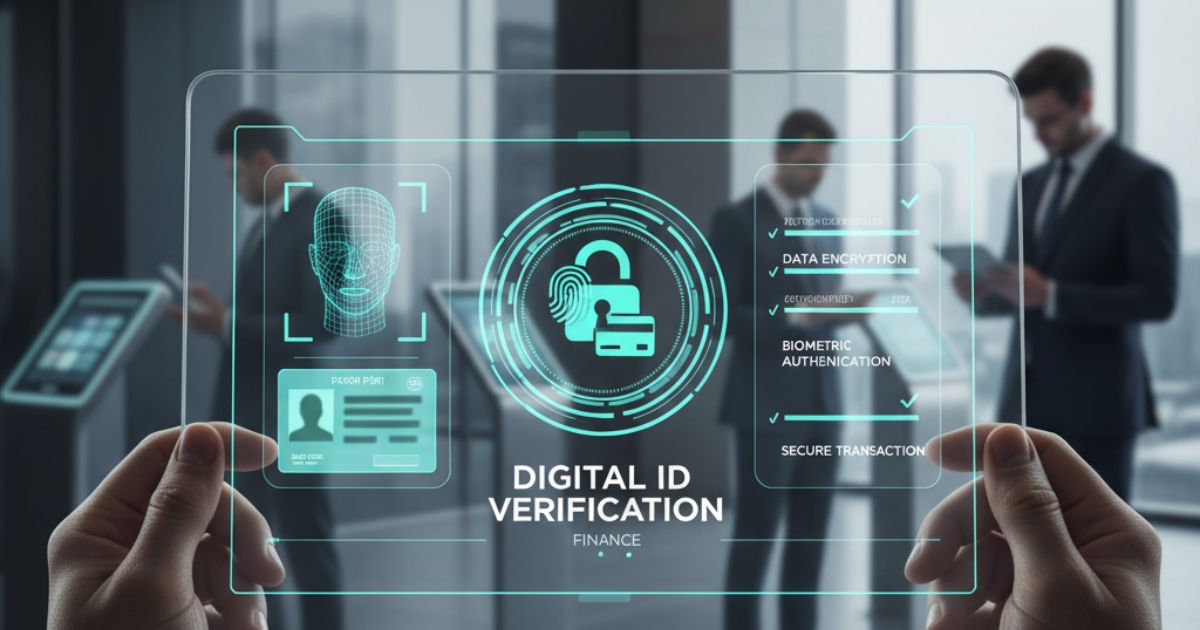
Digital identity verification (IDV) is the process of checking a person’s identity when they use online financial services. It uses tools like document verification, biometric authentication, and real-time identity checks to confirm that the user is genuine.
Banks and financial institutions use this system to prevent fraud, stop identity theft, and follow KYC and AML compliance rules. By comparing user details with trusted data sources, the system ensures safe access to digital banking, online payments, and other financial platforms.
This process helps build trust, improves customer onboarding, and strengthens overall online security in the digital finance ecosystem.
Why Is Digital Identity Verification Important?
Digital identity verification (IDV) is important because it keeps the online world safe. It makes sure every user is real before they access banking, payments, or government services. As digital transactions grow, strong identity checks help protect people from fraud, identity theft, and unauthorized access. This has become a key part of digital finance transformation, where secure and seamless online experiences are essential.
It also helps businesses follow strict rules like KYC, AML, and GDPR. These regulations require companies to verify user identities and keep personal data secure. By using digital ID verification, organizations reduce risk, prevent financial crime, and build trust with customers in a fast-changing digital finance environment.
Key Benefits of Digital Identity Verification
Fraud Prevention:
Stops identity theft, fake accounts, account takeover attacks, and money laundering by verifying real users at onboarding and during key actions.
Enhanced Security:
Uses biometric authentication, document checks, and liveness detection to protect sensitive information and secure digital transactions.
Regulatory Compliance:
Helps financial institutions meet important laws like KYC, AML, and GDPR to ensure proper data protection and reduce legal risks.
Improved User Experience:
Makes onboarding faster and smoother for real users while blocking suspicious or high-risk profiles.
Trust & Transparency:
Builds confidence in online platforms by showing that customer safety and data protection are taken seriously.
Access to Essential Services:
Allows people to safely use online banking, healthcare systems, government portals, and other important digital services.
How Digital Identity Verification Works
- Verification:
At sign-up, the system checks the user’s identity. This may involve taking a selfie, scanning a government ID, or uploading documents. The system matches the person’s face, name, and details to trusted data sources to confirm accuracy. - Authentication:
After the identity is verified, the system ensures the same user returns each time. This can include passwords, OTPs, biometric scans, or multi-factor authentication (MFA) to confirm the user’s identity before giving access.
Together, these two steps keep digital platforms safe, prevent unauthorized access, and ensure only real users can use sensitive online services.
Key Technologies Driving Digital Identity Verification
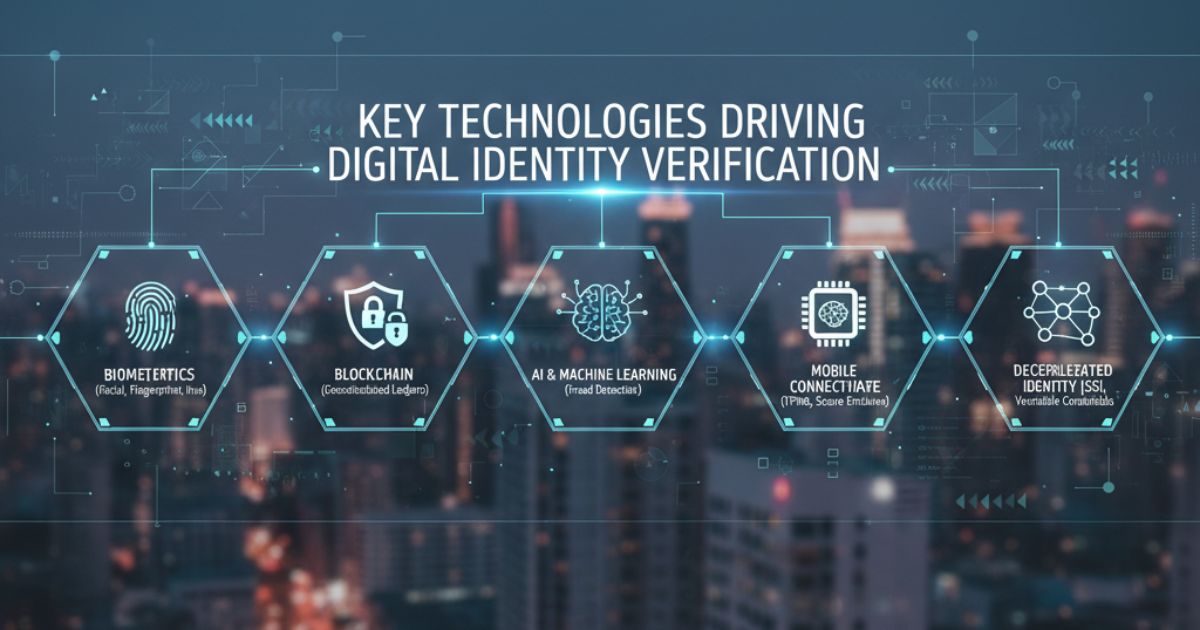
Modern digital identity verification relies on powerful technologies that help confirm a user’s identity quickly and accurately. These tools work together to reduce fraud, secure data, and support safe access to online services.
Optical Character Recognition (OCR):
OCR technology reads and extracts text from government IDs like passports, driving licences, and national ID cards. It helps automate document verification by checking names, dates, and ID numbers with high accuracy.
Biometric Authentication:
Biometrics use physical traits to verify someone’s identity. Common methods include fingerprint scans, facial recognition, and voiceprint analysis. Computer vision and deep learning compare a live selfie or scan with the user’s stored template to make sure the person is real.
This reduces identity fraud and improves security during onboarding and login.
Device Fingerprinting:
This technology collects information about a user’s device—such as browser type, operating system, IP address, and hardware details. If the system detects an unusual device or risky environment, it can flag the login attempt or ask for extra verification.
Behavioral Analytics:
Behavioral analytics studies how users interact online. It looks at typing patterns, mouse movements, login habits, and transaction behavior. If a user suddenly behaves very differently, the system can detect the anomaly and prevent suspicious activity.
Blockchain (Distributed Ledger Technology):
Blockchain adds a layer of trust by storing identity attributes in a secure, tamper-resistant format. Because the data is decentralized, no single party can change or manipulate it. This allows safe data sharing between banks, financial services, and trusted partners without exposing sensitive information.
Common Verification Methods
Implementers can choose from diverse verification approaches or combine them for multi-factor assurance. Document authentication verifies ID cards, passports, and driver’s licenses through the analysis of hologram detection and security features. Biometric checks compare a live selfie or voice sample against a stored biometric reference. Database checks query government, credit bureau, or telecom records to verify personal details. Mobile-based OTP (one-time password) or SMS challenge-response confirms control of a registered phone number. Risk-based scoring dynamically adjusts verification strictness based on user profile, transaction value, and geolocation data.
Common Challenges in Digital Identity Verification
Even with modern technology, digital identity verification still faces several challenges. Poor image quality, blurry photos, and low-resolution ID documents can delay or fail verification. Outdated IDs or mismatched information also make the process harder.
Another growing challenge is the rise of deepfakes, AI-generated faces, and spoofing attacks. These can fool weak biometric systems and make it difficult to confirm real users. Privacy concerns are also increasing, as many users worry about how their personal data is stored, shared, or protected.
Businesses must keep this data safe, follow strict data protection regulations, and balance three critical needs: security, accuracy, and user convenience. Finding the right balance is one of the biggest hurdles for modern IDV systems.
Types of Digital Identity Verification Methods
Document Verification
Verifies passports, national ID cards, and driving licences using OCR, barcode scanning, hologram detection, and security feature checks.
Biometric Verification
Uses fingerprints, facial recognition, iris scans, and voice biometrics. With AI and computer vision, biometrics offer high accuracy and strong protection against fraud.
Database Verification
Cross-checks user information with trusted databases such as government records, telecom databases, and credit bureaus to confirm identity.
Knowledge-Based Authentication (KBA)
Asks personal questions based on past information. This method is less reliable today due to widespread data leaks.
Multi-Factor Authentication (MFA)
Adds extra layers like OTPs, device verification, and biometric scans to provide stronger authentication and reduce unauthorized access.
Use Cases of Digital Identity Verification
Banking & Fintech
Used in remote KYC onboarding, fraud prevention, loan processing, and secure account opening.
E-commerce
Helps verify real buyers, prevent fake orders, and reduce chargeback or payment fraud.
Telecommunications
Supports SIM registration, number portability, and customer verification to prevent identity misuse.
Healthcare
Confirms patient identities for telemedicine, online medical records, and digital health services.
Government Services
Enables safe access to digital IDs, tax platforms, welfare systems, and other public services.
Crypto & Web3 Platforms
Used for verifying users during exchange registration, wallet creation, and anti-money laundering checks.
Digital Identity Verification in Banking & Finance
Digital identity verification is essential in the financial industry. It ensures smooth and secure KYC onboarding, AML screening, and accurate risk assessment.
Banks rely on IDV to open accounts remotely, authenticate users during sensitive transactions, and monitor financial activities in real time.
AI-driven identity checks help detect synthetic identities, suspicious behavior, and account takeover attempts.
Strong IDV also supports regulatory compliance, reduces operational costs, and increases customer trust in digital banking systems.
Compliance & Regulatory Landscape
Digital identity verification plays a major role in helping organizations comply with global regulations:
GDPR (Europe)
Ensures personal data privacy, secure handling, and user consent.
KYC / AML Regulations
Required for banks, fintechs, crypto exchanges, and financial institutions to prevent money laundering and financial crime.
FATF Guidelines
Provide global standards for identity verification, transaction monitoring, and risk assessment.
eIDAS (EU)
Regulates electronic identification and trust services across Europe.
Local Central Bank Requirements
Each country enforces its own KYC onboarding, customer due diligence (CDD), and AML rules.
Following these regulations helps businesses stay legally compliant, avoid fines, protect customer data, and maintain trust in digital services.
Future Trends in Digital Identity Verification
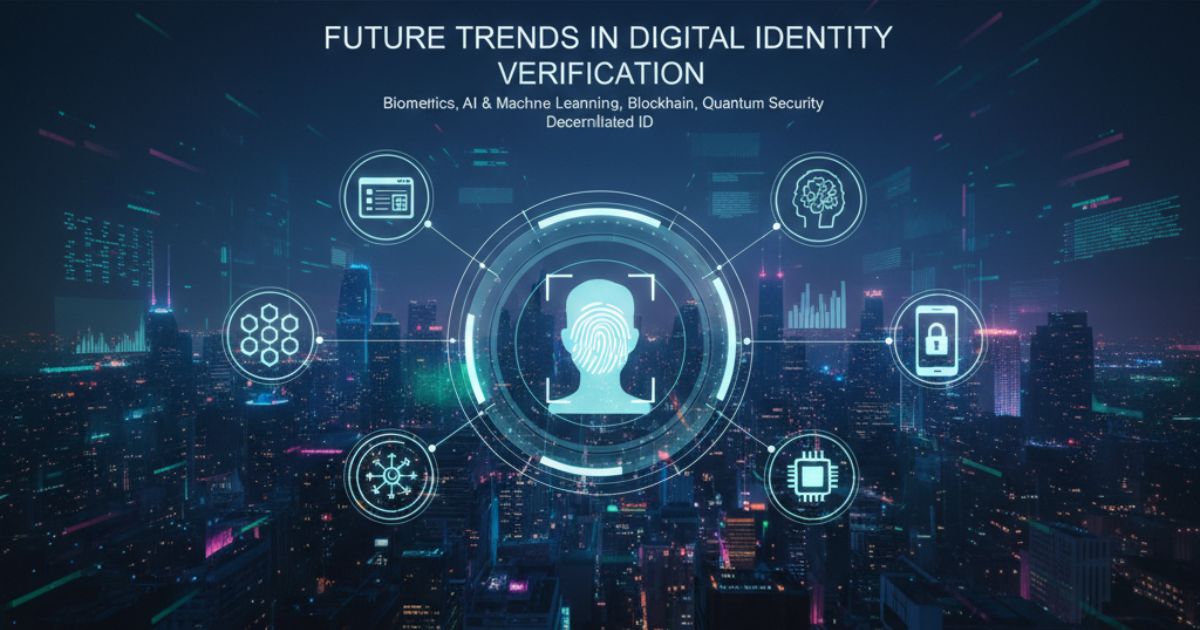
The future of digital identity verification is moving toward more secure, flexible, and user-controlled systems. As technology evolves, identity checks will become faster, smarter, and more reliable across all digital platforms—from banking to e-commerce to government services.
Decentralized Identity (DID):
One major trend is decentralized identity. With DID, users can control their own identity information and share only what is needed. Instead of relying on a central authority, identity credentials are cryptographically signed and stored securely, giving people more privacy and control.
Advanced Liveness Detection:
Biometric security will continue to improve. New liveness detection tools will make it harder for fraudsters to use photos, masks, or deepfakes to fool the system. These upgrades will strengthen facial recognition, voice biometrics, and fingerprint scans.
Interoperable Identity Networks:
Banks, insurers, telecoms, and e-commerce platforms may soon use shared identity networks. This means a user could verify their identity once and access multiple services without repeating the onboarding process. It will reduce friction and create a smoother customer journey.
AI-Powered Risk Scoring:
Artificial intelligence will play a bigger role in identity verification. AI will analyze real-time behavior, context, device signals, and transaction patterns to create dynamic risk scores. This will help organizations identify suspicious users faster and approve trusted users instantly.
5G and IoT Expansion:
With the growth of 5G and IoT devices, new identity sources will appear. Wearables, smart home devices, connected cars, and even sensors can become identity signals. These additional data points will make verification more accurate and context-aware.
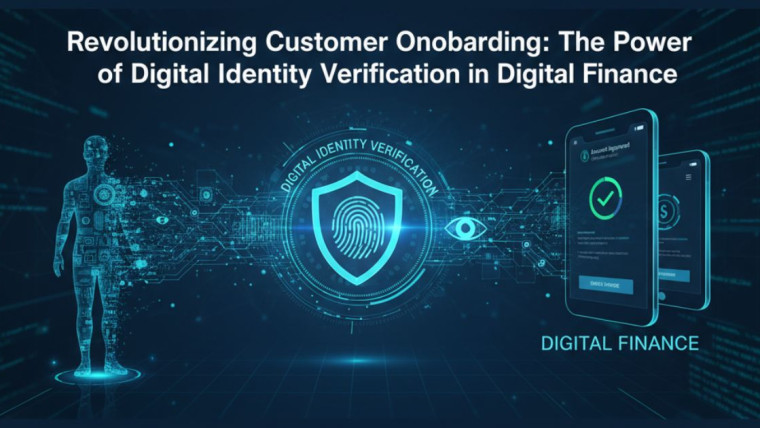
Dig Deeper: Revolutionizing Customer Onboarding: The Power of Digital Identity Verification in Digital Finance
Case Study: How a Fintech Company Reduced Fraud by 60% Using Digital Identity Verification
A fast-growing fintech company was struggling with high onboarding fraud, fake accounts, and failed KYC checks. The manual verification process took hours, frustrated customers, and increased operational costs. To solve this, the company implemented an end-to-end digital identity verification system powered by biometric authentication, AI-driven fraud detection, and automated document scanning.
The Challenge
-
High volume of fake or altered ID documents
-
Slow customer onboarding and drop-offs
-
Rising cases of account takeover
-
Difficulty meeting AML and KYC compliance standards
-
Limited ability to detect synthetic identities
The Solution
The fintech adopted a modern IDV platform that used:
-
AI-powered facial recognition for biometric matching
-
OCR and document verification to extract and validate ID details
-
Liveness detection to stop spoofing attempts
-
Database verification to cross-check customer information
-
Risk scoring tools to flag suspicious profiles automatically
These tools integrated directly with the company’s mobile app, making the onboarding experience smooth and user-friendly.
The Results
After implementing digital identity verification:
-
Fraud dropped by 60% within three months
-
Onboarding time reduced from 12 minutes to under 60 seconds
-
Customer approval rate increased by 35% due to fewer manual reviews
-
Compliance improved, helping the company meet KYC/AML requirements effortlessly
-
Customer trust increased as users felt safer with stronger identity protection
Why This Case Matters
This case shows how digital KYC, biometric ID verification, and AI-driven risk scoring can dramatically improve security while keeping the customer experience smooth. It also highlights how modern ID verification helps financial institutions fight fraud, reduce costs, and stay compliant with global regulations.
Conclusion
Digital identity verification is now a core part of online identity security and modern financial operations. As digital banking, mobile payments, and remote onboarding continue to grow, the need for accurate and secure digital KYC has become critical. Strong IDV systems help financial institutions prevent identity theft, stop synthetic fraud, and maintain regulatory compliance with KYC/AML standards.
With tools like biometric verification, AI-driven fraud detection, OCR document scanning, and risk-based authentication, organizations can verify users quickly while keeping platforms safe. These technologies not only improve customer due diligence but also support secure onboarding and build long-term digital trust.
Looking ahead, decentralized identity, advanced liveness detection, interoperable ID networks, and real-time AML monitoring will reshape how businesses manage identity. For banks, fintechs, and digital platforms, investing in powerful identity verification solutions is essential for fraud prevention, smoother user journeys, and overall fintech security in an increasingly digital world.
FAQs
1. What is digital identity verification in finance?
Digital identity verification (IDV) is the process of confirming that a user is real before giving them access to banking, payments, or financial services. It uses tools like biometric checks, document verification, and database matching to ensure safe onboarding and transactions.
2. How long does digital identity verification take?
In most cases, IDV takes only a few seconds to a few minutes. Automated OCR, facial recognition, and AI-based checks speed up the process, reducing the need for manual review.
3. Is biometric verification safe?
Yes. Biometric authentication—such as fingerprint or facial recognition—is highly secure. Advanced liveness detection prevents spoofing attempts using photos, videos, or deepfakes. Most systems also encrypt biometric data for privacy protection.
4. Why is digital identity verification important for KYC and AML compliance?
IDV ensures that financial institutions verify real users before providing access. This helps meet global KYC (Know Your Customer) and AML (Anti-Money Laundering) regulations, reduces fraud, stops identity theft, and prevents illegal financial activities.
5. What industries use digital identity verification?
Digital ID verification is used across banking, fintech, e-commerce, telecom, healthcare, government portals, insurance, and crypto platforms. Any service that requires secure user onboarding and fraud prevention benefits from IDV technologies.



What Is Digital Financial Inclusion
Emotional Finance Algorithms: Can AI Predict Your Spending Based on Your Mood?
Top 7 Hacks That Will ‘Shake’ The Digital Game of Financial Advisory Industry by 2025
Top 10 Fintech Trends Shaping the Future of Digital Finance
Digital Twin Technology in Finance: How Virtual Models Are Transforming Risk Management
The Future of Personal Finance: Autonomous Finance and AI Money Management
AI Credit Scoring: Revolutionizing SME Banking and Digital Loans
AI Fraud Detection: How Banks Prevent Financial Crime in Real Time