
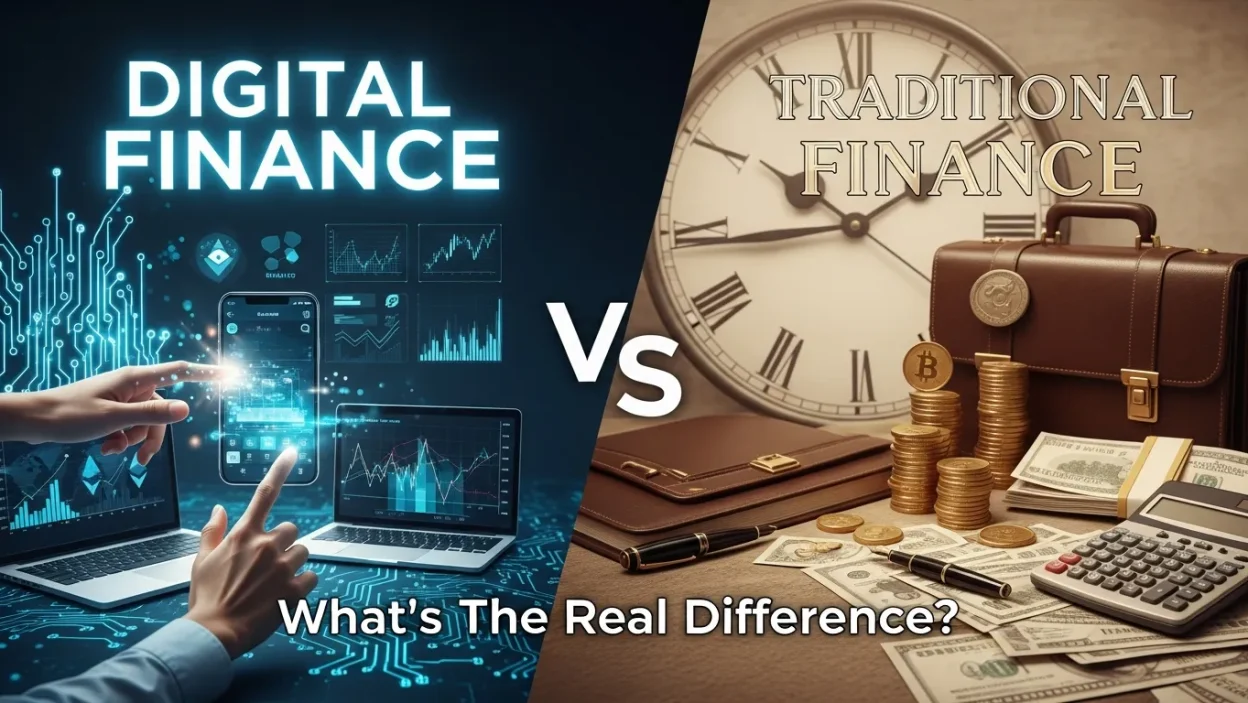
The debate between Digital Finance vs Traditional Finance reflects how rapidly money management is evolving. Digital finance offers speed, convenience, lower costs, and global access through technology, while traditional finance provides stability, personal relationships, and strong regulatory trust. Understanding their differences helps individuals and businesses choose the right financial approach—or combine both—for smarter financial decisions.
The way we manage money is shifting. Smartphones in our pockets and A.I. algorithms are making decisions, so a more digital financial world than ever is at our fingertips. But what is the shift going to mean for you? Can you rely on digital financial services as much as you can on traditional ones? Or do the old behemoths of banking and finance still provide unmatched value?
This article explains how digital finance and traditional finance are different, to help you get to know both sides with practical insights.
What Is Traditional Finance?
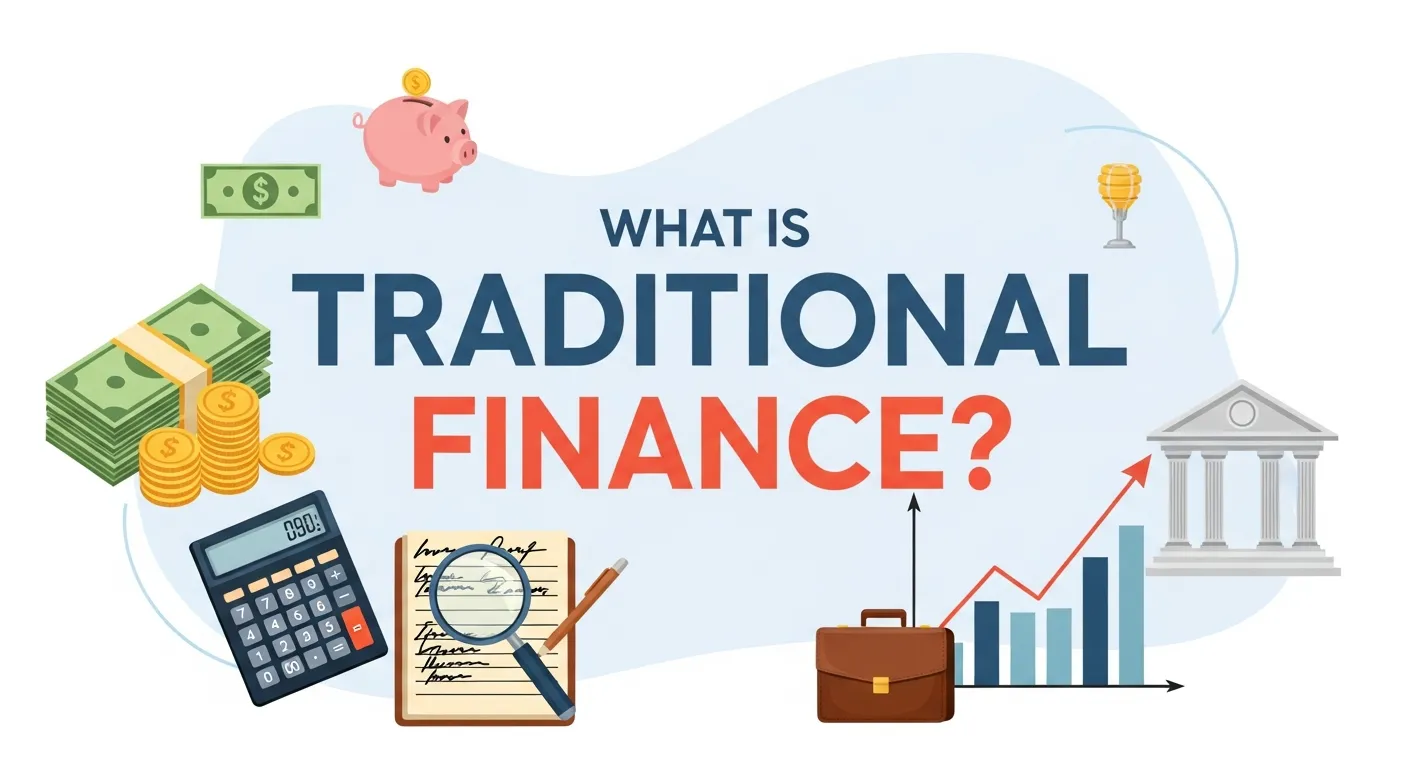
Traditional finance refers to the long-established banking and financial systems that have operated for centuries. It includes brick-and-mortar banks, physical branches, teller counters, paper-based instruments like checkbooks, and in-person financial advisors. These institutions have historically formed the backbone of global financial systems, offering stability, trust, and regulatory oversight.
Some key characteristics of traditional finance include:
-
Physical Presence: Most financial activities—such as opening accounts, applying for loans, or resolving complex issues—require visiting a bank branch or financial institution in person.
-
Centralized Regulation: Traditional financial systems are tightly regulated by central authorities and government agencies, such as the Federal Reserve in the United States or the Bank of England in the United Kingdom, ensuring compliance, consumer protection, and financial stability.
-
Face-to-Face Interaction: Personal relationships with bank managers, tellers, or financial advisors play a crucial role, especially for services like wealth management, mortgages, or business financing.
-
Limited Operating Hours: Banks typically operate only during standard business hours, excluding weekends and holidays, which can limit accessibility and convenience for customers.
While traditional finance has proven reliable and secure over time, it faces challenges in the modern digital era. Slower processes, higher operational costs, and limited flexibility make it less adaptable compared to today’s fast-moving, technology-driven financial solutions.
What Is Digital Finance?
Digital finance is concerned with providing financial services through the use of advanced technology. That so-called digital payment, as it is known, can come in an increasing number of forms: It might be that Venmo transfer from a friend, the PayPal payment you make to an Etsy seller through a smartphone, or an incomprehensible string of numbers and letters that you send to, say, a landlord willing to take rent payment in bitcoin.
Some of the specific elements of digital finance are:
-
24/7 Access: Forgot to pay a bill? No problem! These financial tools live online; there is no location for them.
-
Automation: AI algorithms can also be used to automate tasks such as loan approvals or investment recommendations.
-
Cheaper: Because there is no need for bricks and mortar, digital finance solutions are often more affordable.
-
Global Access: Digital financial tools are not confined to your country.
Notably, digital finance is transforming consumer expectations. These days, humans want personal experiences, instant services, and smooth interfaces.
Main Differences Between Digital Finance and Traditional Finance
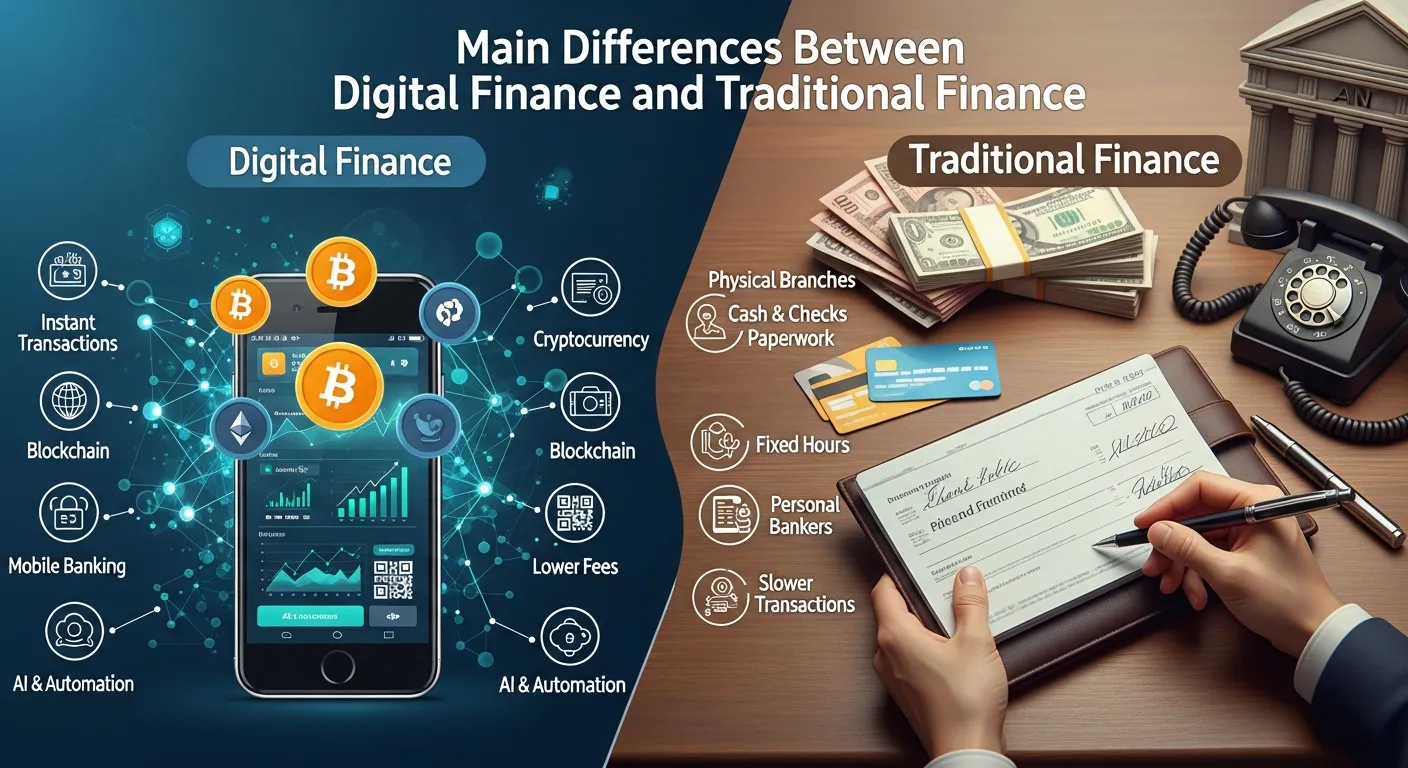
Understanding the key differences between Digital Finance vs Traditional Finance helps individuals choose the right financial services based on convenience, cost, security, and innovation.
Accessibility
Digital Finance:
Digital financial services such as mobile banking apps and online platforms provide 24/7 access. Users can transfer money, track expenses, pay bills, or apply for loans anytime, anywhere—without visiting a physical branch.
Traditional Finance:
Traditional banks operate during fixed business hours, often requiring in-person visits for essential services.
Winner:
By eliminating time and location barriers, digital finance clearly leads in accessibility and convenience.
Customer Experience
Traditional Finance:
Customers benefit from face-to-face interactions with bankers, advisors, and financial consultants. This personalized approach is especially useful for complex financial needs such as mortgage planning or wealth management.
Digital Finance:
Digital platforms deliver automated insights, AI-driven recommendations, and instant support. However, chatbots may struggle with highly customized or complex financial queries.
Winner:
Traditional finance excels in relationship-driven services, while digital finance dominates fast, routine transactions.
Costs and Fees
Digital Finance:
With minimal physical infrastructure, digital banks have lower operating costs. This allows them to offer lower fees, higher savings rates, and sometimes free services.
Traditional Finance:
Physical branches, staffing, and legacy systems result in higher service fees and lower interest rates for customers.
Winner:
For affordability and better returns, digital finance is generally more cost-effective.
Security and Trust
Traditional Finance:
Backed by long-standing regulations and government oversight, traditional banks offer strong legal protections and institutional trust.
Digital Finance:
Modern digital platforms use encryption, biometric verification, and two-factor authentication (2FA). However, poor digital habits can increase cybersecurity risks.
Winner:
Both systems are secure, but traditional finance may feel safer for less tech-savvy users.
Risk Factors in Digital Finance vs Traditional Finance
Every financial model carries risks. Comparing Digital Finance vs Traditional Finance risks provides a balanced and credible perspective.
Common Risks in Digital Finance:
-
Exposure to cyber threats if security measures are weak
-
Dependence on stable internet access and digital literacy
-
Limited human support for complex financial situations
Common Risks in Traditional Finance:
-
Slower transaction and approval processes
-
Higher fees passed on to customers
-
Limited access outside standard banking hours
Understanding these risks helps users make informed financial decisions.
Innovation and Technology
Digital Finance:
Powered by AI, machine learning, blockchain, and automation, digital finance delivers personalized budgeting tools, predictive analytics, and transparent transactions.
Traditional Finance:
Many traditional institutions rely on legacy systems, which can slow innovation and adaptability.
Winner:
When it comes to innovation, digital finance leads as the primary driver of financial transformation.
Advantages of Digital Finance vs Traditional Finance
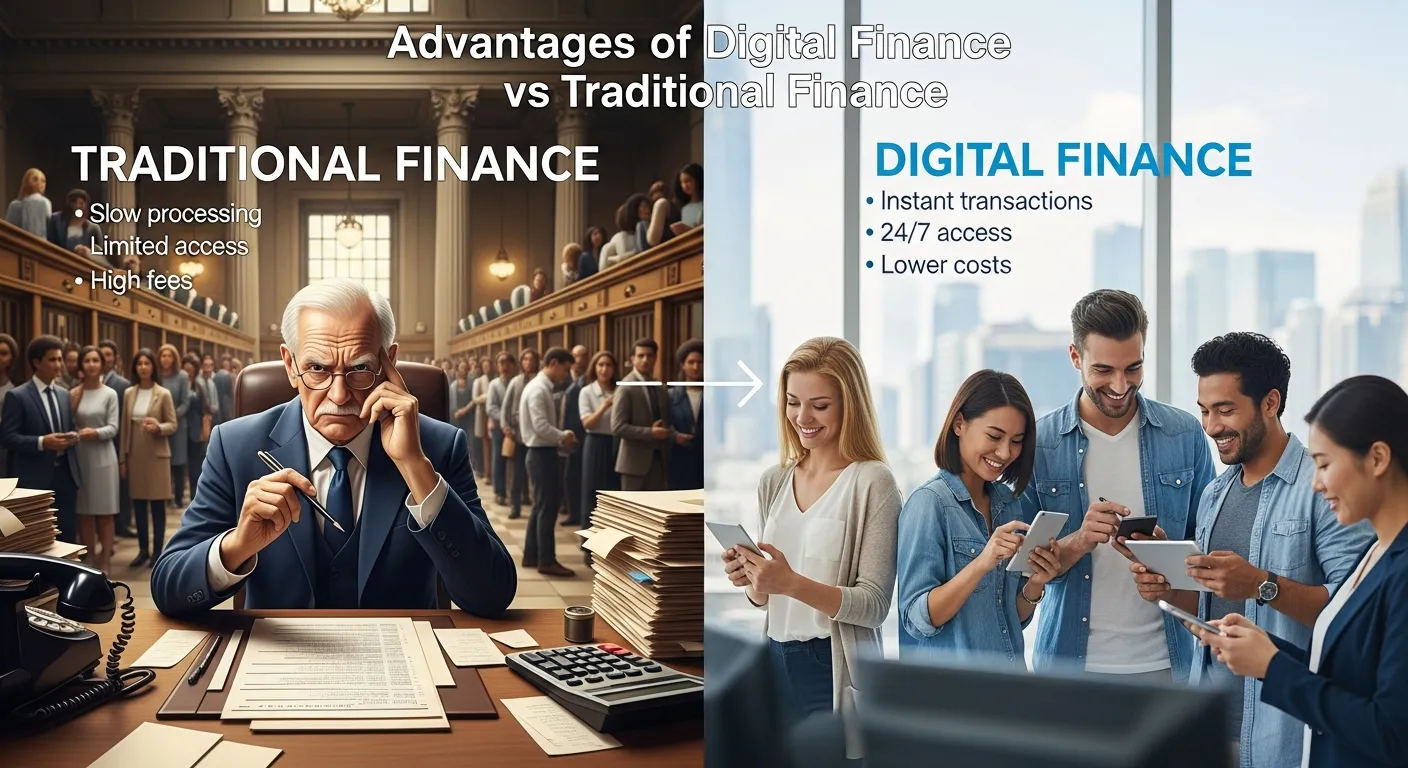
When comparing Digital Finance vs Traditional Finance, it becomes clear that each model offers distinct advantages depending on user needs and lifestyle.
Key advantages of Digital Finance include:
-
Instant access to banking services through mobile apps and online platforms
-
Lower fees due to reduced operational and infrastructure costs
-
AI-driven insights for budgeting, saving, and investing
-
Seamless global transactions without geographic limitations
Advantages of Traditional Finance include:
-
Personalized, face-to-face advisory services
-
Strong regulatory oversight and legal protections
-
Better handling of complex financial products such as mortgages and wealth management
-
Long-established trust and institutional stability
This section helps readers understand that the debate is not about replacement, but about value alignment.
Then, How to Know What’s Best for You?
Whether you go for digital or conventional finance would solely be dependent on what you like and have in mind. Here are some considerations:
-
Do You Prefer Human Interaction?
If you enjoy in-person meetings with an adviser or relationship banking, traditional finance might be the way for you. -
Need Speed and Convenience?
Those seeking fast solutions and flexibility will find good use of digital finance, especially those managing their hectic lives. -
Are You Tech-Savvy?
If you find apps and online tools easy to negotiate, digital finance will make sense. For the less tech-savvy among us, traditional finance may seem safer. -
Concerned About Costs?
Online finance is frequently the most competitive in terms of rates and fees.
Who Benefits Most from Digital Finance vs Traditional Finance?
Different users benefit in different ways from Digital Finance vs Traditional Finance models.
Digital finance is ideal for:
-
Tech-savvy users and mobile-first customers
-
Freelancers, remote workers, and global earners
-
Individuals seeking speed, convenience, and low costs
-
Users comfortable with automation and AI-driven tools
Traditional finance is ideal for:
-
Individuals who value long-term banking relationships
-
Customers managing complex financial needs
-
Those who prefer in-person interactions and human guidance
-
Users less comfortable with digital platforms
This section helps readers self-identify which system aligns best with their preferences.
Connecting the Dots: A Hybrid Approach
Who told you that you have to pick one instead of the other? Hybrid approaches are working for lots of people. For example:
-
For more complicated needs, like mortgages, use a regular bank.
-
Use digital finance for small jobs like transferring money or looking at their spending.
This mix is for the best of both worlds kind of people. You save time and money, but keep those personal relationships where they are most important.
Digital Finance vs Traditional Finance: Side-by-Side Comparison
| Feature | Digital Finance | Traditional Finance |
|---|---|---|
| Accessibility | 24/7 online access | Limited business hours |
| Cost Structure | Low or no fees | Higher service fees |
| Speed | Instant or near-instant | Slower processing |
| Human Interaction | Minimal | High |
| Innovation | AI, Blockchain, DeFi | Legacy systems |
| Global Reach | Borderless | Location-based |
| Personalization | Algorithm-driven | Relationship-driven |
This table improves readability, SEO performance, and user engagement.
The Future of Digital Finance vs Traditional Finance
The future of Digital Finance vs Traditional Finance lies in integration rather than competition.
-
FinTech and Traditional Banking innovations to improve efficiency
-
Digital platforms are strengthening regulatory compliance and security
-
Hybrid financial models are becoming the new standard
-
Customers will increasingly control how much automation or human support they want
This evolution will create a more flexible, inclusive, and customer-centric financial ecosystem.
What’s Next for Finance
Digital finance is not just a choice anymore; it is an inevitability. The tech also keeps on coming – and with the rise of trends such as open banking, decentralized finance (DeFi), and biometric security, we can expect this landscape to shift even more. The ongoing fintech revolution is driving rapid innovation, making financial services more accessible, efficient, and personalized than ever before.
Yet old finance isn’t going away anytime soon. Instead, anticipate ever-greater cooperation between traditional institutions and digital innovators, blending the strengths of both worlds to create a more inclusive and dynamic financial ecosystem.
A Step-By-Step Approach to Securing Your Financial Dream
There are strong arguments to be made both for digital finance and for traditional finance. Knowing these differences can help inform how you manage your money. You may be tech-savvy, or you may favor the personal touch; either has its place in your financial toolbox.
Want to dive into the benefits of digital finance? Begin with the tools that suit your lifestyle and your objectives. The first step is easy, and the possibilities are endless.
Conclusion
The choice between Digital Finance vs Traditional Finance is not about which system is better, but which one fits your needs. Digital finance excels in convenience, automation, and innovation, making it ideal for fast-paced, tech-driven lifestyles. Traditional finance remains valuable for complex financial planning, human guidance, and long-term trust. As the financial landscape evolves, a hybrid approach that blends digital efficiency with traditional reliability will likely define the future of finance.
Frequently Asked Questions (FAQ)
1. What is the main difference between Digital Finance vs Traditional Finance?
Digital finance delivers financial services through technology and online platforms, while traditional finance relies on physical banks, in-person services, and legacy systems.
2. Is digital finance safer than traditional finance?
Both can be secure. Digital finance uses encryption and authentication technologies, while traditional finance offers strong regulatory protection and institutional stability.
3. Why is digital finance growing faster than traditional finance?
Digital finance offers 24/7 access, faster transactions, lower fees, and personalized services, which align with modern consumer expectations.
4. Does traditional finance still matter today?
Yes. Traditional finance remains important for complex services like mortgages, wealth management, and relationship-based banking.
5. Which is cheaper: Digital Finance vs Traditional Finance?
Digital finance is generally cheaper due to lower operating costs, while traditional finance often charges higher fees.
6. Can digital finance replace traditional banks?
Digital finance is unlikely to fully replace traditional banks. Instead, both systems are increasingly working together through hybrid models.
7. Who should choose digital finance?
Tech-savvy users, freelancers, remote workers, and people seeking speed and convenience benefit most from digital finance.
8. Who should prefer traditional finance?
Customers who value personal relationships, in-person advice, and complex financial planning may prefer traditional finance.
9. How does customer experience differ in Digital Finance vs Traditional Finance?
Digital finance focuses on automation and speed, while traditional finance emphasizes personalized, face-to-face service.
10. Is digital finance available globally?
Yes. Digital finance platforms often allow cross-border transactions and global access, unlike many traditional banks.
11. What role does technology play in digital finance?
Technology such as AI, mobile apps, blockchain, and automation drives efficiency, personalization, and innovation in digital finance.
12. What is the future of Digital Finance vs Traditional Finance?
The future lies in integration. Hybrid financial systems will combine digital innovation with traditional trust and regulatory strength.






What Is Financial Technology (FinTech)? Everything You Need to Know
AI Credit Scoring: Revolutionizing SME Banking and Digital Loans
FinTech and Traditional Banking: How Old Banks Are Adapting
What Is Digital Financial Literacy?
The Importance of Insurance Services in Financial Planning
How Tax Planning Helps Individuals and Businesses Save Money
How to Create a Retirement Planning Strategy That Works
How Digital Asset Management Improves Business Efficiency