

Digital Finance Transformation is the adoption of digital technologies across financial processes, systems, and strategies. By integrating cloud computing, AI, data analytics, and automation, organizations can streamline operations, reduce errors, and gain real-time insights. This transformation empowers finance teams to move from reactive reporting to strategic decision-making, improve collaboration, and support sustainable growth in a competitive digital world.
More organizations are recognized digital finance transformation as business critical for survive in this fast changing era. But what does that really mean? And why should finance professionals, business leaders and tech enthusiasts spend time tuning in to what it means?
What Is Digital Finance Transformation?
Fundamentally, digital transformation means adopting digital technology across the financial processes, systems and strategies. It’s not just about replacing tedious tasks with machines or shifting physical systems to the cloud; it’s about re-imagining what finance teams do in a data-rich world.
This process includes the adoption of new technologies that enable companies to handle data more quickly, make more informed decisions, and gain greater insights into business performance. It’s the transformation of finance from a service (reactive, transactional) to a leadership (foresight, planning over time) role.
William Gibson famously said, “The future is here, it’s just not evenly distributed. Transformation of Digital finance is the future; it gives organizations the tools to meet the new challenges.
Why Digital Finance Transformation Matters for Modern Businesses

Digital finance transformation has become essential for organizations operating in competitive and fast-moving markets. Traditional finance models struggle to keep up with real-time decision-making, increasing regulatory pressure, and growing data volumes. By embracing digital finance transformation, businesses gain the agility needed to respond quickly to market changes and financial risks.
Beyond efficiency, digital finance transformation strengthens collaboration between finance, operations, and leadership teams. It ensures that financial insights are no longer delayed or isolated, but shared across the organization to support smarter, faster strategic decisions.
Why it matters today:
-
Enables real-time financial visibility
-
Supports faster and more confident decision-making
-
Aligns finance with overall business strategy
As businesses continue to digitize, finance teams that fail to transform risk becoming bottlenecks rather than strategic partners.
Core Components of Digital Finance Transformation
To understand its impact, we need to explore the foundational elements of digital finance transformation. These include cloud computing, artificial intelligence (AI), and advanced data analytics.
1. Cloud Computing
Cloud technology has revolutionized the way finance data is stored, accessed, and shared. By moving finance operations to cloud platforms, businesses can enjoy real-time collaboration and reduced dependency on expensive on-premise servers.
- Example: A multinational company with offices in New York, London, and Tokyo can share live financial reports across all teams through cloud systems like SAP or Oracle NetSuite.
2. Artificial Intelligence (AI)
AI has unlocked unparalleled potential in financial automation and decision-making. By leveraging machine learning models, finance departments can forecast trends, detect fraud, and automate repetitive tasks like invoice processing.
- Example: AI-powered tools like Workday Adaptive Planning allow finance teams to create dynamic financial plans that adjust based on real-time data.
3. Data Analytics
Data analytics lies at the heart of digital finance transformation. Tools such as Power BI and Tableau enable organizations to convert raw data into actionable insights, allowing leaders to identify profit drivers or spot inefficiencies.
- Example: A retail chain using analytics can track sales patterns and identify areas for cost reduction while simultaneously optimizing inventory levels.
The Benefits of Digital Finance Transformation
The adoption of digital tools and strategies offers significant advantages. Here are three primary benefits finance professionals can expect from a successful transformation.
1. Greater Efficiency
Digital tools reduce time spent on laborious manual processes. For instance, automating payroll and tax calculations can save companies hundreds of hours annually.
2. Improved Accuracy
Humans make mistakes, especially when managing massive sets of numbers. Automation and intelligent algorithms minimize errors, creating more reliable financial data.
3. Strategic Insights
By utilizing predictive analytics tools, finance leaders can go beyond merely analyzing historical data. They can create robust forward-looking strategies, anticipate risks, and find new growth opportunities.
By streamlining processes and providing actionable intelligence, digital finance transformation empowers companies to make decisions faster and with more confidence.
Key Tools Driving Digital Finance Transformation
Digital finance transformation is powered by a combination of modern financial technologies that work together to streamline processes and improve insights. Selecting the right tools allows organizations to scale operations while maintaining accuracy and compliance.
Each tool plays a specific role in transforming finance from a manual, reactive function into a proactive, intelligence-driven capability.
Core digital finance tools include:
-
Cloud-based financial platforms
-
AI-powered automation and forecasting tools
-
Business intelligence and analytics solutions
Below is a simplified comparison of commonly used tools in digital finance transformation:
| Technology | Primary Purpose | Business Impact |
|---|---|---|
| Cloud Finance Systems | Centralized data access | Faster reporting |
| AI & Machine Learning | Automation & forecasting | Reduced errors |
| Data Analytics Tools | Insight generation | Better strategy |
| RPA | Process automation | Lower costs |
When implemented together, these tools create a connected digital finance ecosystem that improves both efficiency and strategic value.
Challenges in Implementing Digital Finance Transformation
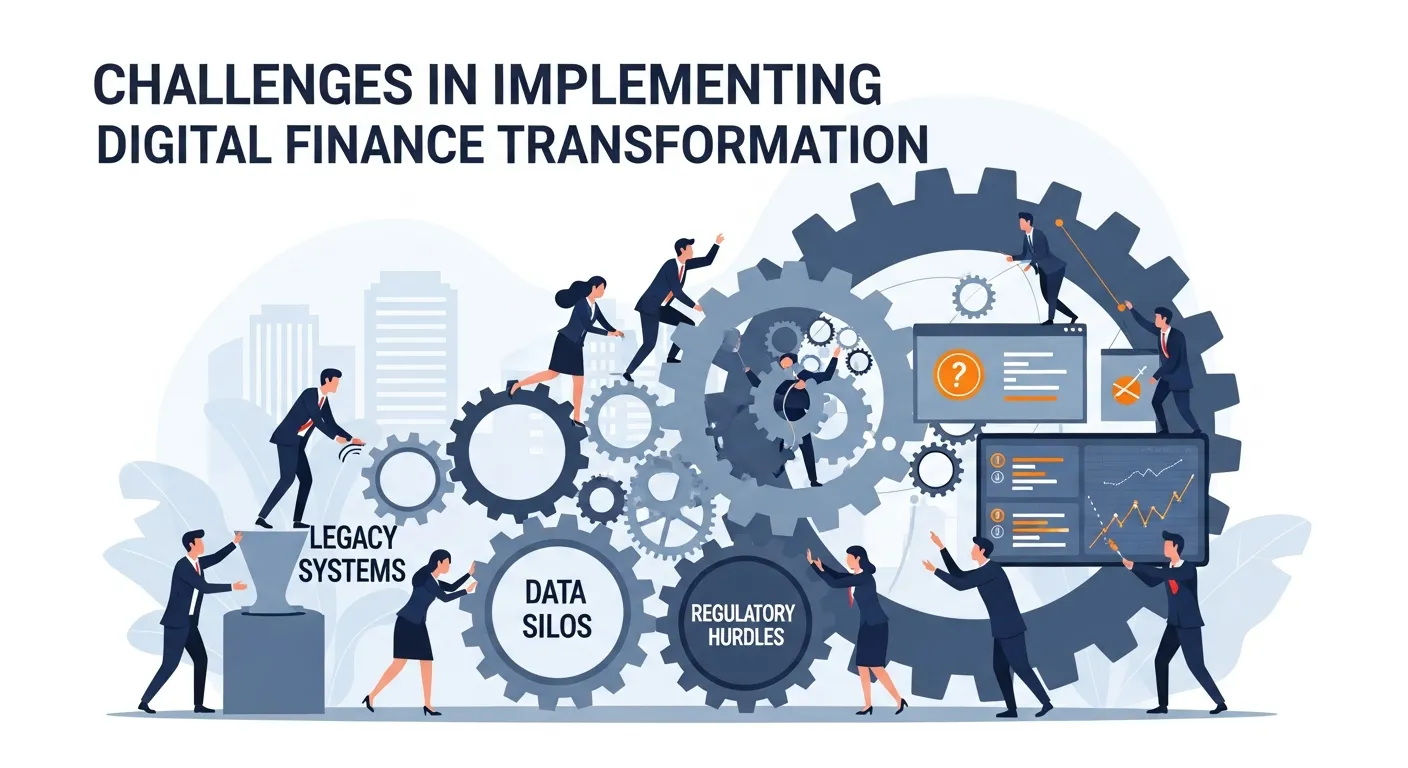
Digital finance transformation doesn’t happen without its hurdles. While the rewards are encouraging, it’s important to acknowledge and prepare for common challenges along the way.
1. Security Concerns
With great data comes great responsibility. Moving sensitive financial information to digital mediums increases exposure to cyberattacks. This makes implementing robust cybersecurity measures critical to safeguard operations.
2. Integration Complexity
Organizations often rely on legacy systems that don’t integrate seamlessly with modern software solutions. Achieving interoperability between old and new systems takes time, planning, and investment.
3. Skills Gap
Finance professionals accustomed to traditional methods may find it challenging to adapt to digital technologies. Workforce upskilling and training programs are essential for overcoming this barrier.
Digital Finance Transformation and Workforce Evolution
Digital finance transformation is not just a technology shift—it is also a people transformation. As finance functions become more automated and data-driven, the role of finance professionals continues to evolve beyond number crunching.
Modern finance teams are expected to interpret data, advise leadership, and support long-term business planning. This shift requires continuous learning and adaptation to new digital tools and analytical methods.
New skills finance professionals need:
-
Data interpretation and storytelling
-
Technology and systems literacy
-
Strategic and analytical thinking
Organizations that invest in upskilling their finance workforce are far more likely to succeed in their digital finance transformation initiatives.
Real-World Examples of Successful Finance Transformations

Example 1: General Electric
General Electric (GE) adopted a digital-first strategy, incorporating AI and cloud solutions into their finance systems. This allowed them to centralize financial reporting and improve the accuracy of their forecasts, saving the company millions in operational costs.
Example 2: Starbucks
Starbucks combined digital payments with advanced analytics to create a seamless customer experience and increase profitability. Their ability to manage customer purchasing data has enabled precise rewards programs and better demand forecasting.
Example 3: Siemens
Siemens introduced robotic process automation (RPA) into their financial workflows. Tasks like accounts reconciliation that once took days now take minutes, reducing costs and boosting efficiency.
Future Trends in Digital Finance Transformation
Looking ahead, the future of digital finance promises even more innovation, with trends like blockchain, automation, and predictive analytics leading the charge.
1. Blockchain
Blockchain technology is set to revolutionize financial transactions by providing transparency and security on a decentralized ledger. This holds particular promise for supply chain financing and fraud prevention.
2. Automation
RPA (Robotic Process Automation)will continue to eliminate repetitive manual tasks such as invoice matching, allowing finance teams to focus on higher-value activities.
3. Predictive Analytics
Current analytics tell us how our past actions performed and what is happening now, predictive analytics helps business make predictions on customer behaviour, market trends, and economic changes before they occur.
The true revolution, however, will come from the interplay of these technologies upon forming integrated digital ecosystems, allowing organizations to function with enhanced agility and accuracy.
How Digital Finance Transformation Supports Long-Term Growth
One of the most powerful outcomes of digital finance transformation is its ability to support sustainable business growth. With access to real-time financial data and predictive insights, organizations can plan more effectively and allocate resources with precision.
Rather than reacting to past performance, finance leaders can proactively model future scenarios, manage risks, and identify growth opportunities across markets and product lines.
Long-term growth benefits include:
-
Improved financial forecasting
-
Better risk management
-
Stronger investment decisions
By embedding digital finance transformation into core strategy, businesses position themselves for resilience and long-term success.
Why Digital Finance Transformation Is the Future
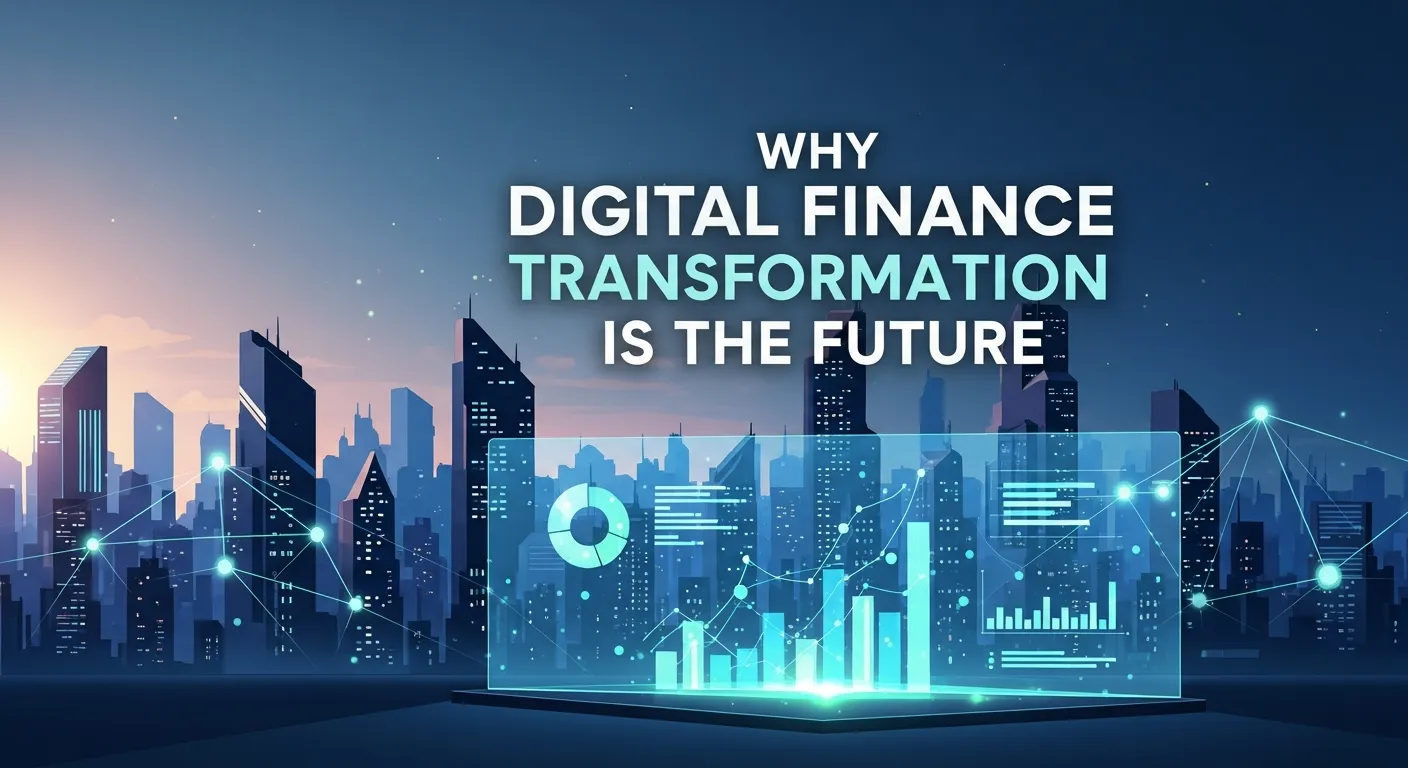
The transition to digital finance transformation isn’t a fad — it is the inevitable future of business operation. It enables organizations to become more efficient, more insightful and ultimately more profitable.
That is the clear message for finance professionals and business leaders: the time to begin this transformation is now. These tools and strategies are crucial for businesses looking to remain competitive in a digital world.
If you’re prepared to take your finance operations to the next level, perhaps it’s time to consider the tools that can help you achieve it. Get started on the new, test different, sign up and discover what digital finance transformation is all about.
Conclusion
Digital Finance Transformation is no longer optional — it’s essential for businesses seeking agility, accuracy, and strategic advantage. By leveraging cloud systems, AI, analytics, and automation, finance teams can reduce manual work, minimize errors, and provide actionable insights that guide business decisions. Organizations that embrace digital finance transformation gain real-time visibility, improved forecasting, and stronger risk management, positioning themselves for long-term growth and competitiveness.
Frequently Asked Question
1. What is Digital Finance Transformation?
Digital Finance Transformation is the process of adopting digital technologies, such as AI, cloud computing, data analytics, and automation, to transform traditional finance functions. It enables finance teams to move from manual, reactive tasks to strategic, insight-driven decision-making, improving accuracy, efficiency, and overall business performance.
2. Why is Digital Finance Transformation important?
Digital Finance Transformation is crucial for modern businesses because it allows real-time financial insights, faster decision-making, and better alignment between finance and overall business strategy. By leveraging digital tools, organizations can reduce errors, respond quickly to market changes, and stay competitive in fast-moving industries.
3. Which technologies drive Digital Finance Transformation?
The key technologies driving Digital Finance Transformation include cloud-based finance platforms for real-time data access, AI and machine learning for automation and predictive analytics, data visualization tools for actionable insights, and robotic process automation (RPA) for streamlining repetitive tasks.
4. How does Digital Finance Transformation improve efficiency?
Digital Finance Transformation enhances efficiency by automating labor-intensive tasks such as payroll, invoicing, reconciliation, and reporting. This saves hundreds of hours annually, allowing finance teams to focus on strategic initiatives, value-added analysis, and forward-looking financial planning.
5. What role does AI play in Digital Finance Transformation?
AI plays a central role by enabling predictive forecasting, fraud detection, and intelligent automation of routine financial processes. With AI, finance teams can quickly analyze vast amounts of data, uncover patterns, and provide actionable insights for both short-term operations and long-term strategy.
6. How do cloud systems support Digital Finance Transformation?
Cloud systems centralize financial data, allowing seamless collaboration across multiple locations and departments. They reduce dependency on costly on-premise infrastructure, enable real-time reporting, and provide scalable solutions that grow with the organization’s needs, making Digital Finance Transformation more accessible and flexible.
7. Can Digital Finance Transformation reduce business risks?
Yes, Digital Finance Transformation helps mitigate business risks through real-time monitoring, predictive analytics, and improved data accuracy. Finance leaders can anticipate potential problems, ensure regulatory compliance, and make proactive decisions to reduce financial exposure and operational vulnerabilities.
8. What challenges do organizations face in Digital Finance Transformation?
Organizations often encounter challenges such as cybersecurity threats, difficulties integrating legacy systems with modern technologies, and a skills gap among finance professionals. Successful transformation requires robust cybersecurity, careful system integration planning, and continuous workforce upskilling.
9. How does Digital Finance Transformation impact the finance workforce?
The finance workforce shifts from transactional roles to strategic advisory roles. Professionals need new skills in data interpretation, technology literacy, and strategic thinking. Digital Finance Transformation empowers employees to provide insights, drive decisions, and support organizational growth rather than simply processing numbers.
10. Can small and medium businesses benefit from Digital Finance Transformation?
Absolutely. Even small and medium-sized enterprises (SMEs) can leverage cloud systems, AI, and analytics tools to automate processes, improve data accuracy, and gain real-time insights. This transformation helps SMEs operate more efficiently, compete with larger organizations, and make informed decisions with limited resources.
11. What are some real-world examples of Digital Finance Transformation?
Successful examples include General Electric (GE) using AI and cloud for centralized reporting and better forecasting, Starbucks using analytics to optimize customer experiences and demand forecasting, and Siemens implementing RPA to reduce manual reconciliation work, cutting costs and improving efficiency.
12. What is the future of Digital Finance Transformation?
The future of Digital Finance Transformation includes the integration of blockchain for transparent transactions, advanced predictive analytics for proactive decision-making, and fully connected automation ecosystems. These innovations will enable organizations to operate with greater agility, accuracy, and strategic foresight in a rapidly evolving digital economy.


Embedded Finance and the Future of Seamless Digital Financial Services
How AI-Based Fraud Detection is Protecting Digital Payments
Harnessing AI and Machine Learning for Fraud Detection in Digital Finance
Digital Marketing for Financial Services: Strategies That Deliver Results
Digital Twin Technology in Finance: How Virtual Models Are Transforming Risk Management
The Future of Personal Finance: Autonomous Finance and AI Money Management
AI Credit Scoring: Revolutionizing SME Banking and Digital Loans
AI Fraud Detection: How Banks Prevent Financial Crime in Real Time