

Machine Learning in Digital Finance is transforming banking and fintech by improving fraud detection, risk analysis, automation, and customer experience. With ethical AI, strong data systems, and smart governance, ML is shaping the future of secure, intelligent financial services.
Today’s financial world is changing faster than ever. Machine learning in digital finance is helping banks, fintech companies, and financial institutions improve the way they work. AI and ML make everyday tasks easier by automating long and complex processes, reducing manual work, and speeding up operations. They also help businesses understand customer behaviour, offer personalised services, and create smoother digital experiences.
These smart technologies support better decision-making by analysing large amounts of data in seconds. They reduce risks, help detect fraud early, and minimise errors. This makes digital banking more secure, reliable, and efficient for both businesses and customers.
AI and machine learning are now becoming the backbone of modern fintech. They are reshaping how payments, loans, investments, customer service, and risk management work in the digital world. As financial services continue to evolve, these technologies will play an even bigger role in building safer and smarter financial systems.
What Is Machine Learning in Digital Finance?
Machine Learning in digital finance means using data, algorithms, and automation to help financial services work better. It allows banks and fintech companies to analyse large amounts of information quickly and make smarter decisions. ML learns from patterns, improves over time, and helps businesses deliver faster and safer digital services.
In digital banking, machine learning helps detect fraud, predict customer needs, and reduce risky decisions. It also supports automated loan approvals, smarter credit scoring, and real-time transaction monitoring. Because ML can process data faster than humans, it improves accuracy and reduces mistakes.
Fintech companies use machine learning to personalise customer experiences, recommend financial products, and offer instant support through chatbots. ML also helps financial institutions handle big data, manage compliance tasks, and strengthen overall security.
Machine learning is a key driver of digital innovation in finance. It makes financial services more efficient, more secure, and more customer-friendly. As the industry moves toward AI-powered systems, ML will continue to shape the future of digital banking and modern fintech solutions.
Key Applications of AI and Machine Learning in Digital Finance

AI and Machine Learning play a major role in today’s digital finance ecosystem. These technologies help banks, fintech companies, and financial institutions improve speed, security, accuracy, and customer experience. They support digital transformation by allowing businesses to use data more intelligently and automate complex financial operations. Below are the most important applications of AI and ML in modern finance.
1. Fraud Detection and Prevention
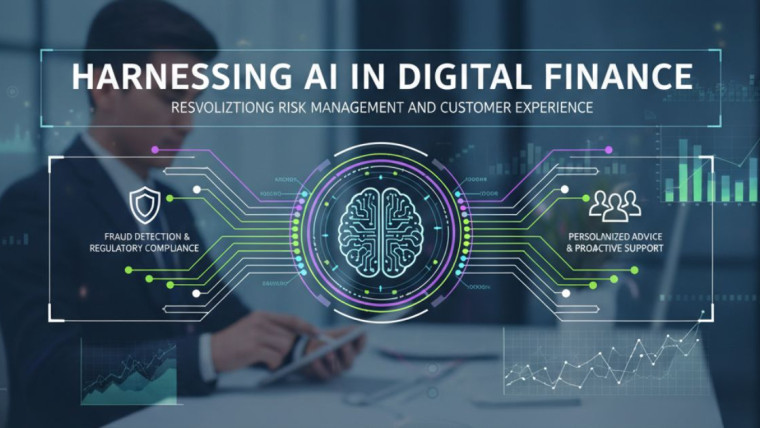
Machine learning models analyse millions of transactions in real time. They detect unusual patterns, suspicious activities, and potential threats within seconds. This helps banks block fraud before it happens. AI-powered fraud detection systems also learn from new data, making digital banking safer every day. This increases trust and security in online payments and mobile banking.
2. Automated Risk Assessment
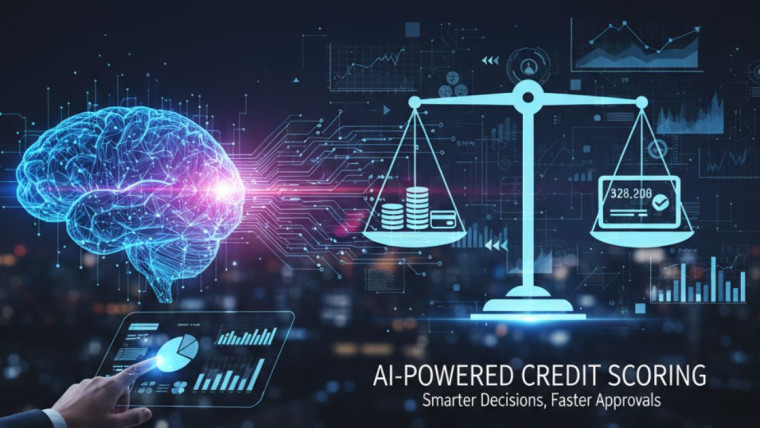
AI and ML improve risk analytics by studying credit history, spending behavior, income patterns, and financial habits. This gives lenders a clearer and more accurate picture of customer risk levels. Automated risk scoring helps financial institutions make faster decisions for loan approvals, credit cards, and buy-now-pay-later services. It also reduces human errors and supports fair, data-driven lending decisions.
3. Personalised Customer Experience
Machine learning helps banks understand customer needs more deeply. AI tools track user preferences, financial goals, and past activities to create personalised banking experiences. Customers receive tailored product suggestions such as custom loan options, savings recommendations, credit improvement tips, and investment ideas. This increases customer satisfaction, boosts engagement, and strengthens long-term loyalty.
4. Smart Chatbots and Virtual Assistants
AI-powered chatbots improve customer service by offering instant support 24/7. They answer questions, guide users through account issues, help with transactions, and provide real-time updates. Virtual assistants reduce the workload on support teams and ensure customers get quick, accurate solutions. This makes digital banking smoother and more efficient.
5. Algorithmic Trading and Investment Insights
Machine learning models analyse market trends, financial news, and historical data to predict price movements. This supports algorithmic trading, automated investment strategies, and risk management decisions. AI-driven investment tools help traders make smarter choices and allow beginners to access advanced insights through robo-advisors and smart portfolio tools.
6. Automated Compliance and Reporting
Financial institutions must follow strict regulations. AI helps by monitoring transactions, detecting compliance breaches, and generating detailed reports automatically. This reduces errors, saves time, and ensures financial businesses meet legal standards. ML also supports better audit trails and improves transparency.
7. Payment Automation and Digital Transactions
Machine learning improves the speed and safety of digital payments. AI tools verify transaction legitimacy, detect suspicious transfers, and optimise payment processing. This results in faster online payments, fewer failed transactions, and a more secure digital payment environment.
AI and Machine Learning now support almost every area of digital finance. These technologies strengthen financial automation, improve operational efficiency, and deliver smarter digital banking experiences. As fintech continues to grow, AI-powered solutions will shape the future of data-driven, intelligent financial systems.
Benefits of Machine Learning in Digital Finance
Machine Learning brings many powerful benefits to the financial industry. It makes digital banking smarter, faster, and safer. By analysing large amounts of data and automating complex tasks, ML helps financial institutions deliver better services and make more informed decisions. Here are the key benefits:
1. Faster Decision-Making
Machine learning analyses data in seconds. It helps banks approve loans, verify identities, and process transactions faster. This improves customer satisfaction and supports real-time financial services.
Predictive analytics also helps businesses stay ahead of risks and make stronger, data-driven decisions.
2. Improved Security and Fraud Prevention
ML models detect suspicious activities before they turn into major problems. They learn from new fraud patterns and update themselves automatically. This strengthens online banking security, protects customer information, and reduces financial losses. Secure digital banking becomes easier with continuous AI monitoring.
3. Higher Operational Efficiency
Machine learning reduces manual work by automating repetitive tasks. This saves time and cuts operational costs. Financial automation allows staff to focus on important tasks like customer support and strategic planning. Banks become more efficient, productive, and scalable.
4. More Accurate Risk Management
ML provides accurate risk insights by analysing financial behavior, transaction patterns, and credit history.
This helps lenders assess borrowers more fairly and reduces the chance of bad loans. It also improves decision-making for credit scoring, investment planning, and market analysis.
5. Enhanced Customer Experience
Machine learning helps banks understand customer needs better. With AI-powered recommendations, customers receive personalised products like suitable loans, savings plans, or investment options.
This creates a customer-centric fintech environment where users feel supported, understood, and valued.
6. Cost Reduction
By automating tasks like fraud monitoring, customer support, and compliance reporting, ML helps banks reduce operational costs. Smarter systems require fewer resources and help institutions manage their budgets more effectively.
7. Stronger Compliance and Reduced Errors
ML tools automatically check for compliance issues and ensure transactions follow regulatory rules. This reduces human errors, improves reporting accuracy, and protects institutions from legal risks.
Machine Learning makes digital finance more secure, efficient, and customer-friendly. It plays a key role in building intelligent banking systems and driving digital transformation across the financial sector. As financial services continue to evolve, the benefits of AI and ML will only grow stronger.
Technical Foundations: Machine Learning Models and Data Infrastructure

Using AI in digital finance requires strong technical foundations. Financial institutions need reliable data pipelines, advanced machine learning models, and scalable data systems to support accurate and secure decision-making.
Machine learning models play a major role in financial automation. Supervised learning methods—such as regression and classification—are widely used for credit scoring, fraud detection, customer risk assessment, and loan approval. These models learn from labelled data and provide fast, accurate predictions.
Unsupervised learning helps discover hidden patterns in financial datasets. Techniques like clustering and anomaly detection identify unusual behavior, segment customers, and reveal risks without needing labelled inputs. This supports better insights in data-driven finance.
Reinforcement learning is growing in popularity in fast-changing environments like algorithmic trading and portfolio optimization. These models learn from rewards and penalties, making them effective in dynamic financial markets.
To run these ML systems, financial institutions need strong data infrastructure. This includes scalable data storage, secure cloud systems, and modern data lakes that hold large volumes of structured and unstructured financial data. Real-time processing frameworks help ML algorithms receive clean, high-quality inputs without delay.
A solid technical foundation ensures that AI-powered finance is accurate, compliant, efficient, and secure. Strong data pipelines and advanced ML models enable banks and fintech companies to build reliable intelligent systems that drive digital transformation.
Challenges and Considerations
Even though AI brings many advantages to digital finance, financial institutions still face several challenges when adopting these technologies. These issues must be managed carefully to ensure safe, ethical, and compliant AI use.
Data privacy is one of the biggest concerns. Regulations such as GDPR, CCPA, and other financial data protection laws set strict rules for how customer data can be collected, stored, and processed. Banks and fintech companies must follow these rules to avoid legal risks and maintain customer trust.
Model transparency and explainability are also important. Financial institutions must show how AI and machine learning models make decisions—especially in areas like credit scoring, loan approvals, fraud detection, and risk assessment. Clear explanations help improve regulatory compliance and build trust with customers.
Another challenge is integrating AI with legacy systems. Many banks still rely on outdated, traditional IT infrastructure that was not designed for modern AI workloads. Connecting new AI tools with old systems can be expensive, time-consuming, and technically difficult. This slows down digital transformation.
Organizations also need skilled teams to manage AI operations. AI talent shortages make it difficult to find experts in data science, machine learning, cybersecurity, and financial analytics. Companies must invest in training, upskilling, and hiring to build strong AI capabilities.
Change management is another important factor. Employees must adapt to new tools, new workflows, and new responsibilities. Without proper training and communication, AI adoption can face internal resistance.
Finally, AI models require continuous monitoring and evaluation. Financial data changes often, and ML models can become outdated or biased if not updated regularly. Ongoing monitoring ensures accuracy, fairness, and reliable performance.
These challenges show that AI adoption in finance requires careful planning, strong governance, and long-term commitment. With the right strategy, financial organizations can overcome obstacles and build sustainable AI-powered systems.
Regulatory and Ethical Implications
As AI systems become more involved in financial decision-making, ethical and regulatory concerns grow more important. AI-driven decisions can directly affect customers’ lives, especially in areas like lending, credit scoring, insurance pricing, and fraud detection. Because of this, fairness and transparency are critical.
One major issue is bias in AI models. If machine learning tools are trained on biased or incomplete data, they may produce unfair or discriminatory outcomes. This can lead to unequal loan approvals, incorrect risk scores, or unfair insurance rates. To avoid this, financial institutions must focus on bias mitigation, fair lending practices, and ethical AI development.
Regulators around the world are now creating rules to guide responsible use of AI in finance. These frameworks highlight principles such as accountability, auditability, explainability, and human oversight. Banks and fintech companies must ensure that all AI decisions can be reviewed, explained, and traced back to clear logic.
Many regions are introducing new standards, such as AI transparency requirements, risk-based regulations, and governance guidelines to protect consumers. This pushes financial institutions to adopt strong AI policies, regular model audits, and clear documentation.
To keep pace with changing rules, financial organizations must stay informed about evolving global standards. They should also collaborate with regulators, policymakers, and ethics boards to build trust and support safe innovation. By balancing innovation with responsibility, the financial sector can create AI-powered systems that are secure, fair, and aligned with customer interests.
Future Trends and Opportunities

The future of digital finance will be shaped by rapid advancements in artificial intelligence and machine learning. As these technologies evolve, they will unlock new possibilities, improve transparency, and create smarter, safer financial systems.
One major trend is Explainable AI (XAI). This technology makes AI decisions easier to understand by explaining how and why a model reached a specific outcome. XAI will help banks, regulators, and customers build trust in AI systems. It will also make compliance easier because financial institutions can clearly show the logic behind credit decisions, risk scores, and fraud alerts.
Federated learning is another important development. It allows models to learn from data stored in multiple locations without moving or centralizing sensitive information. This improves privacy and security while still enabling powerful machine learning. For financial institutions, federated learning supports secure collaboration, safer risk analysis, and privacy-preserving AI solutions.
Quantum computing is expected to create a major shift in financial optimization. Quantum algorithms can solve complex problems much faster than traditional systems. This could transform portfolio optimization, asset allocation, risk modeling, and trading strategies. As quantum technology becomes more accessible, financial firms will gain tools capable of analysing massive datasets and running simulations that were previously impossible.
AI will also support the creation of new financial products and services. Predictive insurance pricing will help insurers offer fairer, more personalized premiums. Automated compliance management will reduce regulatory workload and minimize human error. Real-time analytics will enable smarter decisions in payments, lending, and investment management.
Other emerging opportunities include:
- Hyper-personalised financial services powered by behavioural data
- AI-driven financial planning for everyday customers
- Smart contract automation in digital payments and blockchain-based finance
- Enhanced cybersecurity systems that detect threats instantly
- Intelligent credit models that offer fair access to finance
As these innovations mature, AI will continue to transform the financial ecosystem. The future of fintech will be faster, more predictive, more personalised, and more secure—driven by intelligent systems that help both customers and institutions thrive.
Conclusion
AI and machine learning are creating a major transformation in digital finance. These technologies make financial services more personalised, more secure, and more efficient. They help banks and fintech companies improve decision-making, reduce fraud, automate operations, and offer better customer experiences. This shift marks a new era where data-driven intelligence becomes the core of modern financial services.
However, challenges still exist. Financial institutions must address data privacy laws, ensure model transparency, and manage complex integration with legacy systems. They also need strong governance, skilled talent, and continuous monitoring to maintain accuracy and fairness. Responsible AI practices are essential for building trust and meeting regulatory requirements.
Even with these challenges, the opportunities are far greater. AI-powered finance will continue to unlock new products, new insights, and new levels of innovation. Organizations that adopt AI strategically and ethically will gain a strong competitive advantage. They will lead the future of digital banking and play a key role in shaping the next generation of intelligent financial systems. Read more Central Bank Digital Currencies (CBDCs)
The future of fintech belongs to institutions that combine smart technology with responsible innovation.
FAQs: Machine Learning in Digital Finance
1.What is Machine Learning in Digital Finance?
Machine Learning in Digital Finance uses AI algorithms to analyse financial data, automate processes, and improve decision-making in banking and fintech.
2.How does Machine Learning in Digital Finance work?
It works by learning patterns from large datasets such as transactions, customer behavior, and market trends to make accurate predictions and decisions.
3.Why is Machine Learning important in Digital Finance?
Machine Learning in Digital Finance improves efficiency, reduces fraud, enhances security, and enables faster, data-driven financial services.
4.How does Machine Learning in Digital Finance improve fraud detection?
It monitors transactions in real time, detects unusual patterns, and stops fraudulent activities before they cause financial loss.
5.Can Machine Learning in Digital Finance improve customer experience?
Yes, it personalises banking services, recommends suitable products, and supports customers through AI chatbots and virtual assistants.
6.How is Machine Learning in Digital Finance used in credit scoring?
It analyses income, spending habits, and repayment history to create fairer and more accurate credit risk assessments.
7.Is Machine Learning in Digital Finance safe and secure?
When implemented with strong data security, compliance rules, and ethical AI practices, it is highly secure and reliable.
8.What challenges exist in Machine Learning in Digital Finance?
Challenges include data privacy regulations, model transparency, legacy system integration, and the need for skilled AI professionals.
9.How does Machine Learning in Digital Finance support risk management?
It predicts financial risks by analysing patterns, helping institutions prevent losses and make smarter lending and investment decisions.
10.What role does ethics play in Machine Learning in Digital Finance?
Ethical AI ensures fairness, reduces bias, protects customer data, and builds trust in automated financial decisions.
11.How does Machine Learning in Digital Finance help fintech innovation?
It enables automation, real-time analytics, personalised products, and scalable digital financial solutions.
12.What is the future of Machine Learning in Digital Finance?
The future includes explainable AI, federated learning, quantum computing, and smarter, more secure digital financial ecosystems.



Embedded Finance: How Seamless Financial Services Are Integrating into Everyday Apps
Digital Finance VS Traditional Finance: What’s The Real Difference?
Digital Marketing for Financial Services: Strategies That Deliver Results
What Are Digital Finance Tools
Digital Twin Technology in Finance: How Virtual Models Are Transforming Risk Management
The Future of Personal Finance: Autonomous Finance and AI Money Management
AI Credit Scoring: Revolutionizing SME Banking and Digital Loans
AI Fraud Detection: How Banks Prevent Financial Crime in Real Time