
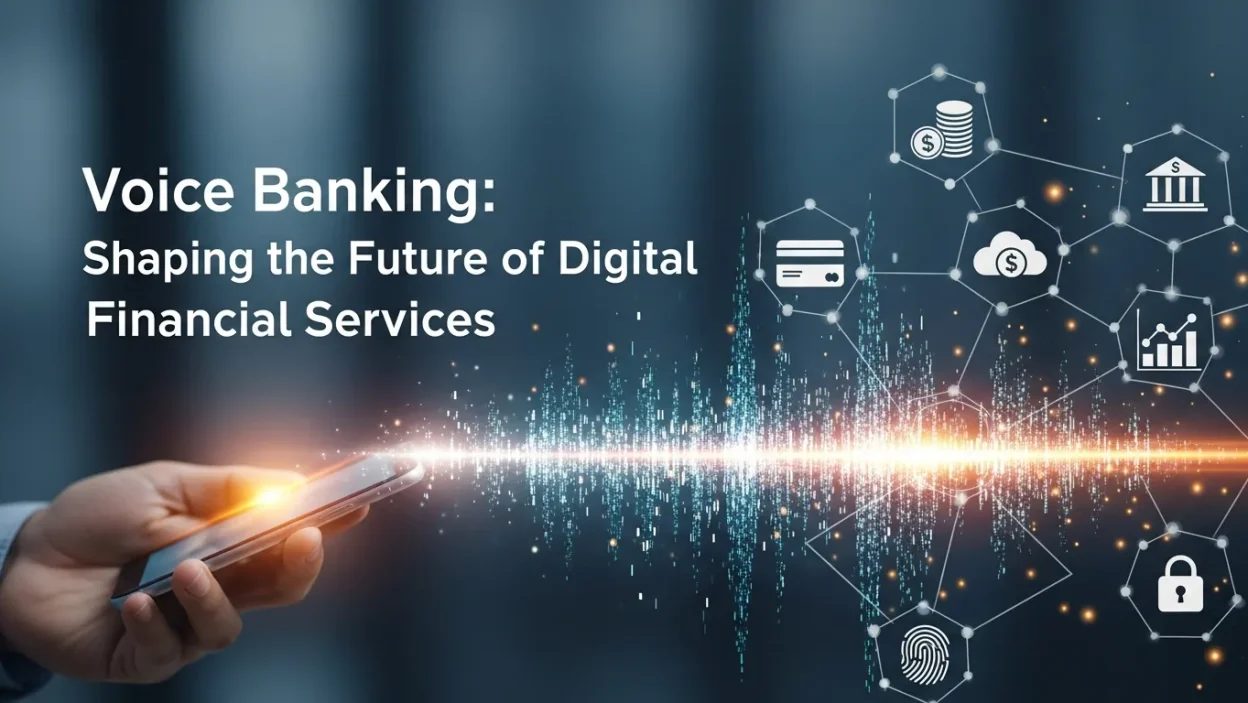
Voice banking is redefining the Future of Digital Financial Service by enabling customers to manage finances through simple voice commands. Powered by AI, natural language processing, and voice biometrics, this technology improves convenience, accessibility, and efficiency while helping banks deliver faster, smarter, and more personalized services.
The banking industry is entering a new era of digital transformation. Voice banking technology is changing the way customers interact with their banks. Using AI voice assistants and natural language processing, people can now manage their finances with simple spoken commands. This move toward conversational banking is more than just a tech upgrade—it is reshaping customer experience and how banks deliver services.
Banks and financial institutions around the world are adopting voice-enabled financial services to meet growing customer expectations. From checking account balances on smart speakers like Alexa to sending money through Siri, hands-free banking is becoming a reality. This innovative technology makes banking faster, more convenient, and easier to use for everyone.
What is the Meaning of Voice Banking?
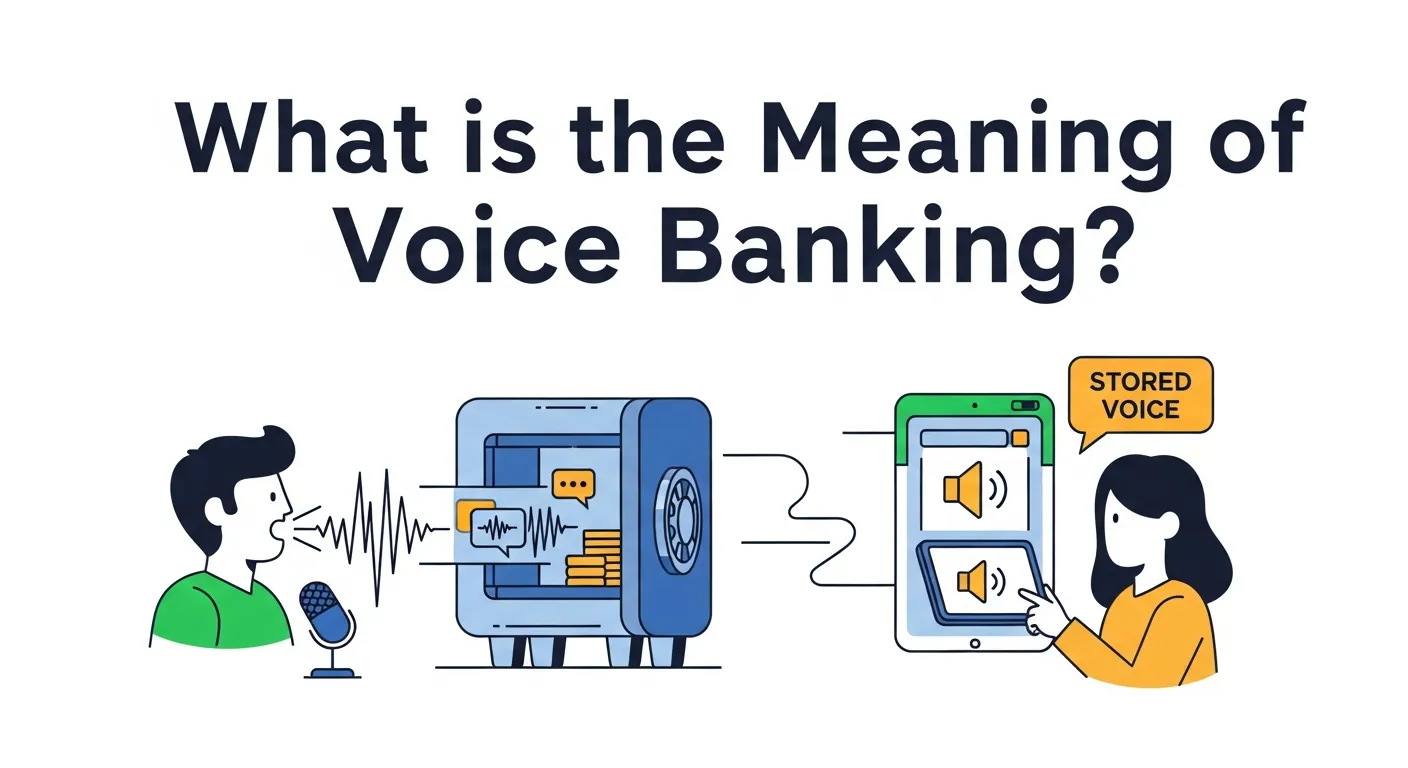
Voice banking is a digital financial service that allows customers to manage their bank accounts using spoken commands instead of typing or tapping. By leveraging AI voice assistants and natural language processing, banks can understand and respond to customer requests in real time.
With voice banking, users can perform tasks like:
- Checking account balances
- Transferring funds between accounts
- Paying bills
- Getting updates on recent transactions
This technology makes banking more convenient, fast, and hands-free, while also improving customer experience and accessibility for everyone, including those with visual or mobility challenges.
The Technology Behind Voice Banking
Voice banking relies on advanced voice recognition technology that has improved significantly over the past decade. Modern banking apps use AI-powered speech recognition and natural language processing in finance to understand customer commands accurately. These systems combine machine learning with smart algorithms to interpret requests and complete banking tasks quickly and efficiently.
Smart banking technology uses a voice user interface to handle complex financial queries. When a customer speaks to their device, the system converts speech to text, analyzes the intent, and delivers the correct response or action. This all happens in milliseconds, creating a smooth and seamless conversational banking experience.
Voice biometrics adds an extra layer of security. Banks can recognize unique voice patterns to authenticate users, making voice-activated banking both convenient and safe. This reduces the need for passwords or PINs for routine transactions and lowers the risk of fraud.
Current Applications in the Banking Industry
Many major banks have already started offering voice banking solutions to improve customer convenience. For example, Chase Bank lets customers check balances and recent transactions using Amazon Alexa. Bank of America’s virtual assistant, Erica, handles over a billion requests every year through voice and text, providing fast and personalized support.
Wells Fargo also offers voice-enabled banking through Google Assistant, allowing users to access account information, pay bills, and perform other tasks with simple voice commands. These examples show how traditional banks are embracing hands-free banking to meet modern customer expectations.
Even smaller financial institutions and credit unions are adopting AI-powered voice technology. By doing so, they can offer personalized banking experiences that were once exclusive to large banks, helping them compete more effectively in the digital finance landscape.
Benefits for Financial Institutions and Customers

Voice banking brings significant advantages for both banks and their customers, transforming the way financial services are delivered.
Benefits for Financial Institutions:
-
Reduced Call Center Volume: Routine inquiries such as balance checks, transaction history, or bill payments can be handled by AI voice assistants, freeing up human staff to focus on complex or high-value tasks.
-
Operational Efficiency: Voice technology can process multiple requests simultaneously without wait times, allowing banks to serve more customers with the same infrastructure.
-
Cost Savings: By automating routine tasks, banks reduce operational costs while maintaining or improving service quality.
-
Valuable Data Insights: Voice interactions generate actionable data about customer behavior, preferences, and frequently asked questions, enabling banks to improve products and services.
-
Competitive Advantage: Implementing voice-enabled solutions positions banks as innovators, appealing to tech-savvy customers and attracting younger demographics.
Benefits for Customers:
-
Convenience and Accessibility: Customers can complete banking tasks hands-free, such as checking balances while cooking or transferring funds while driving.
-
Time-Saving: Voice commands reduce the need to navigate mobile apps or wait on calls, making banking faster and more efficient.
-
Enhanced Customer Experience: Personalized, real-time responses improve satisfaction and engagement.
-
Inclusivity: People with visual impairments or mobility challenges benefit from hands-free banking, making financial services accessible to a wider audience.
-
Seamless Multitasking: Users can manage their finances alongside other activities, increasing productivity without sacrificing security or accuracy.
In short, voice banking not only enhances convenience for customers but also enables banks to operate more efficiently, reduce costs, and gain deeper insights into user behavior. This makes it a win-win solution for the modern financial ecosystem.
Security and Privacy Considerations
Security and privacy are critical when implementing voice-enabled banking. Banks must ensure that customer data and financial transactions remain protected while maintaining the convenience of hands-free banking.
Key Security Measures:
-
Voice Biometrics Authentication: Banks use unique voice Biometrics Authentication patterns to verify customers’ identities, making voice banking secure and reducing the need for passwords or PINs.
-
Multi-Factor Authentication: For sensitive transactions, voice recognition is often combined with additional verification methods such as OTPs, mobile alerts, or security questions.
-
Fraud Prevention: Advanced AI and machine learning monitor voice transactions to detect unusual activity, helping prevent unauthorized access.
Privacy Protection:
-
Secure Data Handling: Financial institutions must protect voice recordings and personal information during processing, storage, and transmission.
-
Clear Data Policies: Transparency about how voice data is stored, used, and retained helps build customer trust in digital banking solutions.
-
User Consent: Customers should be informed about data collection practices and have control over their personal information.
Regulatory Compliance:
-
Financial Regulations: Banks must follow local and international compliance standards while deploying innovative voice technologies.
-
Collaboration Between Teams: Technology developers, security experts, and compliance teams need to work together to meet regulatory requirements without compromising user experience.
-
Ongoing Monitoring: Continuous audits and system updates ensure that voice banking services remain compliant and secure.
In summary, while voice banking offers unmatched convenience, banks must prioritize security, privacy, and regulatory compliance to maintain trust and protect their customers.
Challenges in Implementation

While voice banking offers many benefits, financial institutions face several implementation challenges.
Technical Challenges
-
Understanding Diverse Speech: Voice recognition systems must accurately interpret different accents, dialects, and speech patterns.
-
Background Noise: Systems need to function reliably in various environments, including noisy surroundings.
-
Continuous Improvement: AI algorithms require ongoing training and refinement to maintain high accuracy across all customer groups.
System Integration Challenges
-
Legacy Infrastructure: Many banks rely on older systems that need significant upgrades to support voice-enabled features.
-
Seamless Integration: Proper planning is essential to avoid service disruptions while adding new voice banking functionalities.
-
Compatibility Issues: Ensuring that voice applications work smoothly with mobile apps, web platforms, and smart devices can be complex.
Customer Adoption Challenges
-
Awareness and Education: Many customers are unfamiliar with voice banking capabilities or unsure about security.
-
Building Trust: Banks must clearly communicate how voice banking is secure and beneficial.
-
Training and Support: Providing tutorials, guides, and customer support helps users confidently adopt new voice technologies.
In short, overcoming these challenges requires a mix of advanced technology, careful system planning, and customer education. Banks that address these hurdles effectively can ensure a smooth rollout and higher adoption of voice-enabled services.
The Future of Voice Banking
The future of voice banking promises even more advanced and personalized financial services. Emerging trends show that AI-powered voice assistants will go beyond basic commands, enabling complex conversations and providing nuanced financial advice tailored to individual needs.
Key Trends Shaping the Future:
-
Personalized Financial Recommendations: AI assistants will analyze spending patterns, saving habits, and financial goals to offer customized advice.
-
Integration with IoT Devices: Banking will move beyond smartphones and smart speakers. Cars, home appliances, and wearable devices may soon allow hands-free access to financial services, making money management more accessible and integrated into daily life.
-
Predictive Analytics: Voice assistants will use Predictive Analytics to anticipate customer needs by suggesting budget adjustments, alerting users to unusual transactions, and reminding them of upcoming bills.
-
Proactive Financial Guidance: Instead of reacting to requests, future voice banking will actively guide customers toward smarter financial decisions.
This evolution transforms voice banking from a reactive service into a proactive financial services partner, helping customers manage money more efficiently, securely, and conveniently. Banks that embrace these trends early will gain a competitive edge in the rapidly evolving digital finance landscape.
Industry Impact and Competitive Advantages

Early adopters of voice banking are gaining significant competitive advantages by offering an enhanced customer experience. Voice-enabled financial services help banks stand out in crowded markets by providing innovative, convenient, and hands-free banking solutions. Customers tend to remain loyal when banks offer cutting-edge technology that simplifies financial management.
The fintech industry continues to drive innovation in voice banking applications. Startups are creating specialized solutions, including voice-activated chatbots, that traditional banks can adopt or compete against. This competitive environment accelerates technological development and improves overall service quality in the financial services sector.
Market research shows strong consumer interest in voice banking services, especially among younger demographics. These tech-savvy customers are more likely to adopt digital banking solutions, making voice capabilities essential for attracting and retaining future clients. Banks that ignore this trend risk losing market share to more innovative competitors who embrace AI-powered financial services.
Embracing the Voice Banking Revolution
Voice banking is driving a major digital banking transformation that no financial institution can afford to ignore. This voice-enabled technology delivers clear benefits for both banks and customers, creating new opportunities for customer engagement, improved service delivery, and smart banking solutions. To succeed, banks need to implement voice banking thoughtfully, balancing innovation with security and regulatory compliance.
A practical approach is to start with pilot programs. Testing voice banking capabilities on a smaller scale allows banks to gather customer feedback, refine processes, and resolve any challenges before a full-scale rollout. Partnering with technology providers can accelerate implementation and bring specialized expertise into the process.
The future of banking is conversational, accessible, and intelligent. AI in financial services will continue to advance, enabling more personalized, seamless, and sophisticated interactions through natural language. Banks that embrace this voice banking revolution today will be better equipped to meet evolving customer expectations and lead in the rapidly changing digital finance landscape.
Conclusion
Voice banking is no longer a futuristic concept—it is an essential part of the Future of Digital Financial Service. By combining AI voice assistants, conversational banking, and strong security measures, financial institutions can enhance customer experience, reduce operational costs, and stay competitive in a rapidly evolving digital landscape. Banks that invest early, address security concerns, and educate customers will lead the next phase of intelligent, accessible, and customer-centric digital finance.
Frequently Asked Questions (FAQ)
1. What is voice banking?
Voice banking is a digital banking service that allows customers to perform financial activities using spoken commands instead of typing or tapping. It is a key innovation shaping the Future of Digital Financial Service by making banking more intuitive and conversational.
2. How does voice banking work?
Voice banking works through AI-powered speech recognition and natural language processing. The system converts speech into text, understands user intent, and securely completes financial tasks in real time.
3. Why is voice banking important for the Future of Digital Financial Service?
Voice banking supports faster, hands-free, and personalized interactions. It aligns with modern customer expectations and represents a major shift toward smarter, more accessible digital financial services.
4. What services can customers access through voice banking?
Customers can check account balances, transfer funds, pay bills, review transaction history, receive alerts, and get financial updates using simple voice commands.
5. Is voice banking secure?
Yes. Voice banking uses advanced security measures such as voice biometrics, multi-factor authentication, encryption, and AI-driven fraud detection to protect customer data and transactions.
6. How does voice banking improve customer experience?
It reduces friction in banking by offering instant responses, 24/7 availability, and hands-free access—key elements of a superior Future of Digital Financial Service experience.
7. Can voice banking help people with disabilities?
Absolutely. Voice-enabled banking improves financial inclusion by allowing users with visual impairments or mobility challenges to access banking services easily and independently.
8. Are banks already using voice banking?
Yes. Many leading global banks have implemented voice banking through smart assistants like Alexa, Google Assistant, and AI-driven virtual banking assistants.
9. What challenges do banks face in implementing voice banking?
Banks face challenges such as integrating with legacy systems, ensuring data privacy, improving voice recognition accuracy across accents, and building customer trust in new technology.
10. How does voice banking reduce operational costs?
By automating routine customer inquiries, voice banking reduces call center volume, improves efficiency, and lowers staffing and operational expenses.
11. What role will AI play in the future of voice banking?
AI will enable predictive analytics, personalized financial recommendations, and proactive customer support—driving innovation in the Future of Digital Financial Service.
12. What does the future hold for voice-enabled financial services?
Voice banking will expand through IoT integration, smarter AI assistants, and proactive financial guidance, becoming a core component of next-generation digital banking ecosystems.





The Rise of Financial Avatars: How AI Will Represent You in Future Banking
What Is Digital Financial Literacy?
How Business Finance Drives Better Business Planning and Growth
What is a Fintech Company?
How Digital Banking Is Changing the Future of Financial Management
How Financial Consulting Supports Sustainable Business Growth
How Business Finance Drives Better Business Planning and Growth
How Wealth Management Helps You Achieve Your Financial Goals