
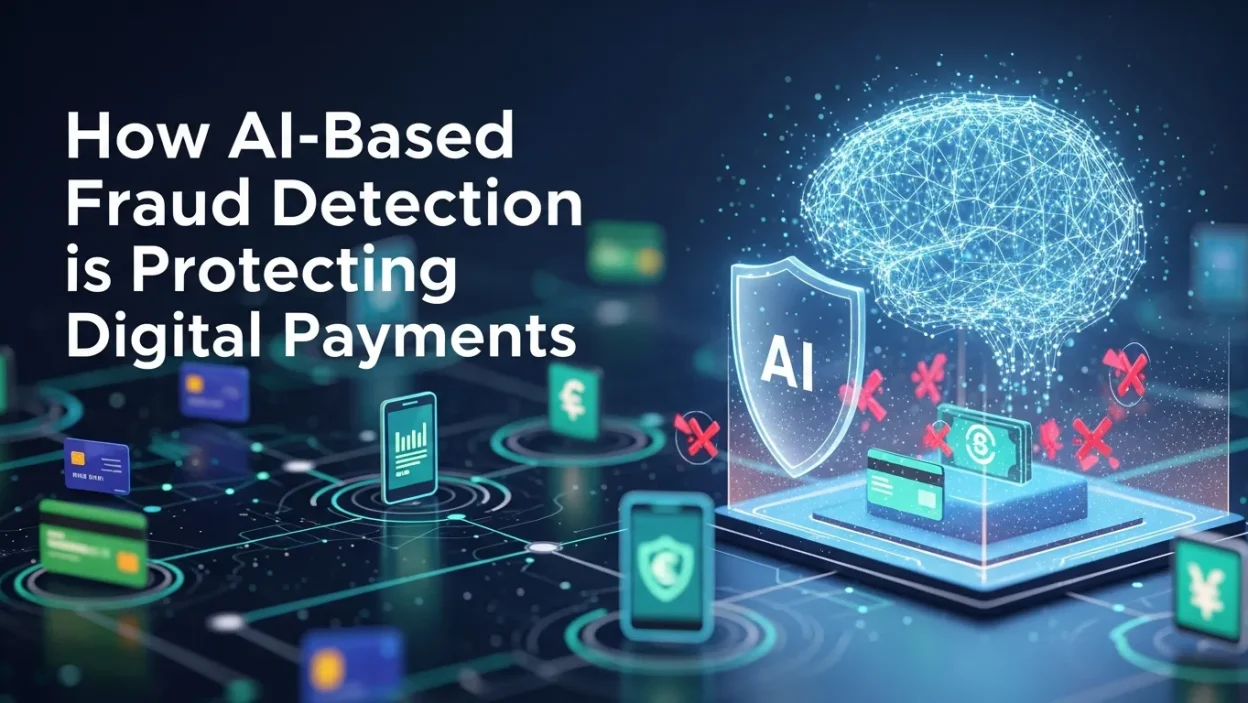
The digital payments landscape is growing rapidly, but with growth comes increased risk of fraud, identity theft, and financial loss. AI fraud detection is revolutionizing the way businesses protect transactions by using machine learning, real-time monitoring, and behavioral analytics. These AI-powered systems can detect unusual patterns, reduce false positives, and adapt to emerging threats faster than traditional methods. By implementing AI fraud detection, companies can secure digital payments, safeguard customer trust, reduce operational costs, and stay compliant with financial regulations.
The digital payments landscape is evolving at lightning speed, transforming how we buy, send money, and complete transactions online. With this growth, however, comes increasing risk: cybercriminals are constantly developing new ways to exploit vulnerabilities in digital payment systems, leading to stolen identities, financial losses, and reputational damage.
This is where AI-driven fraud detection comes into play. Leveraging machine learning fraud detection, real-time transaction monitoring, and advanced behavioral analytics, AI is revolutionizing the way businesses and financial institutions secure online payments. Whether you’re part of the fintech ecosystem, operate an e-commerce business, or simply want to understand how digital payments security is maintained, this guide will help you explore how AI protects transactions and keeps sensitive data safe.
The Rise of Fraud Detection in FinTech
Fraud detection has become one of the most critical components in the fintech industry.
Digital payments are booming, with projections estimating a global market of $14 trillion by 2027. But with that growth, fraud is also increasing. In 2023 alone, payment fraud led to global losses of at least $41 billion.
Cybercriminals now deploy advanced scams like phishing, account takeovers, and synthetic identity fraud. In addition to financial loss, companies risk losing customer trust and brand reputation. In today’s digital-first world, even a single breach can have long-term consequences.
To counter this, businesses are increasingly turning to AI-powered fraud detection systems, which use machine learning algorithms and real-time data analysis to detect and stop fraud before it causes harm.
What is AI-Powered Fraud Detection?
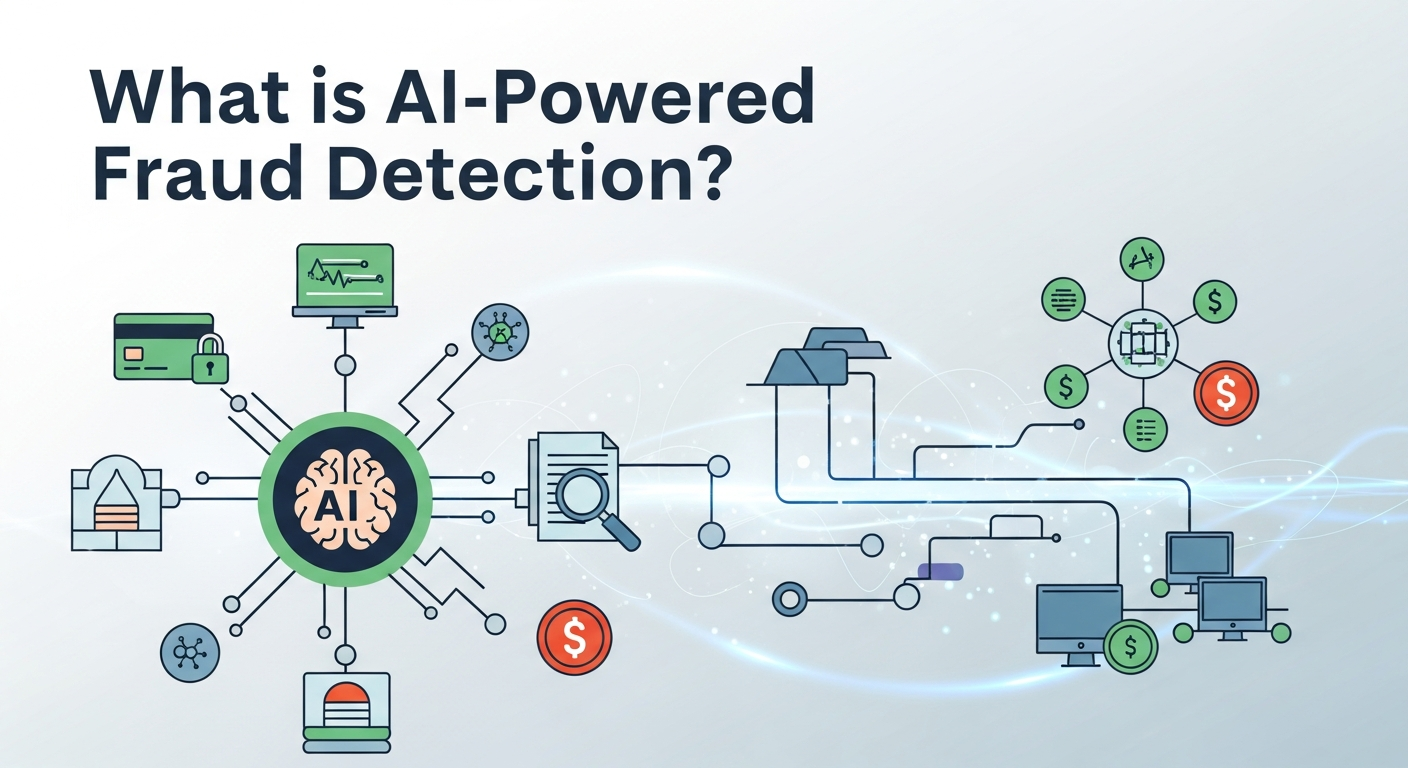
AI-based fraud detection systems rely on machine learning (ML) and big data analytics to detect and prevent fraudulent transactions.
Unlike traditional rule-based systems, AI models can:
- Learn from data to identify fraud patterns
- Adapt quickly to new fraud types
- Minimize false positives, ensuring real transactions aren’t mistakenly flagged
These systems not only detect fraud more accurately but also provide actionable insights, enabling financial organizations to stay ahead of emerging threats.
Advantages of AI for Fraud Detection
Real-Time Analysis
AI can scan millions of digital payment transactions in milliseconds, detecting anomalies as they occur — not after the damage is done. This real-time transaction monitoring helps businesses prevent financial losses and protect customer accounts instantly.
Behavioral Pattern Recognition
AI tracks and learns user behavior, identifying unusual patterns such as multiple logins from different regions or abnormal spending habits. By leveraging machine learning fraud detection, companies can spot potential threats that traditional systems might miss, strengthening digital payments security.
Reduction in False Positives
Advanced AI systems reduce errors in flagging legitimate transactions, improving the user experience and minimizing unnecessary declines. Fewer false positives mean smoother payments for customers while maintaining robust cybersecurity standards.
Scalability
Whether processing hundreds or millions of payments, AI systems scale effortlessly, maintaining high accuracy and performance. This makes AI-driven fraud prevention ideal for growing businesses, high-volume e-commerce platforms, and global fintech operations.
Cost Efficiency
AI reduces operational costs by automating manual fraud detection tasks. Companies save money by minimizing losses from fraudulent transactions and decreasing the need for extensive human review teams.
Regulatory Compliance Support
AI helps businesses stay compliant with regulations like KYC (Know Your Customer), AML (Anti-Money Laundering), and PCI DSS by automating monitoring and reporting processes. This reduces compliance risks and ensures audit-ready operations.
Actionable Insights
AI systems generate data-driven insights from transaction patterns, enabling businesses to understand fraud trends, optimize risk management strategies, and improve overall fintech security measures.
Enhanced Customer Trust
By providing secure, seamless transactions with minimal disruptions, AI increases customer confidence in digital payment platforms. Trustworthy payment systems lead to higher retention, brand loyalty, and long-term growth.
Key Features of AI Fraud Detection Systems
AI fraud detection systems are designed to not only identify suspicious transactions but also provide actionable insights that help organizations improve overall security. These systems combine multiple data sources, learn from patterns, and continuously adapt to new fraud strategies. By incorporating AI, businesses can strengthen security protocols while maintaining smooth payment experiences.
Core features of AI fraud detection:
-
Machine Learning Algorithms: Continuously learn from transaction data to detect new fraud patterns.
-
Real-Time Transaction Monitoring: Detect anomalies instantly, preventing losses before they occur.
-
Behavioral Analytics: Understand typical user behavior to spot unusual activity.
-
Adaptive Risk Scoring: Dynamically assigns risk levels to transactions for better decision-making.
How Artificial Intelligence Is Reshaping Fraud Detection Across Functions

Customer Service
AI reduces the manual load on customer support. It can automatically assess transactions, flag only the high-risk ones, and answer common queries.
Example: AI bots like ChatGPT can instantly inform users why a transaction was flagged, avoiding confusion and delays.
Data Analysis at Scale
AI digs through enormous data sets to identify fraud trends.
Tool Example: FICO Falcon uses historical, cross-industry data to enable adaptive fraud prevention.
Supply Chain Management in Payments
AI ensures that every party in the payment chain meets safety standards. It can verify suppliers and monitor abnormal activities.
Compliance and Regulation Reporting
AI tools help automate regulatory reporting, keeping businesses audit-ready and reducing compliance risk in fraud cases.
Marketing Risk Management
AI can identify ad fraud, where bots mimic user clicks. It also helps ensure marketers are reaching genuine users, not fake traffic.
AI and Tools to Disrupt Fraud in FinTech
Several AI-powered fraud detection tools are leading the charge in safeguarding digital payments and fintech operations. These tools leverage machine learning fraud detection, real-time transaction monitoring, and behavioral analytics to prevent fraud efficiently and accurately.
1. Feedzai
-
Focused on digital banking fraud
-
Real-time detection using smart-device monitoring
-
User-friendly dashboard for tracking suspicious transactions
-
Helps banks and fintech companies protect customers from financial threats
2. Sift
-
Prevents account takeovers and payment fraud
-
Real-time AI fraud prevention with zero customer friction
-
Uses machine learning to continuously adapt to new fraud patterns
-
Ideal for businesses seeking seamless and secure payment experiences
3. Ravelin
-
Designed for high-volume e-commerce transactions
-
Identifies complex fraud patterns across multiple payment channels
-
Provides actionable insights to reduce chargebacks and false positives
-
Scales easily to handle large transaction volumes efficiently
4. ComplyAdvantage
-
Tracks global watchlists and high-risk entities
-
Ensures compliance with KYC, AML, and other financial regulations
-
Automates regulatory reporting, helping businesses stay audit-ready
-
Combines fraud prevention with regulatory intelligence for end-to-end security
These AI tools for fraud prevention enable businesses to detect threats proactively, maintain compliance, and deliver secure digital payment experiences while reducing operational costs.
Why Companies Need To Implement AI Fraud Prevention Now
Protect Brand Reputation
In today’s digital-first world, consumers expect strong cybersecurity and secure digital payments. A single fraud incident can quickly damage a company’s reputation, resulting in loss of trust and customer churn. Implementing AI-driven fraud detection safeguards customer data, prevents financial losses, and builds long-term trust and loyalty. Brands that proactively protect their users demonstrate reliability and strengthen their position in the fintech security landscape.
Stay Ahead of Evolving Fraud
Fraud techniques are constantly evolving, with cybercriminals using sophisticated methods like phishing, account takeovers, and synthetic identity fraud. Traditional rule-based systems struggle to keep up, but AI fraud prevention and machine learning fraud detection tools continuously learn from new transaction data, adapting detection models in real time. This ensures companies remain ahead of emerging threats in the digital payments ecosystem.
Reduce Operational Costs
Manual fraud detection is time-consuming and expensive. AI automates transaction monitoring and analyzes large volumes of data instantly, minimizing manual reviews and operational overhead. By preventing fraud proactively, companies reduce financial losses, improve operational efficiency, and free teams to focus on strategic priorities rather than routine tasks.
Enhance Customer Experience
False positives — legitimate transactions flagged as fraud — frustrate customers and damage trust. AI’s advanced behavioral analytics and pattern recognition reduce false positives, ensuring genuine transactions are processed smoothly. A seamless and secure payment experience strengthens customer satisfaction and encourages loyalty in an increasingly competitive digital finance market.
Ensure Regulatory Compliance
Financial regulations like KYC (Know Your Customer), AML (Anti-Money Laundering), and PCI DSS require strict monitoring and reporting. AI fraud detection tools help automate these processes, generate accurate compliance reports, and maintain audit-ready records, reducing regulatory risks and penalties while ensuring business operations remain secure.
Gain Data-Driven Insights
AI-powered fraud detection goes beyond threat prevention. By analyzing millions of transactions across digital payment channels, AI provides actionable intelligence, helping companies identify vulnerabilities, optimize risk management strategies, and make informed decisions that strengthen overall cybersecurity posture.
Scale Security Efforts with Business Growth
As businesses expand and transaction volumes increase, maintaining security manually becomes impractical. AI fraud prevention systems scale seamlessly, handling hundreds of thousands — or even millions — of transactions per day without compromising accuracy or speed. This ensures consistent protection even as business operations grow globally.
Strengthen Competitive Advantage
Companies adopting AI-driven fraud prevention differentiate themselves by offering safer, more reliable digital payment experiences. Customers are more likely to trust and remain loyal to businesses that proactively invest in advanced fraud detection tools, giving these companies a significant edge in the competitive fintech market.
The Future of Payments Secure with AI

AI-powered fraud detection is no longer just a trend — it’s rapidly becoming the industry standard for digital payments security. Today, machine learning fraud detection in banking and fintech is transforming how financial institutions safeguard customer data, minimize false positives, and identify threats in real time.
By leveraging these advanced AI fraud prevention technologies, businesses can offer safer, faster, and more seamless transaction monitoring experiences. Adopting AI-driven solutions not only protects against emerging cyber threats but also positions companies as leaders in the evolving landscape of fintech security and secure digital finance.
Conclusion
As online transactions become central to the global economy, securing digital payments is no longer optional—it’s essential. AI fraud detection provides an intelligent, scalable, and proactive solution to combat fraud, protect sensitive customer data, and ensure seamless payment experiences. Organizations that adopt AI-driven fraud prevention not only mitigate risk but also strengthen customer trust, optimize operations, and gain a competitive edge in the rapidly evolving fintech landscape. In today’s digital-first world, AI is the cornerstone of secure, reliable, and resilient digital payments.
FAQs
1. What is AI fraud detection?
AI fraud detection uses machine learning and big data analytics to identify suspicious transactions and patterns in real time, adapting to new fraud techniques.
2. How does AI detect fraudulent payments?
AI analyzes transaction data, user behavior, and historical patterns to flag anomalies like unusual locations, high-risk spending, or multiple account logins.
3. Can AI completely prevent payment fraud?
No system is 100% foolproof, but AI greatly reduces fraud risk and stops most fraudulent activities faster than traditional methods.
4. Which industries benefit most from AI fraud detection?
Fintech, banking, e-commerce, and any business handling large volumes of digital payments benefit from AI fraud detection.
5. How does AI reduce false positives in payment systems?
Machine learning models learn typical user behavior and transaction patterns, allowing legitimate transactions to pass while accurately flagging suspicious activity.
6. What are some popular AI fraud detection tools?
Leading tools include Feedzai, Sift, Ravelin, and ComplyAdvantage, each offering real-time monitoring, behavioral analytics, and compliance support.
7. How does AI enhance customer trust?
By detecting fraud quickly and minimizing transaction disruptions, AI ensures secure and seamless payment experiences, which boosts customer confidence.
8. How can AI support regulatory compliance?
AI automates monitoring and reporting for KYC, AML, and PCI DSS compliance, reducing audit risks and ensuring businesses meet regulatory standards.
9. Can AI scale as my business grows?
Yes, AI can process hundreds of thousands or millions of transactions daily without sacrificing accuracy, making it ideal for growing or high-volume businesses.
10. What role does behavioral analytics play in AI fraud detection?
Behavioral analytics allows AI to track user habits, detect unusual patterns, and identify potentially fraudulent activity in real time.
11. How does AI reduce operational costs in fraud prevention?
By automating manual transaction reviews and fraud detection, AI decreases the need for large human teams, reduces losses, and improves efficiency.
12. Why is AI essential for securing digital payments?
AI provides proactive, scalable, and intelligent fraud protection, ensuring transactions are safe, reducing risk, and maintaining customer trust in an increasingly digital economy.






AI Credit Scoring: Revolutionizing SME Banking and Digital Loans
What Is Digital Financial Literacy?
FinTech and Traditional Banking: How Old Banks Are Adapting
What Is Financial Technology (FinTech)? Everything You Need to Know
The Importance of Insurance Services in Financial Planning
How Tax Planning Helps Individuals and Businesses Save Money
How to Create a Retirement Planning Strategy That Works
How Digital Asset Management Improves Business Efficiency