
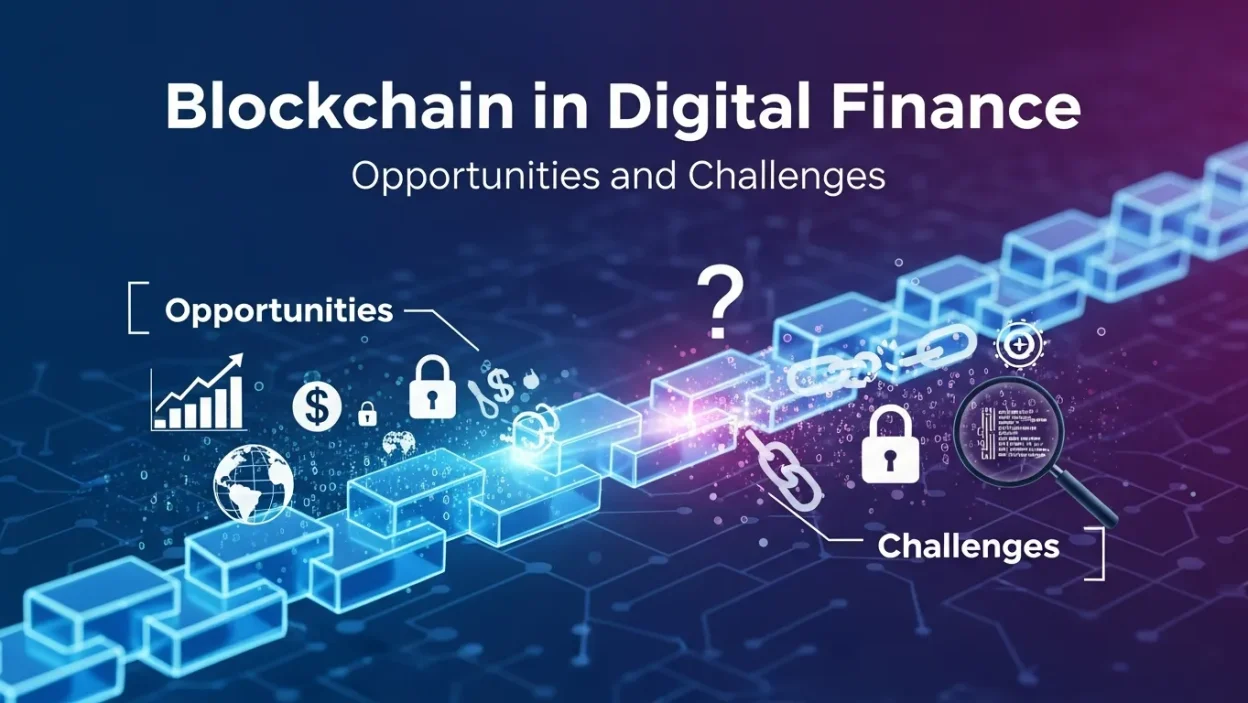
Blockchain in Digital Finance marks a fundamental shift in how financial systems operate—moving from centralized, trust-based institutions to decentralized, cryptography-driven networks. By enabling faster transactions, stronger security, automation through smart contracts, asset tokenization, and broader financial inclusion, blockchain has the potential to redefine global finance. While regulatory, scalability, and integration challenges remain, hybrid models and gradual adoption are paving the way for a more efficient, transparent, and inclusive financial future.
The financial world stands at a crossroads. Traditional banking systems that have dominated for centuries now face a revolutionary technology that promises to transform how we handle money. Blockchain technology has emerged as perhaps the most significant innovation in digital finance since the internet itself.
Transforming Financial Infrastructure

At its core, blockchain offers a decentralized ledger system that records transactions across multiple computers. This seemingly simple innovation creates profound implications for financial systems worldwide.
Banks and financial institutions have taken notice. Many have moved beyond initial skepticism to actively exploring blockchain integration within their operations.
The appeal is clear: blockchain can drastically reduce the friction present in current financial systems. Transactions that once required days can now conclude in minutes or seconds.
This speed doesn’t come at the expense of security. In fact, blockchain’s distributed nature makes it exceptionally difficult to compromise compared to centralized systems.
Why Blockchain in Digital Finance Is a Structural Shift, Not a Trend
Blockchain in digital finance is not merely an incremental upgrade—it represents a fundamental redesign of financial infrastructure. Unlike traditional systems that rely on centralized trust, blockchain replaces institutional trust with cryptographic and network-based verification.
This shift changes how value moves across the global economy. Payments, settlements, and record-keeping no longer depend on a single authority, reducing friction and increasing system resilience. As adoption grows, blockchain in digital finance increasingly resembles a new financial operating system rather than a niche technology.
Structural impacts of blockchain in digital finance include:
- Removal of centralized intermediaries
- Faster settlement and reconciliation
- Reduced operational and compliance costs
- Increased transparency and auditability
Enhanced Security Through Decentralization
Traditional financial systems typically rely on centralized databases. These create single points of failure that hackers can target.
Blockchain fundamentally changes this security equation. When transaction data exists simultaneously across thousands of computers, compromising the network becomes exponentially more difficult.
According to the World Economic Forum, blockchain technology offers unprecedented security advantages through its cryptographic foundations and distributed verification processes.
Each transaction receives a unique cryptographic signature, creating an immutable record that resists tampering. This feature proves particularly valuable for financial transactions where integrity remains paramount.
Blockchain in Digital Finance and the New Trust Model
Trust has always been the backbone of financial systems. Blockchain in digital finance redefines trust by embedding it directly into technology rather than institutions.
Instead of trusting banks or clearinghouses, participants trust cryptographic proofs, consensus mechanisms, and distributed networks. This dramatically reduces fraud risk while increasing confidence in transaction integrity.
Key trust advantages of blockchain in digital finance:
-
Tamper-resistant transaction records
-
Distributed verification instead of single control points
-
Transparent audit trails
-
Reduced dependency on third-party verification
This trust-by-design model is especially powerful in high-value financial ecosystems.
Financial Inclusion and Accessibility
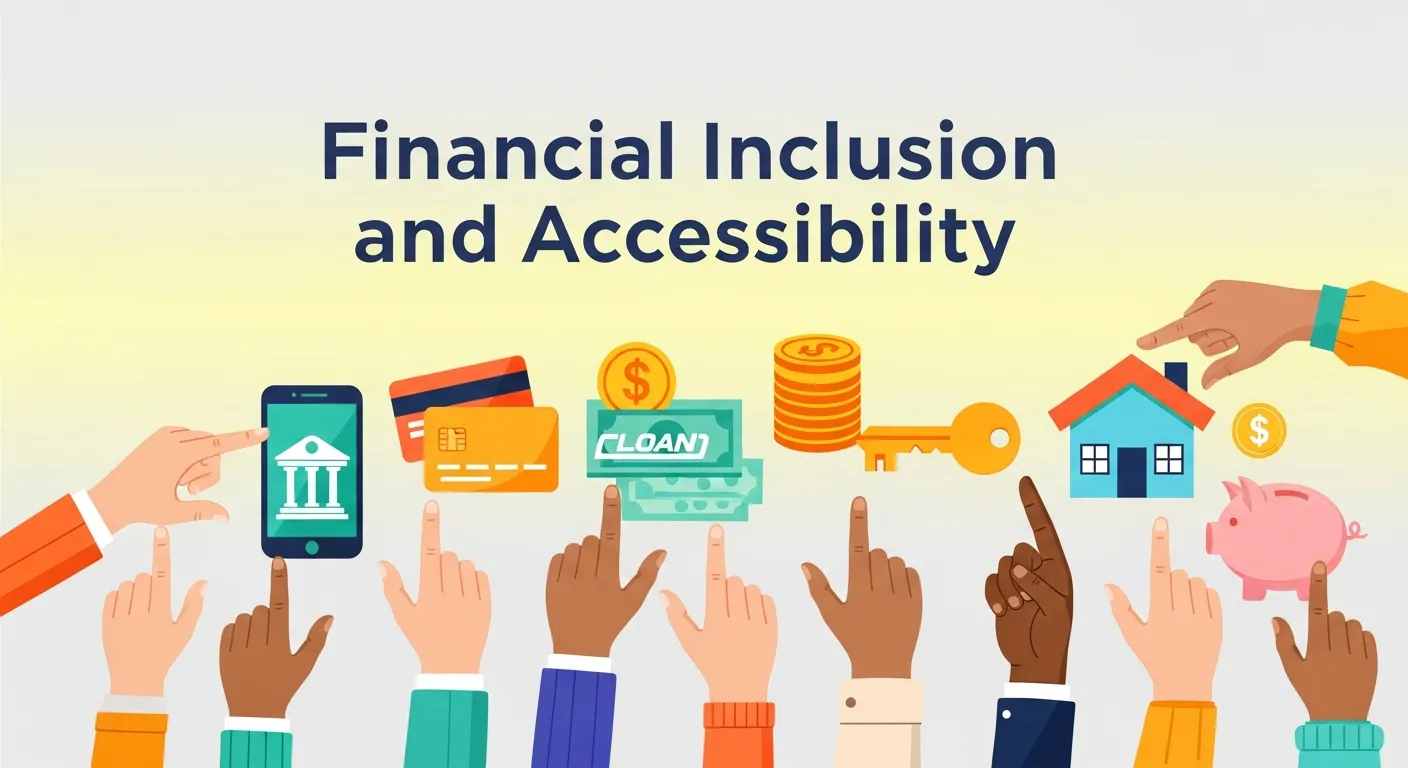
Perhaps blockchain’s most transformative potential lies in extending financial services to the unbanked population. Worldwide, approximately 1.7 billion adults lack access to basic financial services.
Blockchain-based financial systems require only an internet connection and a mobile device. This dramatically lowers the barriers to entry compared to traditional banking infrastructure.
At Digitafin, we’ve observed how blockchain technologies can create pathways to financial inclusion for communities previously excluded from the global economy.
Microtransactions become economically viable through blockchain. Traditional payment systems often make small transactions impractical due to fixed processing fees, but blockchain can facilitate transactions of any size efficiently.
How Blockchain in Digital Finance Expands Economic Participation
Blockchain in digital finance removes structural barriers that have historically excluded billions from the financial system. Traditional banking requires identity verification, minimum balances, and physical access—barriers blockchain can bypass.
With blockchain-based wallets and decentralized finance tools, individuals can store value, transfer funds, and access financial products without traditional gatekeepers.
Inclusion benefits of blockchain in digital finance:
-
Borderless access to financial services
-
Lower onboarding requirements
-
Affordable micro-transactions
-
Financial participation without legacy banking
This democratization of finance may prove blockchain’s most lasting impact.
Smart Contracts and Automation
Smart contracts represent one of blockchain’s most powerful applications in digital finance. These self-executing contracts contain the terms directly written into code.
The automation smart contracts provide eliminates the need for intermediaries in many financial transactions. Loan processing, insurance claims, and asset transfers can occur automatically when predefined conditions are met.
This automation reduces both costs and the potential for disputes. When contract execution happens programmatically based on verifiable inputs, the ambiguity that often leads to conflicts diminishes significantly.
Financial institutions exploring smart contracts report substantial operational cost reductions. Capgemini’s research suggests banks could save between $3-11 billion annually through blockchain-based automation.
Automation as the Engine of Blockchain in Digital Finance
Smart contracts transform blockchain in digital finance from a passive ledger into an active execution layer. Financial logic moves from manual processing into self-executing code.
This automation reduces delays, human error, and disputes—while increasing scalability. Entire financial workflows can operate autonomously with minimal oversight.
Financial processes transformed by smart contracts:
-
Loan disbursement and repayment
-
Insurance claims processing
-
Dividend and interest distribution
-
Trade settlement and reconciliation
Automation is what allows blockchain in digital finance to outperform legacy systems at scale.
Tokenization of Assets
Blockchain enables the representation of physical assets as digital tokens. This process, known as tokenization, creates new possibilities for asset ownership and transfer.
Real estate, traditionally illiquid and requiring extensive paperwork to transfer, can become divisible and easily tradable through tokenization. Investors might purchase fractional ownership in properties across the globe with minimal friction.
Securities trading similarly stands to benefit. Settlement times can shrink from days to near-instantaneous, while reducing counterparty risks inherent in current systems.
Even traditionally illiquid assets like fine art and collectibles can gain liquidity through blockchain-based tokenization, opening new investment opportunities for average investors.
Traditional Finance vs Blockchain in Digital Finance
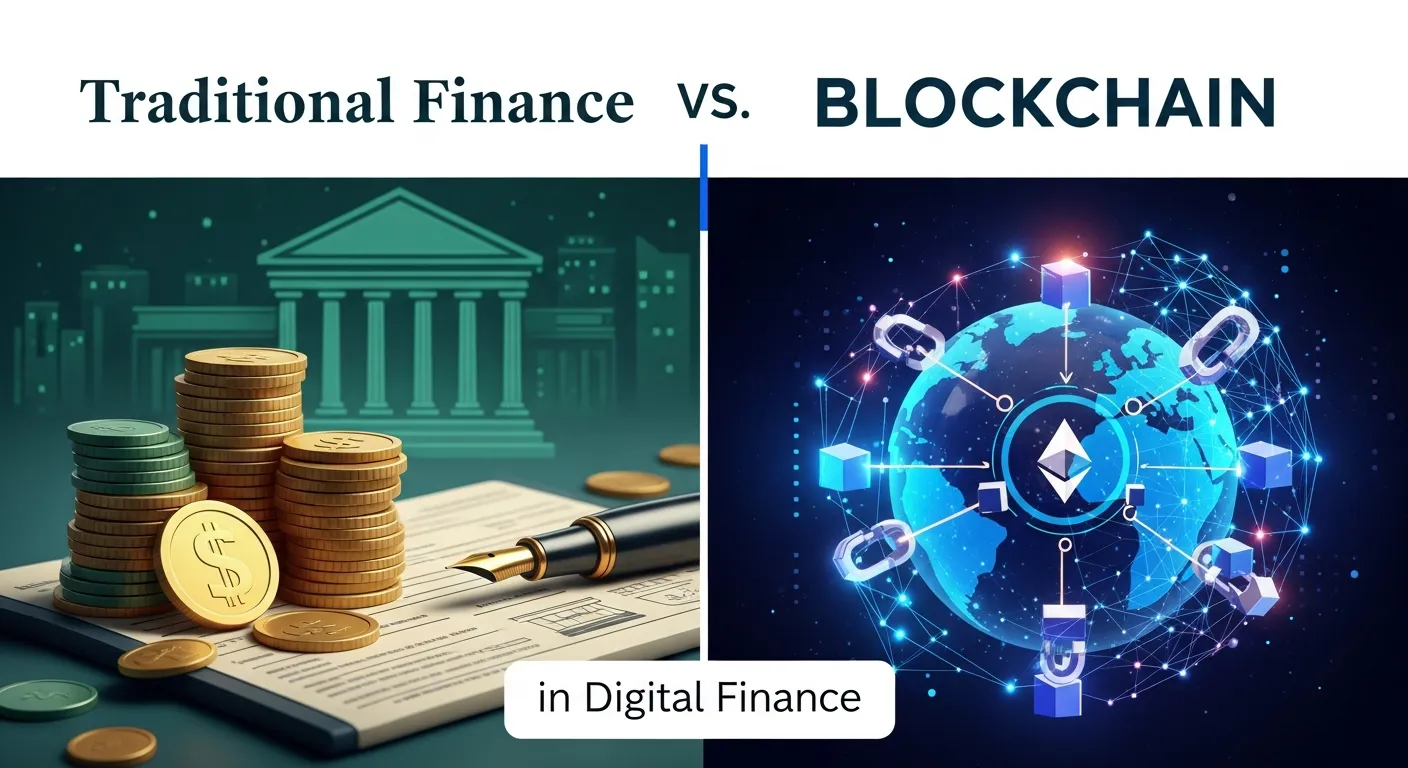
| Dimension | Traditional Finance | Blockchain in Digital Finance |
|---|---|---|
| Settlement Speed | Days | Minutes or seconds |
| Transparency | Limited | High |
| Intermediaries | Multiple | Minimal or none |
| Accessibility | Restricted | Global |
| Asset Liquidity | Often low | Highly flexible |
This comparison highlights why blockchain in digital finance is increasingly viewed as a competitive advantage rather than an experiment.
Regulatory Challenges
Despite its promise, blockchain faces significant regulatory hurdles in the financial sector. Regulators worldwide struggle to develop frameworks that both protect consumers and enable innovation.
The borderless nature of blockchain technology complicates regulation further. Transactions can cross international boundaries instantly, creating jurisdictional questions that lack clear answers.
Financial institutions must navigate an uncertain regulatory landscape when implementing blockchain solutions. This uncertainty often slows adoption as organizations take conservative approaches to avoid potential compliance issues.
Privacy concerns present another regulatory challenge. While blockchain provides transparency, financial regulations often require confidentiality for certain transaction details, creating a tension that needs resolution.
Technical Adoption Barriers
Beyond regulatory challenges, technical limitations continue to affect blockchain adoption in digital finance. Scalability remains a persistent concern for many blockchain networks.
Major blockchain networks still process significantly fewer transactions per second than established payment networks. This throughput limitation restricts blockchain’s applicability for high-volume financial applications.
Energy consumption presents another obstacle, particularly for proof-of-work blockchain systems. The financial sector, increasingly focused on sustainability, must consider the environmental impact of blockchain implementations.
Legacy system integration creates practical challenges as well. Financial institutions have invested heavily in existing infrastructure, making wholesale shifts to blockchain technology financially impractical in many cases.
Scalability as the Make-or-Break Factor
For blockchain in digital finance to support global transaction volumes, scalability must improve. Layer-2 solutions, sidechains, and alternative consensus mechanisms are emerging as solutions.
Financial institutions increasingly experiment with permissioned or hybrid blockchains to address speed, privacy, and energy concerns.
Scalability solutions gaining traction:
-
Layer-2 payment networks
-
Proof-of-stake consensus models
-
Private blockchain infrastructures
-
Modular blockchain architectures
Scalability determines whether blockchain in digital finance remains niche or becomes mainstream.
The Path Forward
Despite these challenges, blockchain continues its advance into digital finance. Hybrid approaches that combine blockchain’s strengths with traditional systems are gaining traction.
Central Bank Digital Currencies (CBDCs) represent one such hybrid approach. These government-backed digital currencies leverage blockchain’s efficiency while maintaining central bank oversight.
Private blockchain networks designed specifically for financial institutions offer another compromise. These systems provide many blockchain benefits while addressing specific regulatory and privacy requirements.
Cross-border payments stand as blockchain’s most immediately promising application. The current system’s inefficiency creates a perfect opportunity for blockchain to demonstrate its value.
Hybrid Models: The Realistic Path for Blockchain in Digital Finance

The future of blockchain in digital finance is unlikely to be fully decentralized or fully centralized. Hybrid systems blend blockchain efficiency with institutional oversight.
CBDCs, private blockchains, and consortium networks reflect this balanced approach. They preserve regulatory control while capturing blockchain’s core benefits.
Hybrid adoption ensures smoother transitions and faster real-world impact.
Conclusion
Blockchain technology represents both tremendous opportunity and significant challenge for digital finance. Its potential to increase efficiency, enhance security, and expand financial inclusion remains unprecedented.
Yet meaningful adoption requires addressing substantial regulatory, technical, and organizational hurdles. The technology’s transformative potential will only materialize through thoughtful implementation that recognizes both its capabilities and limitations.
Financial institutions that find the right balance – leveraging blockchain where it offers clear advantages while maintaining proven systems elsewhere – will likely emerge as leaders in the next generation of digital finance.
The blockchain revolution in finance has only begun. Its ultimate impact will depend not just on the technology itself, but on how effectively we navigate the complex human, organizational, and regulatory landscapes that surround it.
FAQs: Blockchain in Digital Finance
1. What is Blockchain in Digital Finance?
Blockchain in digital finance refers to the use of decentralized ledger technology to manage payments, assets, contracts, and financial records in a more secure, transparent, and efficient way. It reduces reliance on intermediaries while improving trust and traceability.
2. How does blockchain differ from traditional financial systems?
Traditional financial systems depend on centralized institutions like banks and clearinghouses. Blockchain, on the other hand, uses distributed networks and cryptographic verification, allowing transactions to be validated collectively rather than by a single authority.
3. Why is blockchain considered more secure in finance?
Blockchain security comes from encryption, decentralization, and immutability. Once data is recorded, it cannot be altered without network consensus, making fraud, hacking, and unauthorized changes extremely difficult.
4. Can blockchain really speed up financial transactions?
Yes. Blockchain can dramatically reduce settlement times—from days to minutes or even seconds—especially for cross-border transactions that traditionally involve multiple intermediaries.
5. What role do smart contracts play in digital finance?
Smart contracts are self-executing agreements written in code. They automatically enforce terms such as payments, interest, or claims processing, reducing delays, costs, and the risk of human error.
6. How does blockchain improve financial inclusion?
Blockchain enables people without access to traditional banking to store, send, and receive money using only a mobile device and internet connection, expanding access to global financial services.
7. What is asset tokenization in blockchain finance?
Asset tokenization converts real-world assets like real estate, art, or securities into digital tokens. This allows fractional ownership, faster transfers, and improved liquidity for traditionally illiquid assets.
8. Are banks adopting blockchain technology?
Yes. Many banks and financial institutions are piloting private or permissioned blockchains to improve payments, settlements, identity verification, and internal operations.
9. What are the main challenges of blockchain in digital finance?
Key challenges include unclear regulations, limited scalability, high energy use in some networks, and difficulties integrating blockchain with existing legacy financial systems.
10. What are hybrid blockchain models?
Hybrid blockchain models combine decentralized technology with centralized control. Examples include Central Bank Digital Currencies (CBDCs) and permissioned blockchains that meet regulatory and privacy requirements.
11. Is blockchain replacing traditional banking?
Not completely. Blockchain is more likely to complement and modernize traditional banking by improving efficiency, transparency, and automation rather than eliminating banks altogether.
12. What is the future of Blockchain in Digital Finance?
The future points toward scalable, regulated, and hybrid systems where blockchain enhances security, efficiency, and inclusion while operating within established financial and regulatory frameworks.






Embedded Finance and the Future of Seamless Digital Financial Services
The Importance of Risk Management in Modern Business
What Is Financial Technology (FinTech)? Everything You Need to Know
How Financial Technology Is Transforming Digital Payments
The Importance of Risk Management in Modern Business
How Financial Technology Is Transforming Digital Payments
How Digital Banking Is Changing the Future of Financial Management
How Financial Consulting Supports Sustainable Business Growth