
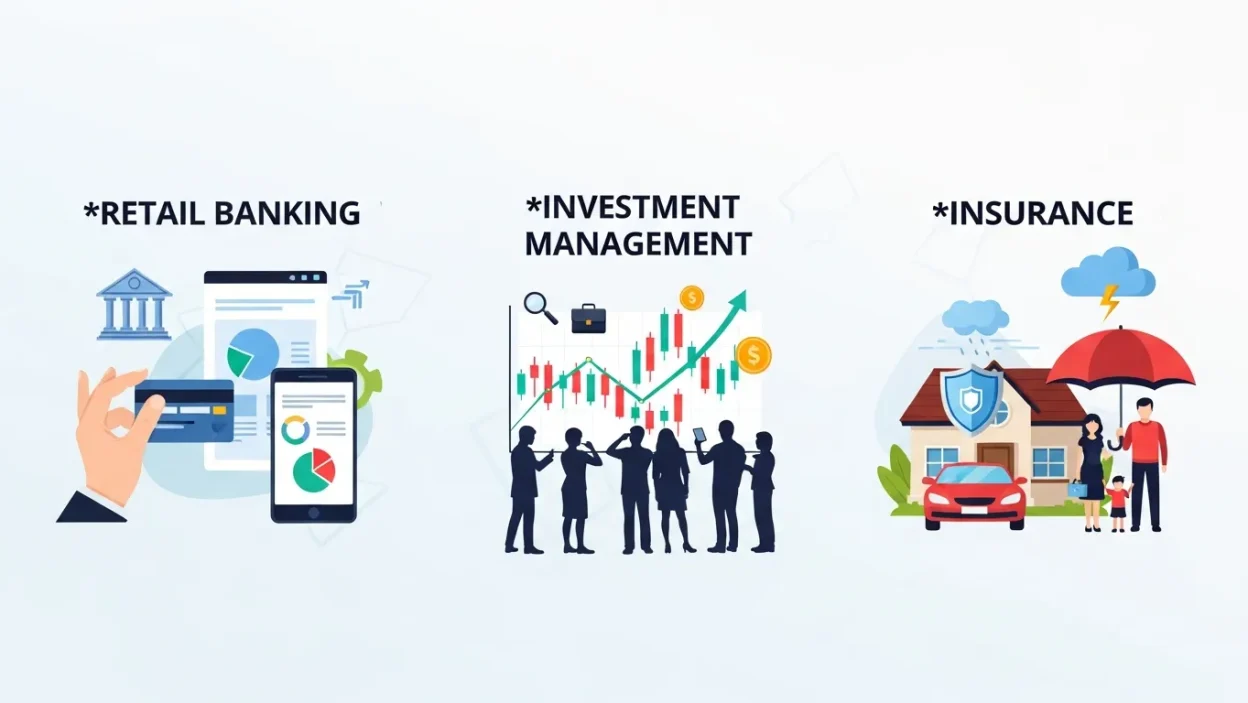
Financial services are the backbone of modern life, impacting how we manage, protect, and grow money. The three main examples—banking, insurance, and investing—serve distinct but interconnected purposes: banking helps manage daily finances, insurance protects against risks, and investing builds long-term wealth. Modern digital tools make these services more accessible, efficient, and personalized, empowering individuals and businesses to make smarter financial decisions. Understanding and actively using these services is essential for financial security and growth.
Money management might sound boring. But the truth? Financial services touch nearly every part of your life. Every swipe of your debit card, every insurance claim you file, every investment you make—it all connects to this one system.
You don’t need to work at a bank to understand this stuff. You just need to know enough to make smart moves with your own money.
So, what are 3 examples of financial services?
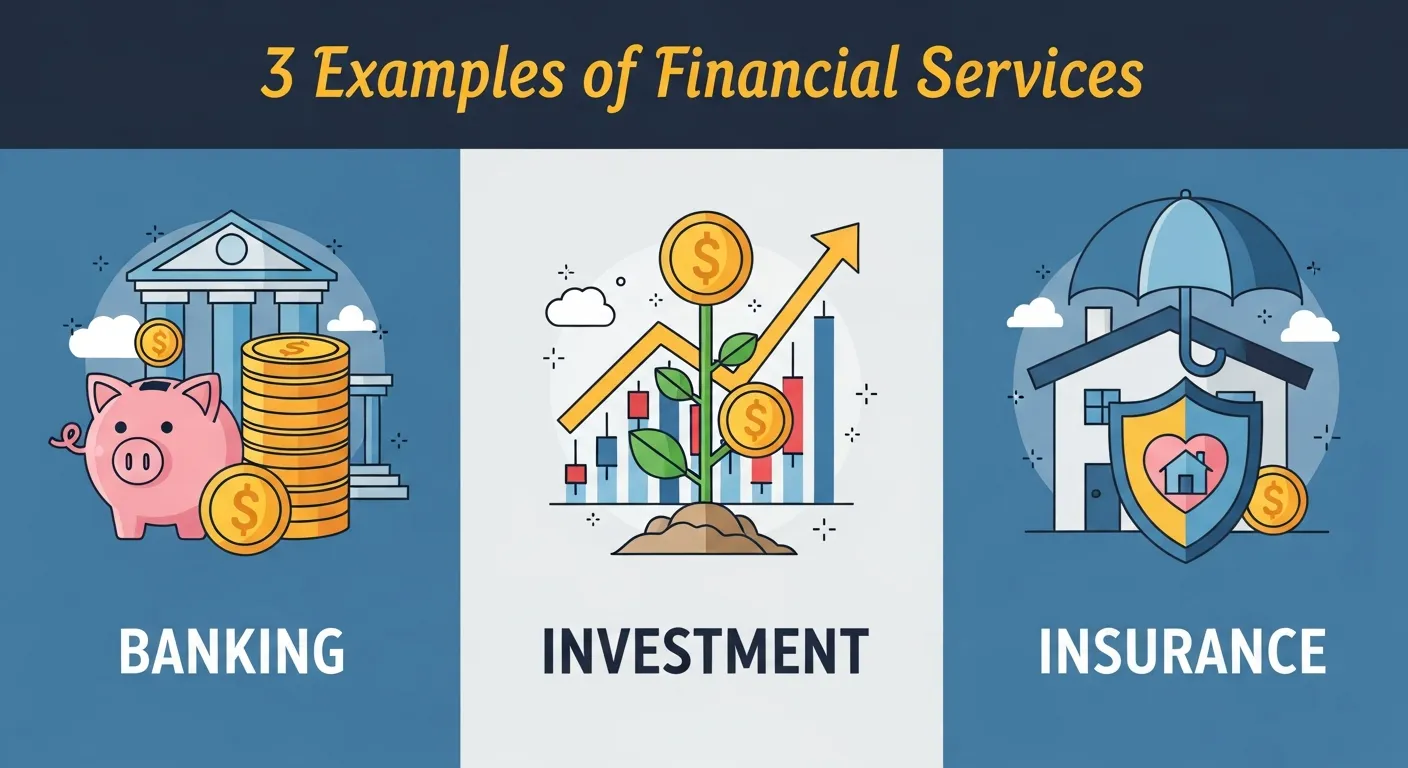
We’ll get to that in a moment, but first, understand this: financial services are not just something for Wall Street folks or your company’s finance department. They’re part of your everyday routine. And knowing how they work gives you an edge in your personal life, business, and long-term planning. These services are evolving fast, especially with the rise of digital transformation in the finance function.
Let’s break it down in a way that actually makes sense.
1. Banking: The Backbone of Daily Life
Let’s start with something almost everyone uses—banks.
Whether you’re cashing your paycheck, paying bills online, or checking your balance through an app, you’re using a financial service. Banking is probably the most familiar one, and for good reason. It’s been part of human life in some form for centuries.
But banking isn’t just about storing money. It includes a wide range of services:
-
Checking and savings accounts
-
Personal and business loans
-
Mortgages
-
Credit cards
-
Wire transfers
-
Mobile and online banking
Think about it this way: your bank is the middleman helping you move, save, and borrow money. Without it, most of the stuff you do—rent payments, online shopping, paying staff—would be chaotic.
And don’t forget, banks serve businesses too. If you run a company, you probably use commercial banking services for payroll, working capital loans, or even just managing your cash flow.
Still, banking isn’t perfect. Hidden fees, long wait times, and poor customer service can be frustrating. But when it works well, it keeps everything else running smoothly.
Modern Banking Beyond Basics
Banks today do much more than just hold your money. Digital platforms and apps allow users to access a wide range of financial tools, from instant money transfers to real-time budget tracking. Banking has evolved to become a full-service ecosystem that supports personal and business financial goals.
-
Mobile and online banking for easy access
-
Peer-to-peer payments and instant transfers
-
Overdraft protection and automatic savings
-
Business banking solutions like merchant services and payroll
These innovations make banking faster, more transparent, and accessible anywhere. Modern banking empowers users to manage, save, and grow their money more effectively than ever before. Find more Digital Twin Technology in Finance
2. Insurance: A Safety Net You Don’t Want to Skip
Most people don’t think about insurance until they absolutely need it. But when life throws you a curveball, insurance can be the one thing that saves you from going broke.
Let’s say your car gets totaled in an accident. Or your home floods. Or someone in your family ends up in the hospital. These are stressful, painful events—but without insurance, they can also be financially devastating.
That’s why insurance exists.
It’s not just for emergencies, either. Some policies help you plan for the future. Life insurance, for example, can support your family after you’re gone. Health insurance makes regular medical care more affordable. Business insurance protects your company from lawsuits, damages, or unexpected shutdowns.
Even travel insurance matters. Ever lost a bag at the airport or had a flight canceled last minute? It’s in these moments that you’re grateful you paid that small premium.
Insurance gives you options when things go wrong. And let’s be honest—life is unpredictable. It’s better to be prepared than to be left scrambling.
Expanding the Insurance Landscape
Insurance isn’t just about emergencies—it’s about long-term security and risk management. From personal protection to business continuity, insurance services help individuals and organizations navigate uncertainty.
| Insurance Type | Purpose |
|---|---|
| Health Insurance | Covers medical expenses and routine care |
| Life Insurance | Provides financial security for loved ones |
| Auto Insurance | Protects vehicles and drivers from accident-related costs |
| Business Insurance | Shields companies from operational or legal risks |
| Travel Insurance | Offers coverage for trip cancellations or emergencies |
By choosing the right policies, people can avoid financial disaster and plan for the future with confidence. Insurance turns unpredictable life events into manageable risks.
3. Investing: The Path to Financial Growth
If banking is about managing your money today, and insurance is about protecting it tomorrow, investing is about what happens next year—or ten years from now.
Investing might sound like a rich person’s game, but that’s a myth. You don’t need thousands of dollars to get started. In fact, many apps now let you invest small amounts, even spare change.
And the options are broad:
-
Stocks
-
Bonds
-
Mutual funds
-
ETFs
-
Real estate
Each one comes with its own risks and rewards. But the big idea is this: instead of letting your money sit idle, you put it to work. Over time, it grows.
Let’s say you invest $100 a month starting at age 25. Even with moderate returns, by the time you’re in your 50s, that money could become a solid cushion for your retirement—or your kids’ college fund.
Investing is long-term thinking. It takes patience and a bit of strategy. But it’s one of the few ways you can grow wealth steadily without a huge amount of effort.
Investing for Everyone
Investing isn’t reserved for the wealthy—it’s a tool anyone can use to grow wealth. Today, platforms and apps allow people to start with small amounts and gradually expand their portfolios, making financial growth achievable at any age.
-
Stocks, bonds, and ETFs for portfolio diversification
-
Mutual funds for managed growth
-
Retirement accounts like IRAs or 401(k)s
-
Real estate crowdfunding for alternative investments
Even small, consistent contributions can compound over time. Regular investing builds long-term financial security while teaching smart money habits along the way.
Why These 3 Services Matter So Much
You might wonder—why focus on just these three? Why not include things like taxes, accounting, or crypto?
Because banking, insurance, and investing form the foundation of how people deal with money. They’re not trends or add-ons—they’re the core systems.
Here’s a quick way to think about it:
-
Banking helps you manage money.
-
Insurance helps you protect money.
-
Investing helps you grow money.
If you ignore one of them, there’s usually a gap in your financial life.
And that gap can cost you.
Everyday Life and Financial Services
Financial services intersect in ways we often overlook. Your paycheck, your bills, and your long-term goals all rely on a functioning financial system that coordinates banking, insurance, and investing.
-
Monday: Salary deposited via bank
-
Tuesday: Health services covered by insurance
-
Wednesday: Automated investment contributions
-
Friday: Business loan disbursement
-
Saturday: Insurance claim filed for damages
-
Sunday: Portfolio performance review
Seeing this integration helps people appreciate how essential these services are. They operate quietly in the background, ensuring life and business run smoothly.
Everyday Life: How These Services Intersect
Let’s look at a regular week in your life:
-
Monday: You get paid and check your account balance on your banking app.
-
Tuesday: You schedule an appointment with your dentist. Your health insurance will cover part of the bill.
-
Wednesday: You send money to your investment account. You’ve got a long-term goal: early retirement.
-
Friday: A small business owner friend of yours applies for a loan to grow her bakery. That’s banking too.
-
Saturday: A neighbor’s house gets damaged in a storm. They file an insurance claim.
-
Sunday: You read that your investment portfolio has grown 6% over the past year. A quiet win.
None of these moments seem life-changing on the surface. But they all depend on the financial service system running quietly in the background.
Without it, your paycheck might not arrive. Your dentist visit could cost triple. And your retirement plans might remain just that—plans.
Making the Most of Financial Services
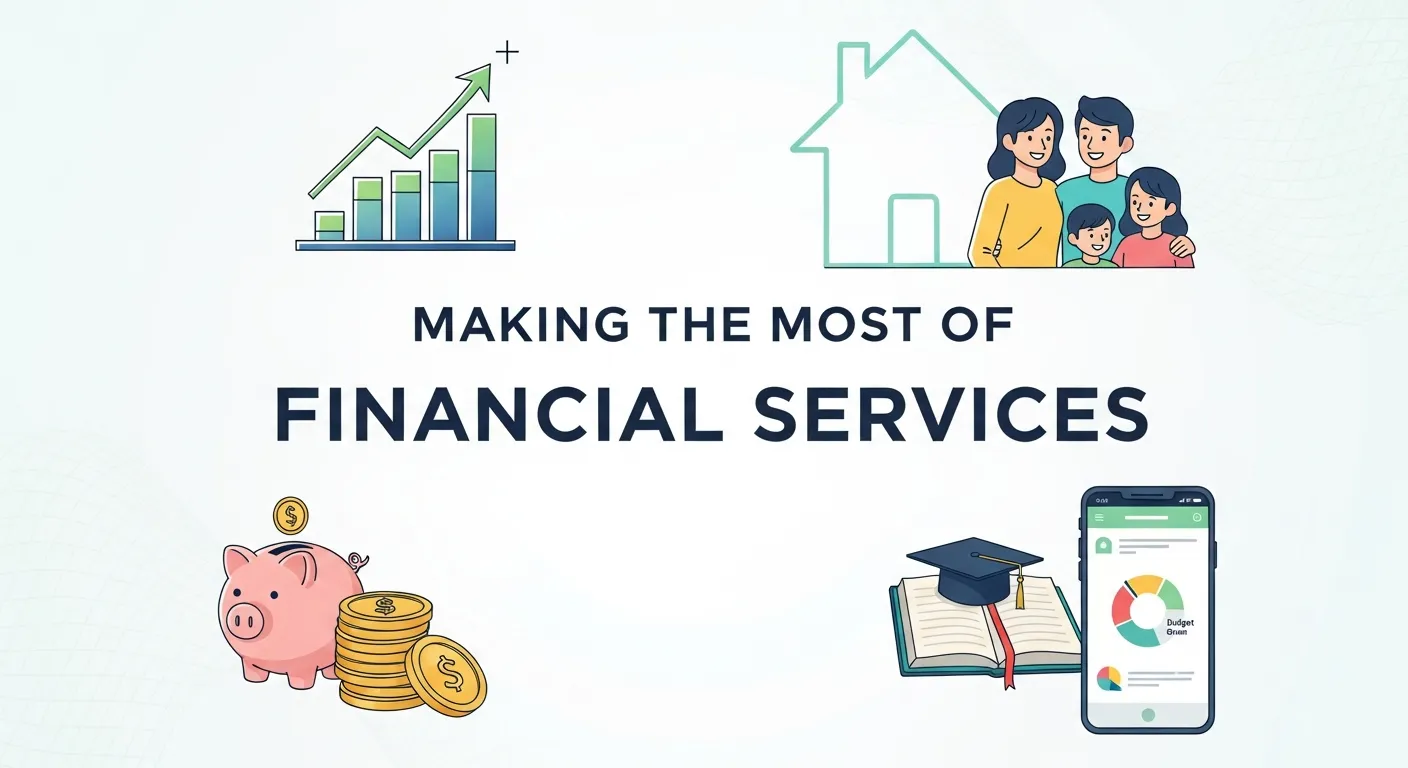
Understanding examples of financial services is only the first step. To benefit fully, you need to actively engage with them, make informed choices, and align them with your personal goals.
-
Choose banking services that fit your lifestyle
-
Review insurance policies regularly for adequate coverage
-
Start investing early, even with small amounts
-
Track your finances to identify gaps or opportunities
Mastering these foundational services gives you control over your financial life. With consistent use, knowledge, and planning, you can turn banking, insurance, and investing into powerful tools for long-term security and growth.
Final Thoughts: Keep It Simple, but Stay Smart
So, back to the big question: What are 3 examples of financial services?
Now you know: banking, insurance, and investing. These aren’t just services—they’re lifelines.
They help you control your money instead of letting it control you.
It’s easy to get overwhelmed by financial jargon. But you don’t need to be a finance major to use these tools well. Start small. Stay consistent. Ask questions when you’re unsure.
The more you understand, the more confident you’ll be—not just with money, but with the future you’re building.
Whether you’re in your 20s figuring things out, or in your 50s planning for retirement, these Website Design for Financial Services blocks that help you get there.
Frequently Asked Questions (FAQs) on Financial Services
1. What are financial services?
Financial services encompass a broad range of products and systems that help individuals and businesses manage, protect, and grow their money. This includes banking, insurance, investments, payment systems, and advisory services. Essentially, any service that deals with the flow, protection, or growth of money falls under financial services.
2. Why are financial services important?
Financial services are essential because they allow people and businesses to manage day-to-day finances, plan for the future, mitigate risks, and build wealth. Without them, basic activities like receiving a salary, making investments, or securing assets would be cumbersome and risky.
3. What are the three main examples of financial services?
The three core examples are:
-
Banking: managing money and facilitating transactions.
-
Insurance: protecting against financial losses.
-
Investing: growing money over time through assets or securities.
4. What does banking include?
Banking services cover a wide array of functions:
-
Checking and savings accounts
-
Personal and business loans
-
Mortgages and credit facilities
-
Credit and debit cards
-
Wire transfers and remittances
-
Online and mobile banking
-
Merchant and payroll services for businesses
5. How does banking benefit individuals and businesses?
For individuals, banking ensures safe money storage, easy access to funds, and smooth bill payments. For businesses, it supports payroll management, working capital loans, and cash flow management—ensuring operations run efficiently.
6. Why is insurance important?
Insurance provides a financial safety net. It protects individuals and businesses from unexpected events such as accidents, health emergencies, property damage, or lawsuits. It ensures that life’s uncertainties don’t lead to financial ruin.
7. What types of insurance exist?
Common insurance types include:
-
Health insurance: Covers medical expenses and routine care
-
Life insurance: Provides financial support for dependents after death
-
Auto insurance: Protects vehicles and drivers against accidents
-
Business insurance: Shields companies from operational, legal, or liability risks
-
Travel insurance: Covers emergencies, cancellations, or lost property during trips
-
Home/property insurance: Protects homes against natural disasters, theft, or damage
8. Why should people invest?
Investing allows individuals and businesses to make their money grow over time. Investments can generate passive income, prepare for retirement, fund education, or build wealth. Proper investing also helps outpace inflation and maximize financial potential.
9. Can anyone start investing?
Yes. Today, technology and apps have made investing accessible to almost everyone. Even small amounts, such as spare change, can be invested in stocks, ETFs, mutual funds, or retirement accounts. Regular investing, even in small increments, can create substantial wealth over time.
10. How do banking, insurance, and investing work together?
These three services form the foundation of financial health:
-
Banking: Manage everyday finances and cash flow.
-
Insurance: Protect assets and mitigate financial risks.
-
Investing: Grow wealth and plan for the future.
Together, they ensure stability, protection, and growth across financial life stages.
11. How do digital tools impact financial services?
Digital tools have transformed financial services:
-
Online banking enables 24/7 access to accounts
-
Insurance platforms simplify policy management and claims
-
Investment apps automate contributions, track performance, and offer portfolio guidance
Overall, technology makes financial management faster, transparent, and more efficient.
12. Do I need to understand finance to use these services?
Not necessarily. While basic knowledge helps, digital platforms and professional guidance make it easier for anyone to use financial services effectively. Understanding the basics empowers smarter decisions and better alignment with personal goals


Embedded Finance and the Future of Seamless Digital Financial Services
How AI-Based Fraud Detection is Protecting Digital Payments
Digital Marketing for Financial Services: Strategies That Deliver Results
Harnessing AI and Machine Learning for Fraud Detection in Digital Finance
Digital Twin Technology in Finance: How Virtual Models Are Transforming Risk Management
The Future of Personal Finance: Autonomous Finance and AI Money Management
AI Credit Scoring: Revolutionizing SME Banking and Digital Loans
AI Fraud Detection: How Banks Prevent Financial Crime in Real Time