
Digital marketing for financial services is now essential for banks, fintechs, insurance companies, and other financial institutions. Social media drives customer engagement, builds trust, generates leads, and promotes financial products. By knowing your audience, selecting the right platforms, creating engaging content, ensuring compliance, and tracking KPIs, financial institutions can strengthen their brand and boost conversions.
The financial industry can no longer choose to ignore social media. From the experimental room, it has now become a key tool for customer engagement, brand development, and lead generation. Digital marketing for financial services social media strategies is reinventing the way that banks, insurance companies, fintech institutions, and other financial service companies engage new and existing customers.
If you’re ready to unlock the potential of social media with an eye toward success in finance, let’s plan your foray. Discover how to know your audience, choose the right platforms, create compliant yet engaging content, and efficiently track your progress!
Knowing Your Customer in Financial Services
Rule one of any marketing campaign is “know your audience” – and never more so than for financial services. Knowing your customer helps you create messages and offers that are in touch with their wants and desires.
3-1: Target Customer Profile
Figure 3-1: Identifying Target Market Demographics
Company Name: Company Name
Company Type: Barber Shop
Business Focus: Drawing younger and older generations to enjoy high-quality and fashionable cuts.
Because financial services is so diverse, the likelihood is that you will have several:
-
Gen Zers and Millennials in need of budgeting apps, student loans, or a first-time investment.
-
Gen X, Baby Boomers in need of wealth management or retirement planning advice.
-
Business owners looking for bespoke loans or business insurance options.
Understand your target audience, so that you can:
-
Develop customer personas based on age, occupation, financial objectives, online activity, etc.
-
Adapt your style of communication to their levels of financial understanding.
-
Customize the customer experience and increase customer retention and conversions.
Pro Tip:
Leverage data scenario tools such as surveys, Google Analytics, or social media insights to further hone that audience and transform assumptions into localized strategies.
Digital Marketing Goals for Financial Services
Before creating a strategy, it’s important to define your goals. Digital marketing for financial services focuses on outcomes like brand awareness, customer acquisition, lead generation, and customer retention. By clearly defining goals, you can tailor content and campaigns to deliver measurable results.
Key Goals:
-
Increase brand trust and visibility among potential clients.
-
Generate qualified leads for banking, insurance, or investment products.
-
Educate audiences about complex financial products.
-
Improve customer engagement through social media interactions.
-
Track conversions and ROI to refine campaigns.
Deciding On The Right Social Media Platforms
One size doesn’t fit all. Platforms aren’t all created equal and financial services companies shouldn’t just push in order to push; they should be concentrating on the channels where their audiences already are.
As the preferred platform for professionals, LinkedIn is perfect for B2B financial services such as wealth management, business loans, and corporate advisory. Use it to:
-
Share valuable content such as killer industry reports or exclusive insights.
-
Share success stories to lead to more credibility.
-
Buy Ads: Use LinkedIn’s Ad platform to run lead generation campaigns aimed at Executive-level business.
Twitter – it goes so quickly, but is excellent for breaking financial news, customer service, and bantering on the latest topic du jour. Include hashtags such as #fintech, #personalfinance, and #retirementplanning so your posts can be found.
Facebook is still a dominant platform, and consumer-facing financial products like credit cards, personal loans, and insurance can do well there. Leveraging micro-targeting features:
-
Advertise based on granular demographic information such as income or family status.
-
Leverage Facebook groups to cultivate communities, like aspiring young investors or first-time home buyers.
Amazingly, visual brands aren’t the only ones that thrive on Instagram. Which is the best place for financial institutions? Here are two ways in which financial institutions can succeed:
-
Educational reels on how to handle debt or tips for saving.
-
Sharing images of infographics and quotes that are visually appealing.
-
Collaborating with influencers to add a human element to their brand.
Types of Content That Work in Financial Services
Creating the right content is crucial for engagement and compliance. Not all content performs equally in financial services; balance education, engagement, and promotion.
Effective Content Types:
- Educational Posts: Explain financial concepts like loans, insurance, or investments.
- Infographics & Visuals: Simplify complex data visually.
- Customer Stories & Testimonials: Build trust through real-life experiences.
- Interactive Content: Polls, quizzes, webinars, and live Q&A sessions.
- Video Content: Short-form videos or reels explaining financial tips.
Developing a Content Strategy
Having defined your audience and platforms, the next step is to produce cool, interesting and relatable stuff.
Prioritize Engagement
There are a lot of highfalutin’ financial terms out there that are just plain overwhelming. Break it down by:
-
Sharing bite-sized educational posts (like “What is compound interest”) with your followers.
-
Using relatable analogies in your copy and imagery to money, taxes, mortgages, etc.
-
Prompting engagement with polls, Q&A posts, or live webinars.
Storytelling Matters
People are more trusting of financial institutions when they see narratives that resonate with them. Tell stories about:
-
Actual customers who have benefited from your services.
-
Motivating employees who lean in.
-
The story of how your organization came together.
Consider Compliance in Digital Marketing for Financial Services
In digital marketing for financial services, compliance is not optional—it’s critical. Every social media post, advertisement, or content piece must follow regulatory standards to protect both your company and your audience. Failing to comply can result in legal penalties, fines, and loss of trust, making it essential to integrate compliance into your marketing strategy from the beginning.
Key Areas of Focus
-
Transparency: Clearly outline the risks and benefits of financial products. Avoid complex jargon, hidden terms, or fine print that could confuse users. Honest and simple communication builds trust and credibility.
-
Disclosures: Always include visible disclaimers in posts, ads, or promotions, especially for investment or loan products. Ensure that your audience can easily understand the terms and conditions.
-
Data Privacy: Protect all customer information. Do not share personal data without explicit consent, and ensure that all marketing activities comply with GDPR or other relevant local data regulations.
-
Accuracy: Verify all financial information, interest rates, statistics, and facts before posting to prevent misinformation or misrepresentation.
-
Record-Keeping: Maintain records of all social media content, approvals, and updates. This provides evidence of compliance during audits or regulatory reviews.
Tips for Staying Compliant in Digital Marketing for Financial Services
-
Legal Review: Have your legal or compliance team review posts, campaigns, and ads before publishing, particularly for financial advice or promotional content.
-
Pre-Approved Templates: Use standardized templates for captions, visuals, and disclaimers to reduce errors and maintain consistent messaging.
-
Compliance Tools: Invest in software that screens content for regulatory compliance, inappropriate claims, or missing disclosures automatically.
-
Team Training: Regularly educate your marketing and social media teams about financial regulations and compliance requirements to prevent mistakes.
Mini Table: Common Compliance Mistakes vs Best Practices
| Common Mistakes | Best Practices |
|---|---|
| Using complex jargon that confuses users | Simplify language and explain terms clearly |
| Missing disclaimers in ads or promotional posts | Always include visible and clear disclaimers |
| Sharing customer data without consent | Protect privacy and comply with GDPR/local laws |
| Posting unverified financial information | Double-check facts, rates, and statistics |
| Ignoring legal review | Have all posts approved by compliance/legal teams |
By following these guidelines, companies in digital marketing for financial services can confidently create social media content, engage their audience effectively, and maintain trust while staying fully compliant with regulations.
Budgeting and Resource Planning
Budgeting your marketing resources ensures efficiency. Financial services campaigns require a balance of creative production, paid ads, and compliance checks. Proper resource allocation maximizes ROI and avoids overspending.
Marketing Budget Allocation Table:
| Budget Item | Recommendation | Notes |
|---|---|---|
| Paid Social Ads | Allocate 40% of marketing budget | Targeted ads on LinkedIn, Facebook |
| Content Creation | Allocate 30% of marketing budget | Videos, graphics, blog posts |
| Compliance & Legal Review | Allocate 15% of marketing budget | Review posts, templates, campaigns |
| Analytics & Tracking Tools | Allocate 10% of marketing budget | Monitor KPIs, optimize campaigns |
| Contingency Fund | Allocate 5% of marketing budget | Unplanned ad boosts or promotions |
Measuring Success with KPIs

Everyone loves a flashy social media campaign, but show me the results. Not tracking progress is a lack of awareness and nobody can know what they’re working on and what they’re not working on.
Key Metrics to Watch
-
Engagement Rate (likes, comments, shares): Is your audience engaging with your content?
-
CTR (Click-Through Rate): Are people clicking through to your landing pages?
-
Lead Generation: How many leads were generated as a direct result of your campaigns?
-
Cost Per Acquisition (CPA): What does it cost you to acquire a new customer?
-
Conversion Rates: How many leads that you have end up signing up or paying you?
Based on these KPIs, evaluate which strategies are best from an ROI perspective, pulling funds from what doesn’t work to what does.
Real-World Examples
A few real-world examples to illustrate the potential of a respected social media strategy in small business! Here are two standout campaigns:
American Express
On Instagram, Amex invited cardmembers to share their special travel and lifestyle experiences with their #AmexLife campaign. This accountable user-generated content established trust as it displayed the success of membership.
Hootsuite
Hootsuite’s “Finance Social Media Content Calendar” campaign went after financial brands with templates and strategies for social posting. This led to a large number of high-quality leads and made Hootsuite an authority in the finance marketing space.
Optimizing Social Media Campaigns
Continuous optimization is key in digital marketing for financial services. Test different types of content, posting times, and messaging. Use analytics to refine campaigns and reallocate budget from low-performing content to high-performing campaigns.
Optimization Tips:
-
Test A/B variations of posts for engagement.
-
Adjust posting times based on audience activity.
-
Track which platforms drive the most conversions.
-
Repurpose high-performing content across multiple channels.
-
Monitor competitor campaigns to spot trends and opportunities.
The Future of Digital Marketing for Financial Services
The digital space is an ever-changing beast and new trends will revolutionize how we use social media in financial services:
Artificial Intelligence (AI)
Hyper-personalized content can be enabled by AI tools and risk analysis made more efficient, along with a customer interaction optimization via chatbots.
Video Content
Short-form videos and live-streaming will prevail, offering financial services the opportunity to visually simplify complex subjects.
Social Commerce
Scalable in-app purchasing is booming in categories such as retail, and finance should be moving toward transactions (opening accounts or buying insurance) on social platforms.
Social Media Should Be Integrated into Your Strategy
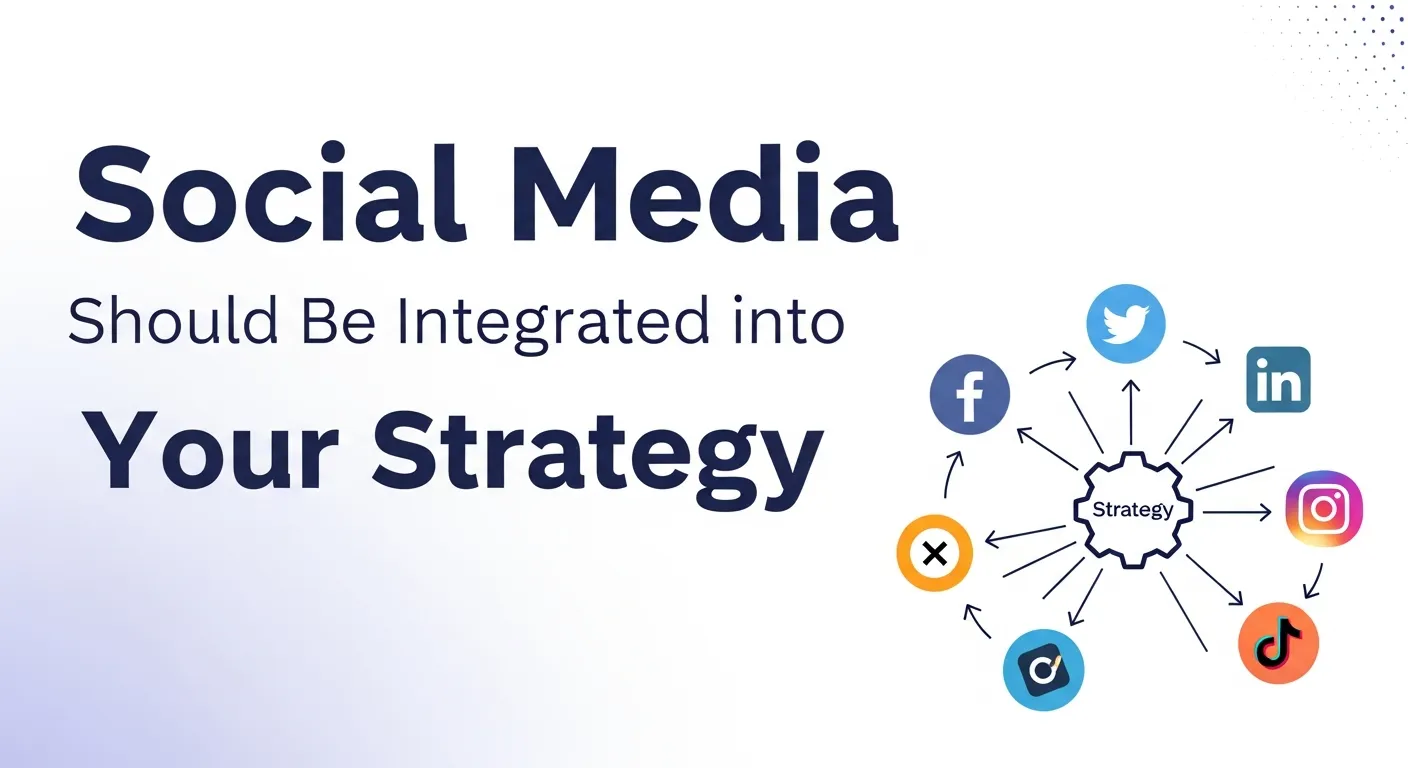
Utilizing social media for financial services marketing is no longer a nice-to-have; it’s a necessity to be competitive. By knowing your audience, selecting the correct platforms, producing engaging content, remaining compliant, and analyzing performance, you can find new space to grow in your organization and toward your brand—but also strengthen your connection with your customers.
If you’d like help from the professionals to develop your social media strategy for financial services, contact the experts at our team today! We’ll customize a strategy that lifts your brand, speaks to your audience, and delivers results with great force.
Discover how e-commerce businesses can leverage analytics and customer insights to boost sales in our guide, Unlocking the Power of Data Driven Marketing in E-Commerce.
Conclusion – Digital Marketing for Financial Services
The future of financial services marketing lies in leveraging digital platforms strategically. Companies that understand their audience, optimize content for engagement, follow compliance rules, and monitor results are best positioned to succeed. By integrating social media, storytelling, and data-driven strategies, financial institutions can build stronger customer relationships, enhance brand credibility, and drive sustainable growth.
Digital marketing for financial services is not just about promotion—it’s about connecting, educating, and empowering customers while ensuring transparency and trust.
FAQs – Digital Marketing for Financial Services
1. What is Digital Marketing for Financial Services?
It refers to using online platforms, especially social media, to promote financial products, engage customers, and generate leads for banks, fintech, insurance, and investment services.
2. Why is social media important in financial services marketing?
Social media allows real-time engagement, brand building, and lead generation while educating customers about financial products.
3. Which social media platforms are best for financial services?
LinkedIn, Facebook, Twitter, and Instagram are commonly used, depending on whether you target B2B or B2C audiences.
4. How do I know my target audience?
By analyzing demographics, financial needs, behavior, and online activity to create detailed customer personas.
5. What type of content works best for financial services?
Educational posts, infographics, videos, customer testimonials, interactive polls, and webinars are highly effective.
6. How do I stay compliant on social media?
Follow legal and regulatory guidelines, use pre-approved templates, double-check posts with compliance teams, and protect customer data.
7. How can financial institutions measure campaign success?
Track KPIs like engagement rate, click-through rate (CTR), leads generated, cost per acquisition (CPA), and conversion rates.
8. What role does storytelling play in financial marketing?
Stories about real customers, employees, and company success build trust, credibility, and emotional engagement.
9. How can AI improve digital marketing for financial services?
AI enables hyper-personalized content, customer interaction optimization through chatbots, predictive analytics, and smarter ad targeting.
10. What is embedded finance in social media marketing?
It integrates financial services directly into non-financial apps or platforms, allowing users to transact or access products seamlessly.
11. How can small financial businesses benefit from social media?
They can reach new audiences, educate customers, build brand authority, generate leads, and compete with larger institutions cost-effectively.
12. What is the future of digital marketing in financial services?
It will focus on AI-driven personalization, video content, social commerce, data-driven campaigns, and compliance-focused engagement to create better customer experiences.






How to Create a Retirement Planning Strategy That Works
What Are Digital Finance Tools
How Tax Planning Helps Individuals and Businesses Save Money
How Digital Asset Management Improves Business Efficiency
How Tax Planning Helps Individuals and Businesses Save Money
How to Create a Retirement Planning Strategy That Works
How Digital Asset Management Improves Business Efficiency
The Importance of Risk Management in Modern Business