
Digital financial literacy is the ability to manage money confidently in the digital age. It combines basic financial knowledge—like budgeting and saving—with skills for using mobile banking, payment apps, and online financial tools safely. This literacy helps avoid scams, make informed decisions, track money, and gain financial independence, supporting inclusion and long-term security.
The Importance of Digital Financial Literacy Today
Digital Financial Literacy is no longer a “nice-to-have”; it’s essential for navigating modern AI Money Management. With more financial activity happening online, those without digital skills risk mistakes that can cost time, money, and security.
Why it matters:
-
Preventing losses from scams, phishing, or fake platforms
-
Choosing the right investment or savings tools
-
Making informed decisions when using mobile wallets or banking apps
-
Understanding digital financial services like online loans, insurance, and budgeting apps
In short, digital financial literacy allows individuals to take control of their finances safely and confidently
Why It Matters in Real Life
Digital financial literacy shows its true value in everyday situations. Consider a common example: someone receives a message claiming they’ve won a lottery and must share their bank details to receive the prize. A digitally financially literate person would recognize the red flags—unexpected winnings, urgency, and requests for sensitive information—and immediately ignore or report it. Someone without this knowledge, however, might respond, risking serious financial loss.
This is only one example. In reality, digital financial literacy influences many daily financial decisions, including how people:
-
Transfer money securely using mobile banking or payment apps
-
Shop safely on e-commerce platforms without exposing card or personal data
-
Identify trustworthy investment platforms and avoid fake schemes
-
Use budgeting and expense-tracking apps correctly
-
Recognize phishing attempts, fake links, and online fraud
These situations are no longer rare or exceptional—they are part of normal life. Every online transaction carries some level of risk, and without the right skills, even small mistakes can have lasting consequences.
Whether someone is a student managing allowances, a working professional handling salaries and investments, or a retired individual using digital banking for convenience, the ability to make safe and informed financial choices online has become essential rather than optional.
The Digital Shift in Finance
Not long ago, managing money meant balancing a checkbook, visiting a bank branch, or speaking directly with a financial advisor. Today, nearly every financial activity happens digitally. From mobile wallets like Apple Pay and Google Pay to investing apps such as Robinhood or digital banking platforms, money now exists largely in the cloud.
This shift has made financial services faster, more accessible, and more convenient—but also more complex. Knowing how to budget or save is no longer enough on its own. Individuals must understand how to apply these financial skills through apps, online platforms, and automated systems while navigating digital risks and security concerns.
This is where digital financial literacy becomes essential. It connects traditional financial knowledge with modern digital tools, helping people adapt old financial habits to new digital behaviors. By developing these skills, individuals can manage money more effectively, make informed decisions, and stay safe in an increasingly digital financial world.
What Skills Are Involved?
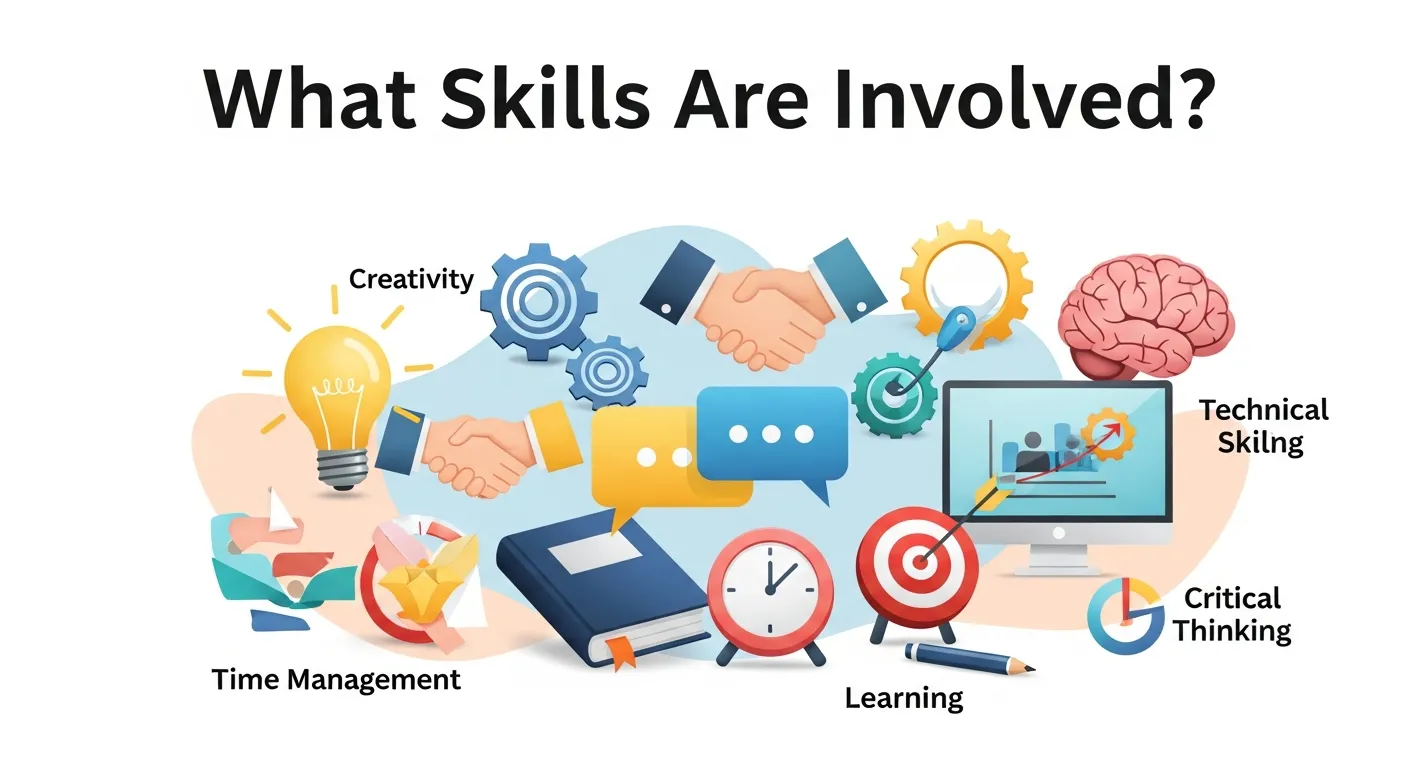
When we talk about this kind of literacy, we’re not just talking about numbers. It includes several areas:
1. Basic Financial Knowledge
You still need to understand saving, budgeting, interest rates, and debt. These concepts never go out of style.
2. Digital Tool Familiarity
This means knowing how to use apps, online banking, and payment systems. It’s about navigating platforms like PayPal or Google Pay with confidence.
3. Online Security Awareness
You need to recognize suspicious emails, protect passwords, and know what two-factor authentication is. It’s about staying safe while being connected.
4. Evaluating Financial Information
Not every blog, video, or ad you see online is trustworthy. Knowing how to separate facts from scams is part of being digitally literate.
Core Skills of Digital Financial Literacy
To be digitally financially literate, one must master a combination of financial knowledge and digital competencies. This goes beyond simply knowing how to budget or save; it includes using technology effectively.
Key skill areas include:
-
Basic Financial Knowledge: Understanding interest rates, savings, budgeting, and debt management
-
Digital Tool Familiarity: Navigating mobile banking, payment apps, and investment platforms
-
Online Security Awareness: Recognizing phishing attempts, using two-factor authentication, and protecting personal information
-
Evaluating Financial Information: Identifying trustworthy sources and avoiding scams online
Developing these skills helps users make smarter, faster, and safer financial decisions in an online environment.
The Cost of Being Unaware
Not having digital financial literacy is risky. It can lead to:
-
Falling for phishing or scam websites
-
Losing money to fake investment platforms
-
Overspending due to poor tracking
-
Missing out on better savings or interest options
Worse, it can lead to stress and a lack of confidence when making decisions online.
Think about how many people click on ads without verifying the source or download random financial apps without checking reviews. These small actions can lead to big consequences.
Consequences of Poor Digital Financial Literacy
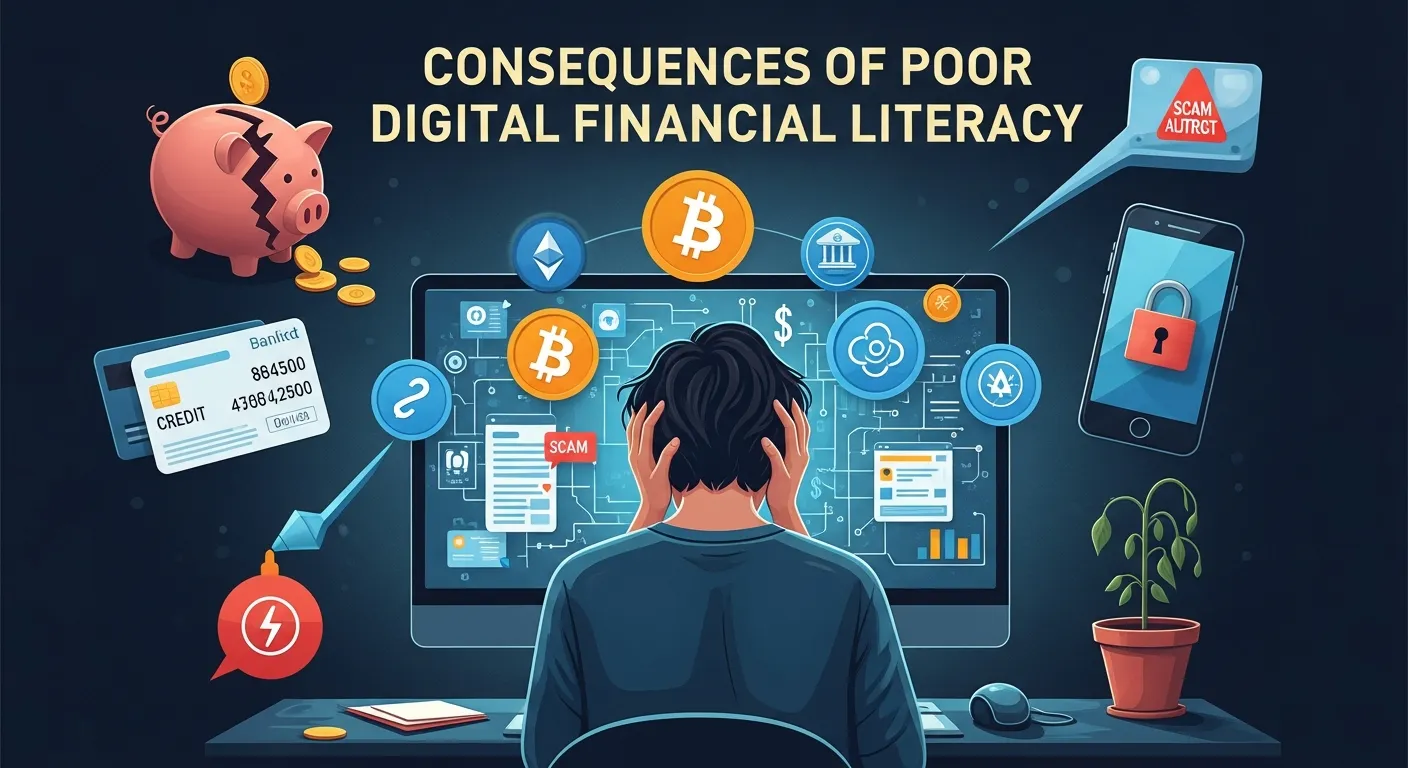
Failing to understand digital financial systems can lead to serious consequences. Not only can money be lost, but stress and financial mismanagement may also affect long-term financial health.
Risks include:
-
Falling victim to phishing or scam websites
-
Losing money on fake investment or e-commerce platforms
-
Overspending due to lack of tracking tools
-
Missing opportunities for higher interest savings or better financial products
Digital literacy equips people with the knowledge to avoid these pitfalls and maintain control over their financial well-being.
The Role of Education
Governments and educational institutions have begun introducing digital financial literacy into their programs, but progress remains gradual. As a result, many people still gain these skills only after experiencing financial mistakes or losses.
Greater public awareness is essential. Individuals need practical guidance on key areas such as recognizing fake or fraudulent websites, managing money through mobile and online tools, identifying secure and trustworthy investment platforms, and understanding fees, charges, and data privacy policies.
In the absence of widespread formal education, self-learning plays a critical role. Credible websites, educational YouTube channels, online courses, and community-based training programs can help bridge the knowledge gap and empower people to navigate digital financial systems safely and confidently.
Impact on Financial Freedom
One of the biggest benefits of digital financial literacy is control.
When you understand digital tools, you:
-
Make faster, smarter financial decisions
-
Track your money in real time
-
Save on fees by choosing better services
-
Grow your wealth through informed investing
People who are confident in these areas feel more independent. They don’t rely on others for every money decision. They can manage their financial goals, plan for emergencies, and even help others in their family or community.
How Digital Financial Literacy Drives Financial Independence
One of the most powerful outcomes of digital financial literacy is the ability to make independent financial decisions. When individuals understand both finance and digital tools, they can:
-
Track and manage money in real time
-
Make informed investment and savings choices
-
Reduce unnecessary fees by selecting better platforms
-
Plan for emergencies and long-term goals
In essence, digital financial literacy provides freedom, confidence, and empowerment in managing money.
How to Start Improving Your Skills
If you’re wondering how to improve your digital financial literacy, you don’t need a course or certification. You just need curiosity and a bit of consistency.
Start by:
-
Exploring your bank’s mobile app and learning its features
-
Watching tutorials on secure online payments
-
Using budgeting apps to track your monthly spending
-
Following finance blogs or YouTube channels that break down complex topics into simple language
Make it a habit to verify any financial platform before sharing your personal information. Use strong passwords and update them regularly.
Most importantly, don’t assume you know everything. The digital finance world evolves fast, and keeping up is part of staying safe.
Tools and Resources to Improve Digital Financial Literacy
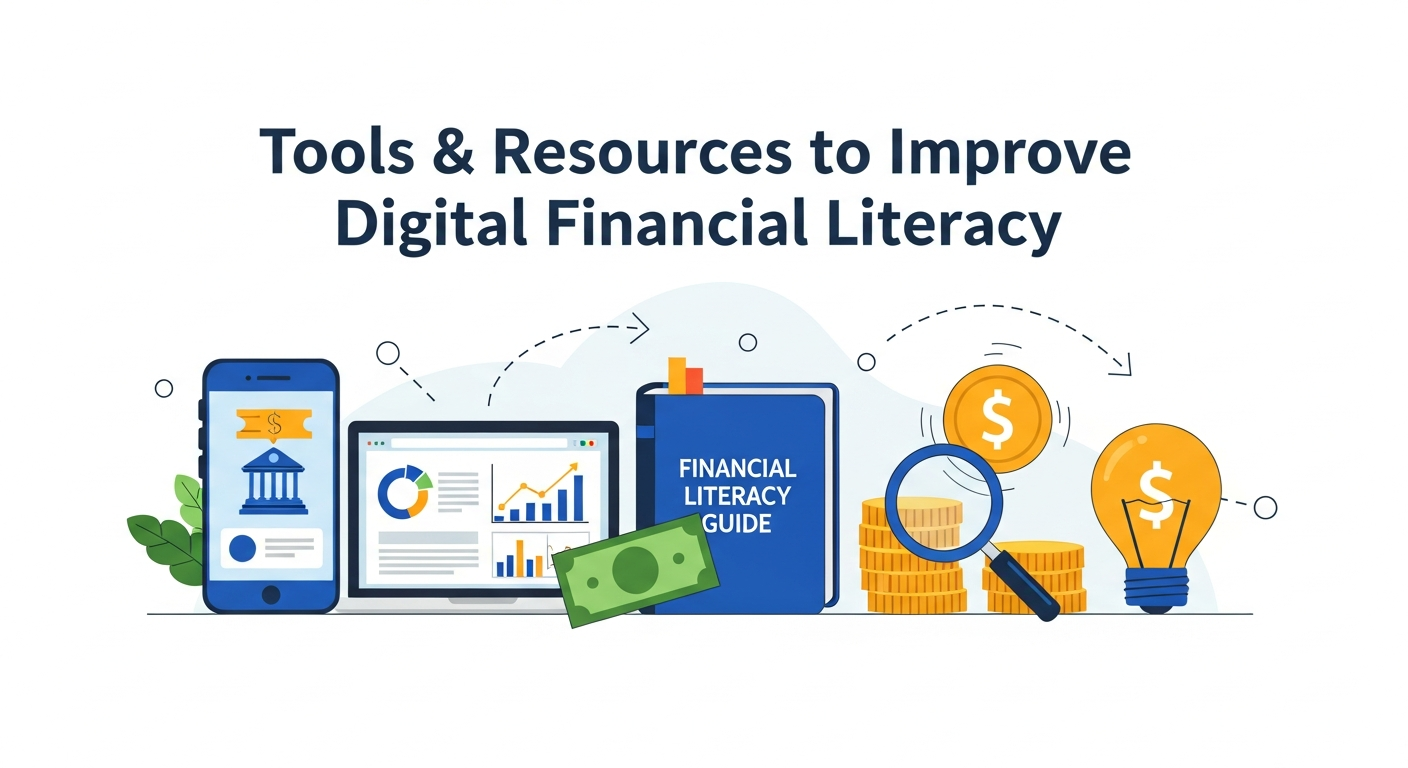
Improving digital financial literacy doesn’t require formal training. Simple steps and accessible resources can significantly boost skills.
Practical approaches include:
- Exploring your bank’s mobile app and learning all features
- Watching tutorials on secure online payments and budgeting apps
- Tracking monthly expenses using digital tools
- Following credible blogs, YouTube channels, and online courses
- Regularly updating passwords and verifying financial platforms before sharing personal information
Consistency and curiosity are key. The digital finance world evolves rapidly, and staying informed is part of being literate.
Conclusion
Digital financial literacy is no longer optional; it is a necessity for navigating modern financial systems safely and effectively. It equips individuals with the knowledge and skills to protect themselves from fraud, make informed financial choices, and leverage digital tools for saving, investing, and managing money. By combining financial understanding with digital competence, people gain confidence, independence, and control over their financial lives. Continuous learning and vigilance are key, as technology and financial services evolve rapidly.
FAQs: Digital Financial Literacy
1. What is digital financial literacy?
Digital financial literacy is the ability to understand, manage, and make informed decisions about money using digital tools. This includes mobile banking, online payments, digital wallets, investment apps, and budgeting platforms, while being able to identify and avoid scams and protect personal financial information.
2. Why is digital financial literacy important?
It ensures people can navigate the digital financial world safely and confidently. It helps prevent fraud, reduces financial mistakes, improves money management, and enables individuals to make informed decisions about savings, investments, and payments.
3. Who needs digital financial literacy?
Everyone benefits from digital financial literacy. Students, working professionals, entrepreneurs, retirees, and even small business owners need these skills because financial transactions, investments, and banking are increasingly conducted online.
4. What skills are involved?
Key skills include:
-
Basic financial knowledge: budgeting, saving, investing, understanding interest and debt.
-
Digital tool familiarity: navigating mobile banking, e-wallets, and online investment apps.
-
Online security awareness: recognizing phishing, using strong passwords, and enabling two-factor authentication.
-
Evaluating financial information: identifying reliable sources and avoiding scams or misleading platforms.
5. What are the risks of low digital financial literacy?
Lacking these skills can lead to falling victim to online scams, losing money through fake platforms, overspending, making poor investment decisions, and experiencing financial stress or mismanagement.
6. How does it prevent online fraud?
Digital literacy helps users recognize phishing emails, verify platforms before sharing sensitive information, maintain strong passwords, use two-factor authentication, and avoid untrustworthy apps or websites, reducing the risk of financial loss.
7. What are examples of digital financial tools?
Examples include mobile banking apps from banks, e-wallets like PayPal, Google Pay, or bKash, budgeting tools like Mint or YNAB, and online investment platforms for stocks, mutual funds, or cryptocurrencies.
8. How does digital literacy impact financial independence?
Being digitally financially literate allows individuals to track and manage their money in real-time, make informed savings and investment decisions, reduce unnecessary fees, plan for emergencies, and achieve long-term financial goals without relying on others.
9. What role does education play?
Formal education, government programs, online courses, and community initiatives help raise awareness and teach digital financial skills. However, practical, hands-on learning and self-directed study remain critical for mastering these skills effectively.
10. How can someone improve their digital financial literacy?
Start by exploring your bank’s app and learning its features, using budgeting apps, watching tutorials on secure online payments, following credible finance blogs or YouTube channels, and always verifying platforms before financial transactions. Consistent practice and curiosity are key.
11. What is the connection between digital literacy and financial inclusion?
Digital financial literacy empowers people to safely access modern financial services, participate in the digital economy, and take advantage of innovations like mobile banking, digital payments, and online lending. It reduces barriers and ensures broader financial inclusion.
12. Can anyone learn digital financial literacy?
Yes. With curiosity, patience, and consistent practice, anyone—regardless of age or background—can develop the knowledge and skills to manage money safely and confidently in the digital world.






What is a Fintech Company?
FinTech and Traditional Banking: How Old Banks Are Adapting
What Is Financial Technology (FinTech)? Everything You Need to Know
AI Credit Scoring: Revolutionizing SME Banking and Digital Loans
Market basket analysis: Transforming Education Through Calm and Focus
Zero-Knowledge Proofs: Transforming Education Through Calm and Focus
Blockchain Interoperability in Education
Bridging the Unbanked Gap with Mobile Digital Finance