
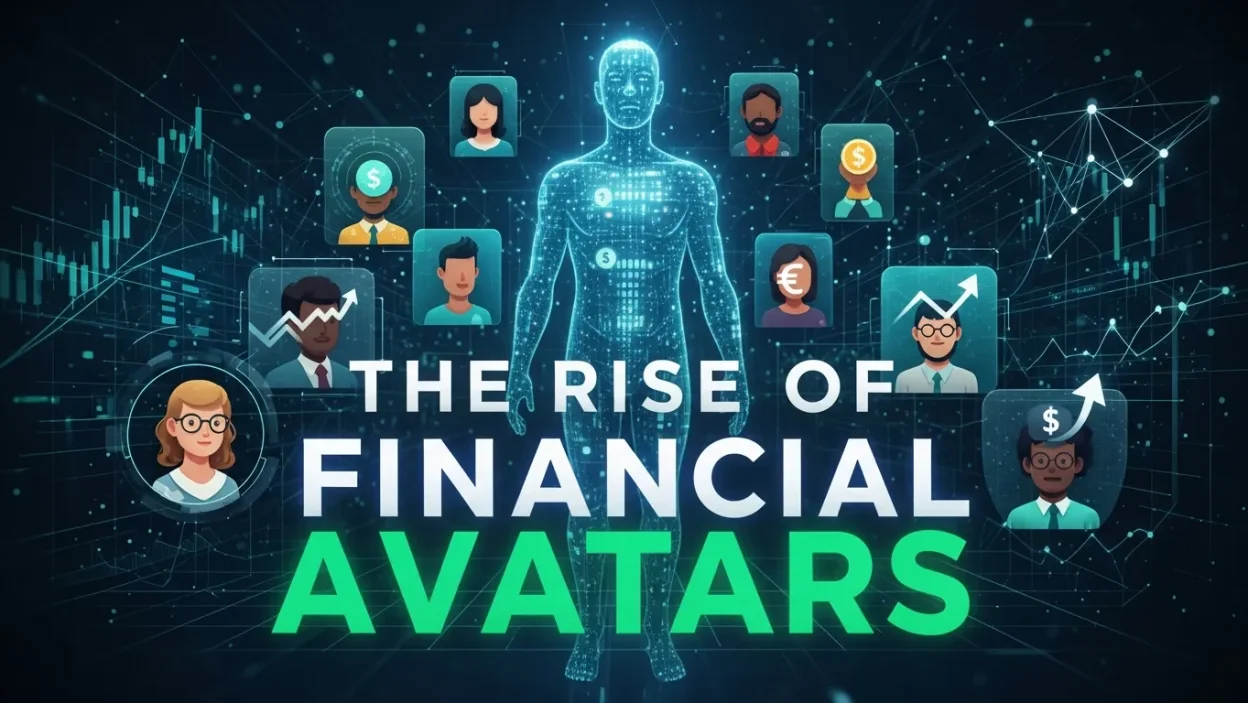
Financial avatars are AI-powered digital representatives that manage banking and money decisions on a user’s behalf. Unlike basic chatbots or budgeting apps, these intelligent systems learn spending habits, emotional triggers, and long-term goals to proactively handle saving, investing, bill payments, and risk management. By combining machine learning, behavioral intelligence, and predictive analytics, financial avatars transform banking from reactive account management into personalized, anticipatory financial guidance.
Banking is undergoing a transformation that extends far beyond mobile apps and digital payments. We’re approaching an era where artificial intelligence will create personalized financial representatives that understand your spending habits, investment goals, and financial personality better than any human advisor ever could.
What Are Financial Avatars?

Financial avatars represent a revolutionary shift in digital banking and personal finance. These AI-powered entities act as intelligent financial representatives, using deep learning to analyze transaction history, spending habits, risk tolerance, and long-term financial goals.
Unlike traditional chatbots that simply respond to user queries, financial avatars actively participate in financial decision-making. They learn from every transaction, investment choice, and behavioral pattern, gradually forming a digital twin that reflects how you manage money and how you respond to financial situations.
Built on advanced machine learning and behavioral economics, financial avatars go beyond tracking what you spend. They interpret why financial decisions are made, identifying emotional triggers, habits, and preferences. This deeper understanding allows avatars to provide proactive guidance, automate financial actions, and adapt strategies over time, creating a more intuitive and personalized banking experience.
Transforming Daily Banking Interactions
Traditional banking requires you to log into apps, navigate menus, and manually execute transactions. Financial avatars eliminate these friction points by anticipating your needs and acting on your behalf.
Imagine your avatar automatically transferring money to your savings account when it detects surplus funds in your checking account. Or picture it negotiating better interest rates with lenders based on your improved credit profile without any input from you.
These digital representatives will handle routine financial tasks seamlessly. They’ll pay bills on optimal dates to maximize cash flow, schedule investments during market opportunities, and even dispute fraudulent charges automatically.
The convenience extends beyond automation. Your financial avatar will communicate with other financial institutions on your behalf, maintaining consistent financial strategies across multiple accounts and investment platforms.
Proactive Financial Decision-Making Through AI
Financial avatars shift banking from a reactive process to a proactive one. Instead of waiting for users to notice issues or opportunities, avatars continuously monitor financial activity and act before problems arise. This anticipatory model helps users avoid late fees, cash shortages, and missed investment opportunities.
-
Detects upcoming cash flow gaps in advance
-
Adjusts spending or savings automatically
-
Identifies early signs of financial stress
-
Responds instantly to abnormal transactions
By making decisions ahead of time, avatars reduce financial friction and uncertainty. Users no longer need to constantly check balances or track expenses—the system maintains stability quietly in the background.
Personalized Financial Strategy Development
One of the most compelling aspects of financial avatars lies in their ability to develop truly personalized financial strategies. Unlike generic financial advice, these AI representatives consider your unique circumstances, emotional responses to financial stress, and long-term life goals.
Your avatar analyzes patterns in your spending during different life events. It recognizes when you overspend during stressful periods and can implement protective measures automatically. This emotional intelligence in financial management represents a significant advancement over traditional banking tools.
The personalization extends to investment strategies as well. Your avatar considers your risk tolerance not just as a static number, but as a dynamic characteristic that changes based on market conditions, personal circumstances, and life stages.
For those interested in exploring more about how AI is revolutionizing financial services, Digitafin offers comprehensive insights into emerging financial technologies.
Behavioral Intelligence in Financial Avatars
Financial avatars go beyond numbers by incorporating behavioral intelligence into money management. They analyze emotional patterns tied to spending, saving, and investing, allowing them to intervene when behavior threatens long-term goals.
| Behavioral Insight | Avatar Response |
|---|---|
| Stress-based overspending | Temporary spending limits |
| Sudden income increase | Automatic savings adjustment |
| Market panic behavior | Risk exposure rebalancing |
| Goal fatigue | Strategy simplification |
This behavioral awareness enables avatars to guide users gently rather than restrict them harshly. Over time, this creates healthier financial habits rooted in understanding rather than discipline alone.
Security and Trust in Avatar Banking

The concept of AI representatives managing finances naturally raises security concerns. However, financial avatars operate within strictly defined parameters that you establish and can modify at any time.
These systems employ advanced encryption and blockchain technology to ensure transaction integrity. Your avatar cannot access funds beyond predetermined limits, and all actions require cryptographic verification unique digital identity.
Multi-factor authentication becomes more sophisticated with avatar banking. Instead of remembering passwords, the system recognizes your behavioral patterns, spending habits, and even typing rhythms to verify your identity.
Transparency remains paramount in avatar banking. Every decision your financial representative makes includes detailed explanations and can be reviewed, modified, or reversed according to your preferences.
User Control and Ethical AI Boundaries
Despite their autonomy, financial avatars operate strictly within ethical and user-defined boundaries. Users remain the final authority, with full visibility into how decisions are made and executed.
- User-defined action limits
- Transparent decision explanations
- Manual approval for high-impact actions
- Real-time activity monitoring
These safeguards ensure that avatars function as representatives—not replacements. Ethical AI design prioritizes trust, accountability, and user empowerment over unchecked automation.
The Technology Behind Avatar Intelligence
Financial avatars rely on sophisticated neural networks that process multiple data streams simultaneously. They analyze market trends, economic indicators, and personal financial data to make informed recommendations and decisions.
Natural language processing allows these avatars to communicate complex financial concepts in terms you understand. They translate market volatility, interest rate changes, and investment opportunities into actionable insights tailored to your financial literacy level.
Machine learning algorithms continuously refine avatar behavior based on successful outcomes and user feedback. This creates an increasingly accurate representation of your financial preferences and goals over time.
The integration of predictive analytics enables avatars to anticipate financial needs before they arise. They can identify potential cash flow issues weeks in advance and automatically implement corrective measures.
How Financial Avatars Learn and Evolve
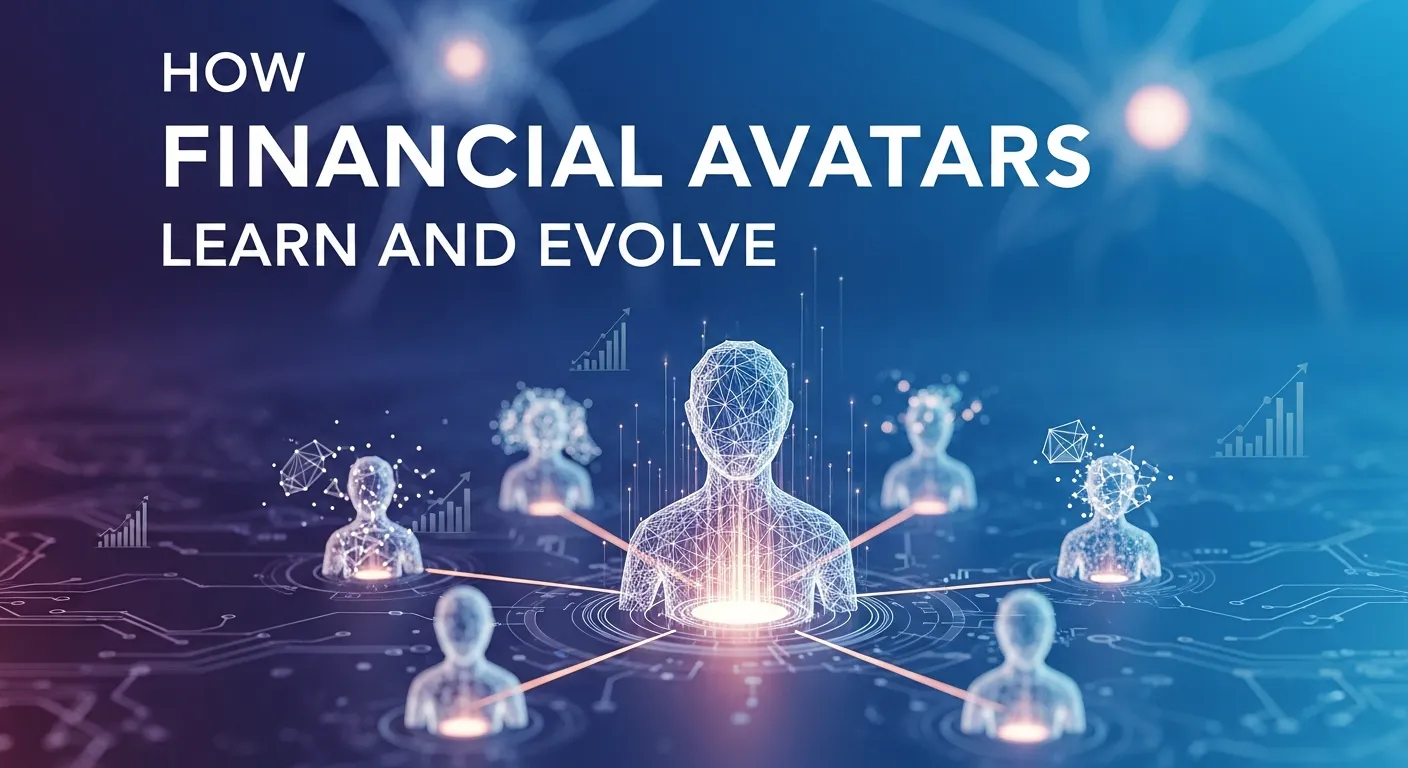
Financial avatars continuously evolve through adaptive learning models. They refine strategies by analyzing outcomes, user feedback, and environmental changes such as interest rate shifts or inflation trends.
| Learning Source | Purpose |
|---|---|
| Transaction history | Pattern recognition |
| Market data | Strategy optimization |
| User feedback | Preference alignment |
| Outcome analysis | Performance improvement |
This constant refinement allows avatars to remain relevant across life stages. As financial circumstances change, the avatar evolves alongside the user rather than requiring manual reconfiguration.
Implementation Challenges and Solutions
The transition to avatar-based banking faces several technical and regulatory hurdles. Financial institutions must navigate complex compliance requirements while developing AI systems that meet stringent security standards.
Data privacy regulations require careful consideration of how financial avatars collect, process, and store personal information. Banks are developing federated learning approaches that allow avatars to improve without centralizing sensitive data.
Integration with existing banking infrastructure presents another challenge. Financial institutions are gradually implementing avatar capabilities through API-based systems that work alongside current platforms rather than replacing them entirely.
User adoption represents perhaps the biggest challenge. Many people feel uncomfortable delegating financial decisions to AI systems. Banks are addressing this through gradual implementation, starting with simple automation and progressively adding more sophisticated capabilities as users become comfortable.
Future Implications for Financial Services
The widespread adoption of financial avatars will fundamentally reshape the banking industry. Traditional branch banking will likely become obsolete as customers interact primarily through their AI representatives.
Financial advisors will evolve from transaction facilitators to strategic consultants who work alongside avatars to address complex financial planning scenarios. This collaboration between human expertise and AI efficiency will create superior financial outcomes for consumers.
Competition among financial institutions will increasingly focus on avatar capabilities rather than traditional metrics like branch locations or product offerings. Banks with the most intelligent and capable avatars will attract and retain customers more effectively.
The democratization of sophisticated financial services through avatars will reduce inequality in financial outcomes. Advanced investment strategies and financial planning techniques previously available only to wealthy clients will become accessible to average consumers through AI representatives.
Financial avatars represent more than technological advancement; they embody a fundamental shift toward truly personalized financial services. As these systems mature, they will transform banking from a transactional relationship into a collaborative partnership focused on achieving your financial aspirations.
The future of banking lies not in replacing human judgment but in augmenting it with AI capabilities that understand your financial personality as well as you do. Financial avatars will serve as trusted representatives in an increasingly complex financial landscape, ensuring your money works as intelligently as you do.
Financial Avatars and the Future of Financial Inclusion
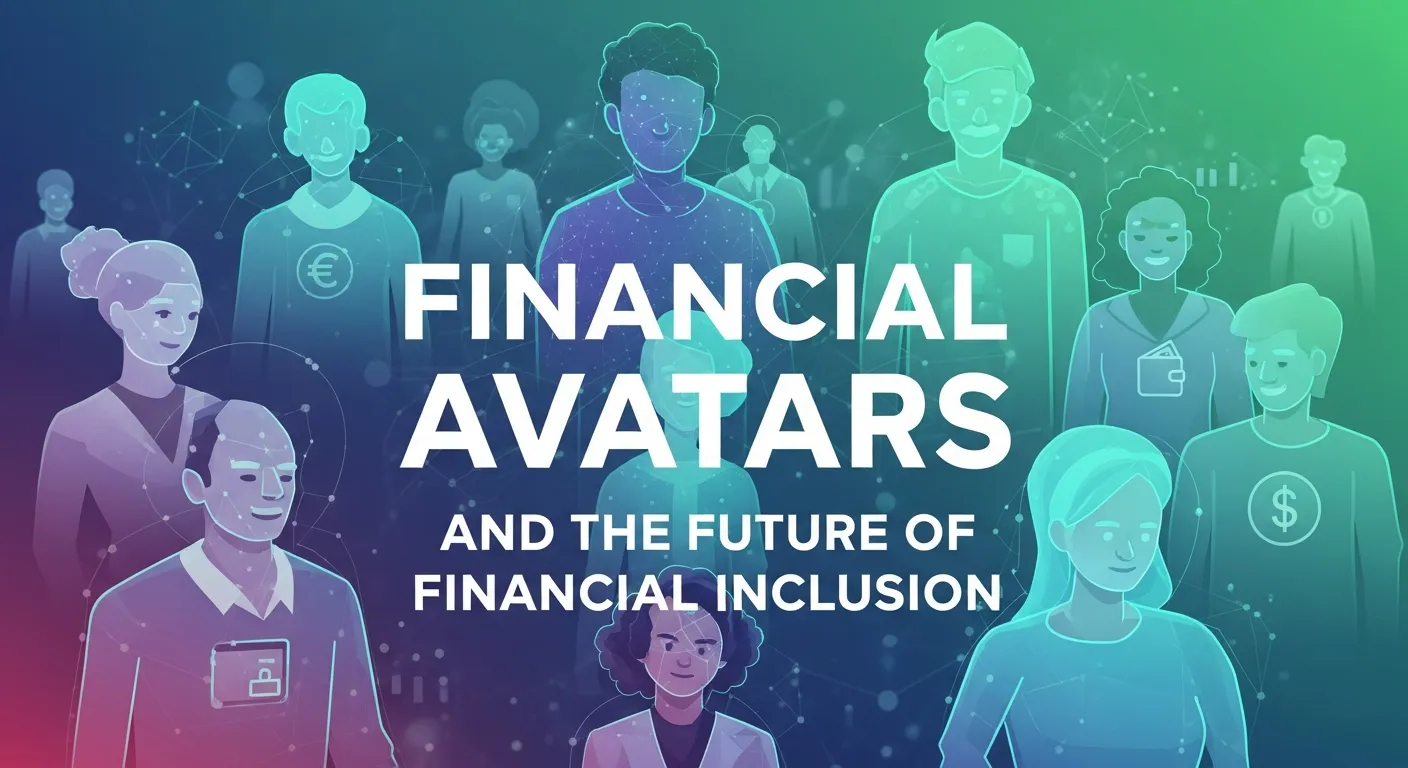
Financial avatars have the potential to close long-standing gaps in access to quality financial guidance. By automating complex financial planning, they make advanced strategies available to individuals regardless of income or education level.
-
Delivers expert-level guidance at low cost
-
Reduces dependency on traditional advisors
-
Expands access to investment planning
-
Supports underserved and unbanked populations
As adoption increases, financial avatars may become the foundation of inclusive banking ecosystems. They represent a shift toward equitable financial empowerment driven by intelligence, accessibility, and personalization.
Conclusion
Financial avatars represent a transformative shift in the way individuals manage and interact with their finances. Acting as intelligent, personalized AI representatives, they streamline routine financial decisions, reduce stress, and provide tailored guidance that aligns with each user’s unique goals, risk tolerance, and spending habits. By combining advanced machine learning, behavioral insights, and proactive automation, financial avatars make sophisticated financial strategies accessible to everyone—not just high-net-worth individuals.
These systems are designed with robust security measures, ethical boundaries, and transparency, ensuring users maintain control while benefiting from automation. Rather than replacing human judgment, financial avatars augment it, enabling more informed decisions and long-term financial well-being. As the banking landscape grows increasingly complex and digital, financial avatars are poised to become central to building intelligent, inclusive, and human-centric financial ecosystems where users can confidently achieve their financial goals.
Frequently Asked Questions (FAQs)
1. What is a financial avatar?
A financial avatar is an AI-powered digital representative that manages, monitors, and optimizes personal finances by learning from user behavior, financial goals, and individual preferences over time.
2. How is a financial avatar different from a banking chatbot?
Unlike basic banking chatbots that respond to queries, financial avatars learn continuously, act proactively, and can make or recommend financial decisions based on real-time data and long-term objectives.
3. What financial tasks can a financial avatar handle?
Financial avatars can manage budgeting, automated savings, investments, bill payments, fraud detection, cash flow forecasting, and long-term financial planning from a single system.
4. How do financial avatars personalize money management?
They analyze spending patterns, emotional triggers, life events, and risk tolerance to create adaptive, personalized financial strategies that evolve as circumstances change.
5. Can financial avatars prevent emotional or impulsive spending?
Yes. By identifying behavioral patterns linked to stress or impulse spending, avatars can enforce temporary limits, adjust budgets, or redirect funds toward savings automatically.
6. Are financial avatars secure?
Financial avatars use advanced encryption, behavioral authentication, blockchain verification, and user-defined permissions to ensure high levels of security and data protection.
7. Do users remain in control of their finances?
Absolutely. Users set spending boundaries, approve high-impact actions, monitor all activity in real time, and can override or modify avatar decisions whenever needed.
8. How do financial avatars learn over time?
They continuously learn from transaction history, market conditions, user feedback, and outcome analysis to refine strategies and improve financial decision-making accuracy.
9. Can financial avatars work with multiple banks and platforms?
Yes. Through secure APIs, financial avatars can coordinate accounts, credit cards, loans, and investments across multiple financial institutions for unified money management.
10. Will financial avatars replace human financial advisors?
No. Financial avatars are designed to complement human advisors by handling routine decisions, allowing professionals to focus on complex planning and personalized guidance.
11. How do financial avatars support financial inclusion?
They provide affordable, expert-level financial guidance to underserved and unbanked populations, expanding access to budgeting, savings, and investment tools.
12. What is the future of banking with financial avatars?
The future of banking will be more personalized, proactive, and inclusive, with AI-powered financial avatars serving as the primary interface between users and financial systems.





How to Create a Retirement Planning Strategy That Works
How Tax Planning Helps Individuals and Businesses Save Money
What Is Financial Technology (FinTech)? Everything You Need to Know
FinTech and Traditional Banking: How Old Banks Are Adapting
How Tax Planning Helps Individuals and Businesses Save Money
How to Create a Retirement Planning Strategy That Works
How Digital Asset Management Improves Business Efficiency
The Importance of Risk Management in Modern Business